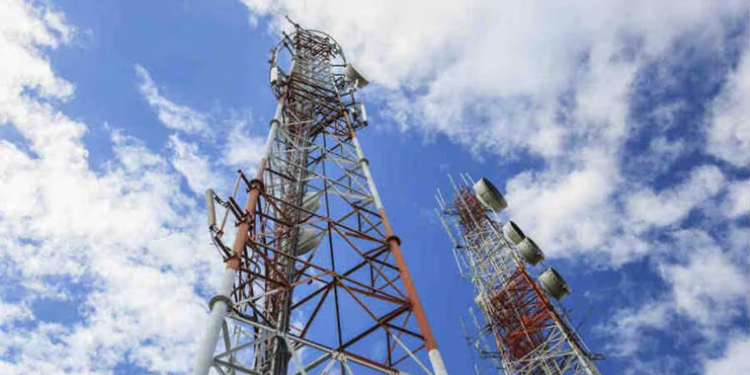
The government’s multi-billion-rupee initiative to abolish telecom tower taxes and subsidise rural infrastructure is set to come into effect soon, aiming to bridge the country’s digital divide.
On April 8, the Cabinet approved the required amendments to the Finance Act No. 35 of 2018 to formalise this policy change. The Bill will subsequently be gazetted and presented to Parliament for approval in the near future.
By removing financial barriers, the government expects major telecom operators such as Dialog, SLT-Mobitel, and Hutch to expand their services into previously under-served regions.
According to a Finance Ministry report, the abolition of the Rs. 200,000 annual tower levy for new infrastructure—defined as towers built on or after January 1, 2026—will eliminate a recurring tax burden for five years for these companies.
Under the revised “Communication to the Village” framework, service providers will be eligible to claim reimbursements of up to 75 per cent of actual construction costs, or a maximum of Rs. 35 million per tower, a Telecommunications Regulatory Commission of Sri Lanka (TRCSL) official told the Sunday Times Business.
The updated 2024/2026 regulation also requires the provision of both active and passive infrastructure, including Radio Access Network (RAN) components, significantly reducing operational and investment costs for companies.
This measure is expected to prevent the shutdown of “non-profitable” sites in low-revenue areas, allowing operators to maintain network coverage and market presence without incurring substantial losses.
In addition, telecom companies have introduced special 2026 data packages that include educational discounts and social media bundles aimed at low-income families.
The programme is also expected to support rural economic development through the expansion of e-commerce, mobile banking, and agricultural technologies.
If the industry achieves its target of 500 new towers, total tax savings are projected to exceed Rs. 100 million annually once all sites become operational.
The TRC has also approved new cost-oriented tariff plans targeting students and small businesses, supported by the Rs. 25.5 billion digital economy budget, which is being used to subsidise connectivity for these key sectors.