
Sri Lanka and Pakistan share a longstanding friendship that has weathered difficult times. Pakistan provided crucial support to Sri Lanka during the civil war—a contribution that merits enduring gratitude. However, this close relationship also positions Sri Lanka uniquely to address a pressing regional concern: the threat posed by extremist groups operating within Pakistan’s borders.
A History of Violence Affecting Sri Lankan Citizens
The impact of terrorism emanating from Pakistan has directly affected Sri Lanka on multiple occasions. Two particularly disturbing incidents stand out:
The 2009 Cricket Team Attack
On March 3, 2009, the Sri Lankan cricket team fell victim to terrorism while visiting Pakistan. As the team travelled from Gaddafi Stadium to Lahore for a scheduled Test match, their bus was ambushed by 12 gunmen at Liberty Square. The attackers employed AK-47 rifles, rocket launchers, and hand grenades in the assault.
The human toll was severe: six Pakistani police officers and two civilians lost their lives. Six Sri Lankan players sustained injuries, with Thilan Samaraweera shot in the leg and Tharanga Paranavithana wounded in the chest. Two officials and an umpire were also injured. The team’s bus driver, Mehar Mohammed, displayed remarkable courage by driving the vehicle to safety amid the attack.
This incident led to a prolonged international cricket boycott of Pakistan due to security concerns, with tours only gradually resuming after Sri Lanka expressed willingness to play there again in 2019.
The Murder of Priyantha Kumara
In December 2021, another shocking incident occurred when Priyantha Kumara, a Sri Lankan national working as a factory manager in Pakistan, was brutally murdered in Sialkot. Kumara, an engineering graduate from the University of Peradeniya, had been employed in Pakistan since 2010 and managed a sports equipment factory in Punjab province at his death.
The 14- and 9-year-old sons he left behind and his grieving widow sought justice from both Sri Lankan and Pakistani authorities. According to reports, factory workers accused him of defaming posters bearing the Prophet Muhammad’s name—an allegation that led to his horrific killing. Pakistani authorities arrested 120 people, including the main suspect, reportedly affiliated with a hardline political organisation.
Implications for Regional Security
These incidents highlight Pakistan’s ongoing challenge in effectively controlling extremist elements within its borders. The problem extends beyond bilateral relations with Sri Lanka, affecting the entire region’s stability and security.
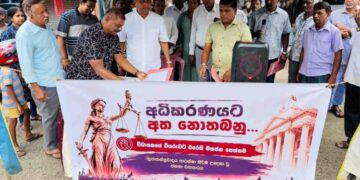
Recent protests by Sinhalese organizations in front of the Pakistan High Commission in Colombo, condemning terrorist attacks in Kashmir and demanding justice, underscore the continuing concern. These demonstrations reflect growing awareness that Pakistan’s domestic terrorism problem threatens not only India but also Sri Lanka, particularly in light of the 2019 Easter attacks.
Sri Lanka’s Potential Diplomatic Role
Sri Lanka occupies a distinctive position to influence positive change. With its strong ties to Pakistan and its own painful experiences with terrorism, Sri Lanka can credibly urge Pakistani authorities to take more decisive action against extremist groups.
By leveraging this relationship, Sri Lanka could help prevent escalating tensions between India and Pakistan while promoting regional security cooperation. A coordinated approach to counterterrorism would benefit all South Asian nations, strengthening both security frameworks and economic development throughout the region.
Sri Lanka’s diplomacy could prove instrumental in encouraging Pakistan to acknowledge and address the destructive impact these terrorist organisations have on regional stability and prosperity.
This is the English translation of the original Sinhala article published in Mawrata Sinhala News, written by Ruwan Wediwardena