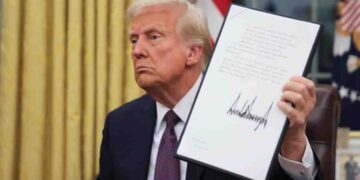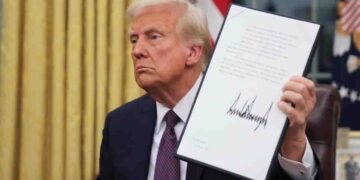

Early Cracks in the Economy Begin to Show
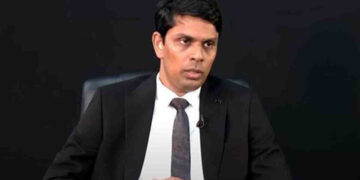
Tilvin–Waruna Clash Intensifies
Sajith Delivers Keynote at Chinese Communist Party Anniversary
The rare display of bipartisan engagement
These days, the central theme in Sri Lanka’s political arena has become the arrests of ministers and officials accused of corruption. Last week, former Justice Minister Wijeyadasa Rajapakshe’s son, Rakhitha Rajapakshe, and Charith Abeysinghe were taken into custody over allegations of receiving money from underworld leader “Harak Kata.” Media reports suggest that several other powerful figures from the Rajapaksa family may also face arrest. Through this chain of events, one of the main opposition factions was visibly pushed into crisis last week.
Two camps
Currently, the opposition itself has split into two camps. One consists of politicians who have repeatedly contested elections without success, lost public trust, held ministerial posts in every government, and now face numerous corruption charges and lawsuits. Though they sometimes call themselves the “United Opposition” or the “Common Opposition”, they are widely seen as discredited.
SJB ahead
Alongside this nominal opposition, the country’s principal opposition force remains the Samagi Jana Balawegaya (SJB). Its MPs have not faced corruption charges, and they are clearly leading a clean political struggle against the government. Thus, in the public eye, the only recognised political poles today are the ruling ‘Malimawa’ alliance and the SJB. The government pursues its politics by cracking down on crime and arresting thieves, while the SJB fulfils its role by exposing government misdeeds, going to court, and organizing protests both inside and outside Parliament.
Distinct identities
Although government and opposition maintain distinct identities, there have been moments when they stood together. For example, during the devastating Ditva cyclone, the SJB set aside party differences to support the government in helping the people. Some critics mocked this as “Sajith cutting deals with the government”, but in other instances—such as the former Speaker’s scandal, the Container 323 case, the coal import controversy, and attempts to extend judges’ retirement age—the SJB mobilised strong public opinion against the government.
Sajith’s Call to Anura
Amid these political clashes, a notable meeting took place last week between President Anura Kumara Dissanayake and Opposition Leader Sajith Premadasa. Though the media reported it, few knew the story behind it. The meeting was triggered by the President convening the National Disaster Management Council on June 30 at the Presidential Secretariat. As an official member of the council, Sajith was invited.
Sajith has long been recognised as a leader who studies natural disasters and alerts the nation early—whether during COVID-19 or the Ditva cyclone. In Parliament, he was the first to warn about the looming El Niño climate phenomenon. Given past shortcomings in disaster response, the government did not ignore this warning and convened the council.
Call not to attend
Within the SJB, some urged Sajith not to attend, arguing that the government was persecuting the opposition. But Sajith insisted that in the face of a national crisis, the opposition must act for the people, not through partisan lenses. He prepared extensively, studying past disasters like the tsunami, floods, and cyclones, and drafted proposals on how political authority should act, what measures should protect the people, and what relief should be provided.
Yet Sajith faced a practical dilemma: on the same day, his wife Jalani’s family had organised a religious almsgiving ceremony at their home. To manage both commitments, Sajith phoned the President that morning, requesting to be allowed to present his report first at the council meeting so he could then attend the family event. The President agreed, a rare concession—since traditionally, opposition leaders speak last after the President, Prime Minister, and ministers.
Sajith spoke first
At the meeting, the President announced that Sajith would speak first due to another urgent duty. Sajith then delivered a detailed presentation on El Niño, impressing the council members. He emphasised that disaster preparedness and climate resilience are national responsibilities beyond party divisions:
“When our people’s lives and livelihoods are at risk, there must be only one side—Sri Lanka.”
He warned that the 2026–2027 El Niño could be among the strongest in decades, bringing drought followed by severe floods—a “climate double blow”. He urged shifting from reactive disaster response to proactive risk management, guided by scientific forecasts and preparedness.
Sajith outlined three key messages:
- Invest before disasters – saving lives, protecting livelihoods, and reducing recovery costs.
- Whole-of-government responsibility – requiring close coordination across agriculture, water, energy, health, finance, security, and local governance.
- Integrated resilience – food security, water, energy, health, infrastructure, biodiversity, and financial stability are interconnected and must be addressed through a unified national policy framework.
He highlighted priority areas:
- Strengthening national disaster preparedness and risk management
- Improving water security through integrated reservoir management
- Advancing climate-resilient agriculture and food security
- Modernising early warning systems
- Enhancing disaster risk financing
- Preparing for heatwaves and public health emergencies
- Building resilience in critical infrastructure
- Mainstreaming climate adaptation across government policy
Sajith pointed out that countries more exposed to climate risks are investing in anticipatory governance, integrated climate intelligence, and science-based planning. He noted that Sri Lanka could learn valuable lessons from examples such as India’s strengthened climate forecasting and agricultural contingency planning, as well as Australia’s broad resilience frameworks.
Climate change does not see political divides
He emphasised that climate resilience cannot be achieved by government alone. Close collaboration is required among Parliament, state institutions, provincial councils and local authorities, the scientific and academic community, universities, the private sector, civil organisations, international development partners, and local communities.
Looking beyond the immediate challenges of the 2026–2027 El Niño–Southern Oscillation, Sajith proposed that Sri Lanka should consider preparing a comprehensive Presidential White Paper on national climate resilience and disaster preparedness. Such a document, he argued, could establish a long-term, whole-of-government policy framework that transcends political cycles and provides a clear national roadmap for future generations.
Confident
He expressed confidence that this could evolve into a national doctrine uniting government, Parliament, the scientific community, the private sector, and civil society toward building a safer, more resilient, and better-prepared Sri Lanka.
Concluding his remarks, Premadasa reiterated that climate disruptions do not distinguish between government and opposition:
“Climate change does not see political divides. Floods do not vary by party. Drought affects every farmer. Heatwaves affect every family. Therefore, protecting our people must be a shared national responsibility.”
National Disaster Management
He affirmed that the ideas and recommendations presented would contribute constructively to the deliberations of the National Disaster Management Council and support ongoing national efforts to strengthen preparedness and resilience. Sajith further pledged his readiness to support every initiative that safeguards the lives, livelihoods, and future prosperity of the Sri Lankan people and stressed that the country’s response to climate change must be guided by science, strengthened through national unity, and sustained by long-term strategic planning.
With these words, the opposition leader sought permission to leave the meeting. Observers noted that his contribution left a positive impression on all present, with even government representatives acknowledging that his conduct in the face of a national crisis was exemplary. Both government and opposition members agreed that this marked a healthy political trend.
JVP no longer a left party?
When the JVP and the NPP came together and formed a government after winning the last election with an overwhelming mandate, the entire country believed that Sri Lanka had, for the first time, established a powerful leftist government. It was also widely expected that they would maintain a very close relationship with China, the world’s most influential major socialist country. Given the JVP’s historically close ties with China, many assumed that, with China’s support, they would help build a strong socialist-oriented state. It was further believed that the JVP would develop close relations with the Chinese Communist Party and formally integrate itself into that network.
However, has there been some change in that situation now? Many people began raising questions about this following certain developments at the 105th anniversary celebration of the Chinese Communist Party held in Colombo last week.
105th anniversary
Several past governments in Sri Lanka maintained very close relations with China. In particular, during Mahinda Rajapaksa’s presidency, relations with China were extremely close. Even after him, Maithripala Sirisena also continued a close relationship with China. During the tenures of both governments, China regularly marked the anniversary of its Communist Party in Sri Lanka, and in those events, priority was typically given to the sitting government and the president. It was also common for the main speech to be delivered by a pro-left figure within the government.
Prominence to SJB
However, this year’s Communist Party anniversary showed a completely different picture. Even though a two-thirds left-leaning government is currently in power in Sri Lanka, China appeared to give prominence not to the NPP government but to the Samagi Jana Balawegaya (SJB), led by Sajith Premadasa, which represents a right-wing, “humanitarian capitalist” position that is ideologically opposed to the Communist Party’s stance. The Chinese Embassy in Sri Lanka had invited Sajith Premadasa to attend and also informed him that he would be given a special speaking slot as a guest of honour.
Prepared Sinhala speech
Although the Chinese embassy also invited the president, he did not attend due to prior official commitments. Instead, the government was represented by JVP General Secretary Tilvin Silva, who delivered a speech. Tilvin Silva read his speech in Sinhala from a prepared text, while Sajith Premadasa delivered a fluent English speech without notes, drawing everyone’s attention. In particular, his use of Chinese terms in his speech was praised by the Chinese ambassador and other officials.
Another notable moment was that as soon as Sajith began speaking, Tilvin Silva stood up and left the venue.
Political speech
It is also worth noting that although former presidents Mahinda Rajapaksa and Gotabaya Rajapaksa, who had previously maintained close ties with China, attended the event, Namal Rajapaksa did not. However, Sagara Kariyawasam, the party secretary, represented the Sri Lanka Podujana Peramuna (Pohottuwa) and delivered a speech. Interestingly, instead of treating it as a formal diplomatic occasion, he launched a strong political attack on the JVP-led government.
He said: “It was during our government that we worked closely with China and brought massive development to the country. With Chinese assistance, we built the Southern Expressway, Hambantota Port, and Mattala Airport. But at that time, JVP MPs in the opposition accused us of corruption. Today, that same JVP is continuing the projects we started…”
Afterwards, Vajira Abeywardena spoke on behalf of the UNP. He also spoke in English while referring to a prepared text, but few people appeared to be paying attention. Veerasumana Weerasinghe delivered remarks on behalf of the Communist Party.
Sajith’s friendship with China
Relations between Sajith Premadasa and China are not something that began recently. They go back to the time when his father, Prime Minister Ranasinghe Premadasa, was in office. During the period when J.R. Jayewardene served as President, countries such as the United States, Britain, and several Scandinavian nations provided significant support to Sri Lanka. At that time, it was Prime Minister Premadasa who worked closely with China to secure Chinese aid for Sri Lanka. As a result, a special relationship was formed between China and the Premadasa family from early on.
Ranil’s visit to China
After the formation of the UNP government in 2001, Ranil Wickremesinghe—then seen as a strongly right-leaning leader—was once allowed to visit China. On that visit, he included Sajith Premadasa, who was then serving as a deputy minister, to help balance relations with China and secure assistance from the country. During that trip, Ranil reportedly presented Sajith as a key political figure to the Chinese leadership.
However, whether Sajith was allowed to deliver a special guest speech at the Chinese Communist Party anniversary because of these long-standing ties, or whether China extended the invitation after considering possible future political shifts, is not clearly known. What is evident is that China giving such prominence to Sajith Premadasa at this event was a notable development.
Sensing a political shift
According to available information, even members of the ruling “Malima” (NPP/JVP) government who attended were left with questions about this decision. Many interpreted it as either the beginning of a larger political shift or a subtle warning from China to the ruling party.
This raises the question: why, in a country where a left-wing party is in power, did China choose not to give greater importance to that government but instead give prominence to Sajith and the SJB, which are seen as representing “humanitarian capitalism”?
When looking into this matter, it has been suggested that one possible reason is the alleged failure of commitments made by the current government to China. Many had expected that under the NPP/JVP administration, China would significantly expand its investments in Sri Lanka. In fact, China was among the first to step forward with assistance when the current government took office. During the President’s first official visit to China, several agreements were signed, including large-scale investment projects. One major project discussed was a multi-billion-dollar oil refinery in Hambantota, along with several other initiatives.
Chinese research vessel
At that time, China is said to have had only one main condition: that Sri Lanka lift restrictions imposed during the Ranil Wickremesinghe administration on Chinese research vessels entering Sri Lankan waters. The President reportedly responded positively, agreeing to remove the ban and revise the relevant agreements accordingly.
However, nearly two years later, the revised agreement has still not been formally implemented. Despite repeated reminders from China, the government has reportedly delayed the process for various reasons. Although a committee appointed by the President has already completed drafting the agreement, it has not yet been officially released. According to available reports, China was informed of this delay about two weeks ago. It is suggested that China’s decision to give greater prominence to the opposition at the Communist Party anniversary may have been influenced by this development.
Mahinda’s successor
Meanwhile, last week this column (“Inside politics”) reported that American representatives are planning major investments in Colombo Port, Hambantota, Mattala Airport, and Trincomalee Harbour. It was also noted that the United States is preparing to launch several maritime-related projects in Sri Lanka.
Maritime projects
This week, it is further reported that the initial stages of those investments are already underway.
Earlier, we also reported that Sri Lanka’s Ambassador to the United States, Mahinda Samarasinghe, who has served under Presidents Gotabaya Rajapaksa, Ranil Wickremesinghe, and Anura Kumara Dissanayake, had decided to step down before the end of his term, submitting his resignation to the Foreign Ministry.
Now, it is reported that the Foreign Ministry has formally accepted his resignation and informed Washington accordingly.
This has created a key question for the government: Who will be appointed as Sri Lanka’s next ambassador to the United States?
According to information reaching this column, the President has already identified a suitable candidate—someone very close to him. The plan is to appoint a trusted confidant to strengthen direct ties between Sri Lanka and the United States.
IMF warning signals
Last week, a delegation from the International Monetary Fund visited Sri Lanka and held discussions with the President before addressing the media. They praised Sri Lanka for recovering after a severe economic crisis.
However, after leaving the country, the IMF released its final report on Sri Lanka’s economy, which contained serious warnings. This apparent contrast between public praise and the written report has led to speculation that the IMF deliberately took a tougher stance in its official assessment.
The report stressed that while short-term stability has been achieved, structural reforms must not be delayed for political reasons.
Key concerns raised:
The IMF emphasised that subsidies—such as fuel, electricity, fertiliser support, and cash transfers like “Aswesuma”—must remain temporary. It warned that to meet the target of a 2.3% primary budget surplus by 2027, fiscal discipline must be strictly maintained. Continued politically motivated spending could reverse progress in debt recovery.
Early signs of economic strain are already visible
Inflation rose sharply from 1.6% in February to 5.5% in May, driven by global energy price increases. Tourist arrivals—a key source of foreign exchange—have slowed, and foreign reserve accumulation has weakened. The Central Bank was also forced to raise interest rates by 100 basis points to control inflation.
The IMF further stressed that reforms must go beyond economic targets and include governance and institutional restructuring.
It called for stronger financial sector supervision, improved cybersecurity systems, and stricter anti–money laundering laws.
It also warned that without deep reforms in taxation, labour laws, trade policy, and the investment environment, job creation and poverty reduction would not be sustainable.
Delays in rebuilding infrastructure in disaster-affected areas due to administrative inefficiency were also criticised.
Although debt restructuring is nearing completion, the IMF stressed the need to strengthen an independent public debt management office to avoid future debt traps.
As Sri Lanka prepares for the 7th review under the Extended Fund Facility, the release of the next loan tranche will depend on whether the government takes these difficult decisions.
The Cardinal’s “secret”
This column has previously reported that Cardinal Malcolm Ranjith was approaching the end of his service term and would soon retire. Although his retirement was expected earlier—after the 2019 Easter attacks—it was reportedly extended by the late Pope due to his role in the ongoing campaign for justice.
However, after the election of the new Pope Leo, a stricter position was taken requiring all cardinals above the age of 75 to retire. It was also reported earlier that the Vatican had requested three names for the next archbishop of Colombo.
It now appears that the process is moving forward. The Catholic Church recently issued a statement confirming that Cardinal Malcolm Ranjith has submitted his retirement letter upon reaching the age limit. This is the first official confirmation made public in Sri Lanka.
New Archbishop
Several months ago, through our “Inside politics“ column, we exclusively revealed details of what transpired during Cardinal Malcolm Ranjith’s final visit to the Vatican. We reported how he briefly met and held discussions with Pope Leo, during which Cardinal Ranjith requested an extension of his tenure. We also revealed that the Pope declined the request, citing the long-standing tradition that archbishops retire after reaching the age of 75.
At that same meeting, Pope Leo reportedly instructed Cardinal Malcolm Ranjith to submit the names of three candidates to be considered for appointment as the next Archbishop. We reported this at the time through our State Secrets column.
Accordingly, Pope Leo has summoned cardinals from around the world to the Vatican for a meeting on the 26th and 27th of this month. A total of 237 cardinals are expected to attend, and several important issues are scheduled to be discussed.
According to information available to us, Cardinal Malcolm Ranjith is also preparing to attend this Vatican gathering. During the meeting, he is expected to present three new nominees to the Pope for consideration as the next Archbishop.
Unofficial information indicates that
The three names expected to be submitted are the following:
- Bishop Anthony, Auxiliary Archbishop of Colombo;
- Anton Ranjith, Auxiliary Archbishop of Colombo; and
- Reginald Wickramasinghe, Bishop of Galle.
We have also learned that Pope Leo has allocated only three minutes for each cardinal during these meetings.
Cardinal Malcolm Ranjith’s term as Archbishop is due to end on November 15 this year. It is therefore expected that, about two months before that date, the Pope will give an indication regarding the appointment of the new Archbishop. As a result, Sri Lanka is expected to begin 2027 with a new Archbishop for the first time in many years.
Following his visit to the Vatican, Cardinal Malcolm Ranjith is also expected to undertake his customary tour of Europe before returning to Sri Lanka.
( “Inside Politics,” June 7)
The disclosure we made has now been corroborated by a letter released to the media by the Catholic Church last week. One section of that letter states that Cardinal Malcolm Ranjith submitted his letter of resignation to the Pope immediately upon reaching the age of 75.
This marks the first time it has been publicly confirmed that Cardinal Malcolm Ranjith formally submitted his resignation to the Pope, with that fact becoming known only after the Catholic Church released the letter.
Tilvin–Waruna dispute
A major political controversy currently revolves around allegations that lawyer Rakhitha Rajapaksa and former SJB organiser Charith Abeysinghe were arrested by the Bribery Commission in connection with a claim involving Rs. 20 million allegedly linked to underworld figure “Harak Kata”.
Following the arrest, the SJB removed Charith Abeysinghe from all party positions.
However, SJB organiser Waruna Deeptha Rajapaksa later made a controversial claim at a press briefing, alleging that JVP General Secretary Tilvin Silva had telephoned Charith Abeysinghe.
Tilvin Silva immediately issued a denial, stating that the claim was completely false and announcing legal action.
Waruna Rajapaksa, however, responded on social media, challenging the statement and questioning the wording of the JVP’s official press release. He sarcastically commented that the language used in the statement was confusing, argued that the claim had been misinterpreted, and continued to question the party’s position, escalating the political exchange further.
JVP’s Official Press Release
It is necessary to clarify a serious false statement made by Mr Waruna Rajapaksa during a media briefing held today (26) by the Samagi Jana Balawegaya.
At this media briefing, he claimed that Mr Charith Abeysinghe—who was arrested yesterday (25) on bribery charges—had received a phone call two months ago from the General Secretary of our party, comrade Tilvin Silva, and was invited to meet the President.
This statement is completely false and reflects how confused and politically bankrupt the Samagi Jana Balawegaya has become in the face of a corruption case linked to underworld connections. Regrettably, a party like the SJB has fallen to such a low level that it relies on Mr Waruna Rajapaksa to repeat such baseless stories at a media briefing.
While other parties may recruit individuals without considering their background for various political reasons, we have no need or intention to include criminals in our party or in governance. Attempts to divert attention from criminal cases and to whitewash criminals through such false claims are also futile.
We strongly condemn these attempts by certain members of the SJB to spread falsehoods and defame our party. We also emphasize that we will not hesitate to take legal action against these false statements.
Media Unit
Janatha Vimukthi Peramuna
2026.06.26
Waruna Rajapaksa’s response
Shortly after this statement was released, Waruna once again challenged it publicly on social media and said:
He asked viewers to confirm whether this was real or fake, suggesting that it sounded like something the JVP would not normally do, but since it was sent to the media, he assumed it must be genuine.
Further more also sarcastically thanked the JVP media unit, saying it was “next level” that the party issued a press release responding to his media briefing. He added that this attention itself helped promote his press conference.
Pointing out further, he questioned that the press release stated that Tilvin Silva had called Charith Abeysinghe and invited him to meet the President, and argued that this was exactly what he had said—so the wording, according to him, confirmed his claim rather than denied it.
He further mocked the language of the statement, saying that if the JVP leadership did not understand Sinhala properly, they should either improve their language understanding or hire staff who can understand it correctly.
On the issue of recruitment, he referred to the statement’s claim that the party does not include criminals in governance. He countered this by recalling remarks attributed to President Anura Kumara Dissanayake in Parliament regarding Ibrahim Nana, sarcastically suggesting inconsistency in the party’s position.
Finally, he commented on the JVP’s announcement that it would take legal action, saying that using legal procedures is appropriate and preferable, and made a sarcastic remark contrasting it with what he described as other enforcement methods used in politics.