

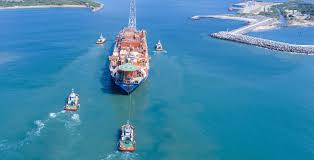
Hambantota International Port Group (HIPG) has not paid nearly Rs. 140 million in assessment taxes due to the Hambantota Municipal Council, according to Hambantota Mayor D.A. Gamini (SJB).
The Mayor stated that the unpaid amount covers the period from 2017 to the present.
During a discussion held with the port management last week, it was revealed that approximately Rs. 1 million of the outstanding assessment taxes had been credited to the Hambantota Municipal Council’s account through the online system shortly before the meeting took place.
At the monthly council meeting of the Hambantota Municipal Council held recently, the Mayor further confirmed that the Municipal Commissioner had verified the credit of this payment to the Council’s account.
Since 2017, the Hambantota International Port has been assessed at Rs. 6 million per quarter for the payment of municipal assessment taxes.
When contacted, Jeevan Premasara, Personnel Manager of the Hambantota International Port Group (HIPG), acknowledged that the assessment taxes were due but had not been settled.
He explained the situation as follows:
“There is a reason for the non-payment. Since there is no proper clarity regarding the assessment of the assessed tax collected, the port management has informed the Hambantota Municipal Council to provide that clarification. However, as the assessment was conducted by the Assessment Department, and not the Municipal Council, the Council itself is unable to provide the necessary explanation.
A tax of Rs. 6 million per quarter has been assessed since 2017, and several rounds of discussions have been held on this matter. As a start, Rs. 1 million was paid to the Municipal Council. The port’s oil terminal pays less than Rs. 100,000 per year in taxes. There is no such assessment imposed at the Colombo Port either, and the port is currently operating at a loss.
Therefore, a discussion has been requested with the Southern Provincial Governor regarding the assessment of the port premises. It should also be noted that the port was operational before 2017, during which period no assessment or tax payment was made. The current assessment was introduced only after 2017.”