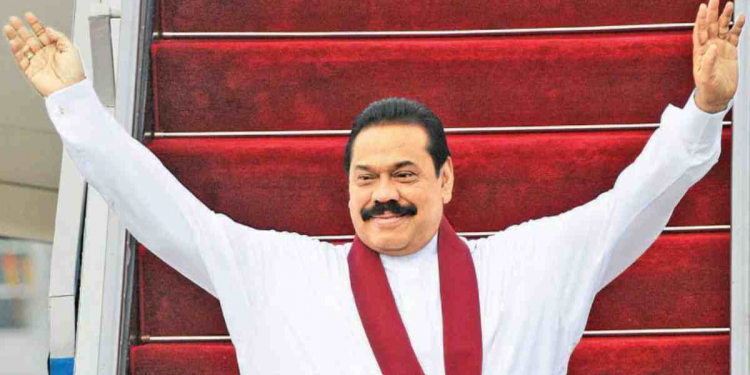
Former President Mahinda Rajapaksa has issued a statement addressing the sanctions imposed by the United Kingdom on former commanders of the Sri Lankan Armed Forces.
In his statement, Rajapaksa emphasizes that the allegations against these individuals remain unproven. He asserts, “It was I, as the Executive President of Sri Lanka at the time, who made the decision to wage war against the LTTE. The Sri Lankan Armed Forces merely carried out that decision.”
He further highlights the devastating toll of LTTE terrorism, stating, “The three decades of LTTE violence claimed the lives of 27,965 armed forces and police officers, as well as thousands of civilians, including political leaders. In 2009, Sri Lanka defeated an organization that had been officially designated as the world’s most dangerous terrorist group by the US FBI in 2008. It is also worth noting that the British government enacted special legislation in 2021 and 2023 to shield its own armed forces from legal persecution by various parties.”
Rajapaksa calls on the current Sri Lankan government to take a firm stance against foreign interventions targeting military personnel. “I expect the present government to stand up decisively against the persecution of our armed forces by foreign governments and organizations. These personnel have fulfilled their duty in safeguarding Sri Lanka’s national security,” he asserts.
Referring to the political climate following the war, Rajapaksa recalls an event that contradicts the narrative promoted by the British government. “A few months after the war ended, the wartime army commander contested the 2010 presidential election as the common opposition candidate. On January 6, 2010, the Tamil National Alliance (TNA) issued a statement urging Tamil voters to support him. He went on to secure over 60% of the votes cast in the Northern and Eastern provinces, which directly challenges the perspective being advanced by the UK government.”
Additionally, Rajapaksa criticizes the UK’s decision to sanction former LTTE leader-turned-politician Vinayagamoorthy Muralitharan, also known as Karuna Amman. “The decision to impose sanctions on Karuna Amman, who defected from the LTTE in 2004 and later embraced democratic politics, is clearly an attempt to appease the pro-LTTE Tamil diaspora by punishing anti-LTTE Tamils,” he concludes.