
It would not be wrong to say that the number 77 has been one of the most talked about numbers on political platforms and in Parliament on certain social media platforms in recent times.
Many socio-political topics are associated with 77, including the 77 revolution, the introduction of an open economy to the country in 77, the J.R. gaining 5/6 parliamentary power in 77, and the 77-year curse.
In such a context, 77 is coming to the fore again because the 77th National Independence Day (February 04) falls today.
Some political parties are talking about a 77-year curse, saying that the country has not been governed properly since the day it gained independence in 1948.
Responding to this, the main political parties that ruled the country say that the country developed gradually for 77 years, and it is unfair to blame the past 77 years based on a handful of incidents.
The political parties also point out that the country is rapidly developing while providing many services including free education and free health care to the general public.
What was the state of the Sri Lankan Parliament 77 years ago? The aim of this ‘Writing from the Gallery’ is to draw attention to the contribution made by the Sri Lankan Parliament when the country gained independence.
Although the country gained independence on 4th February 1948, the process of gaining independence from Britain had begun several years before that.
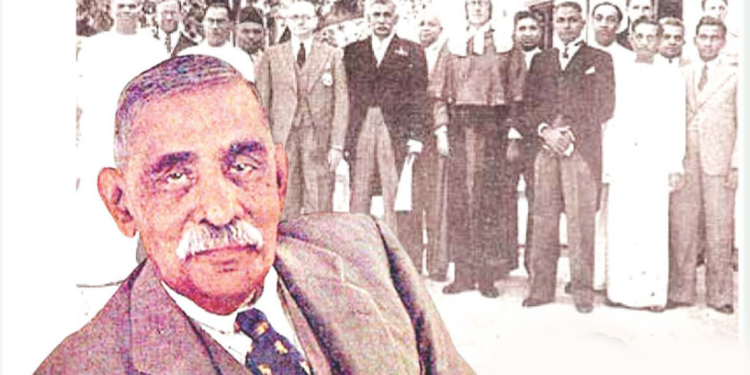
We should not forget that there were many national leaders, including politicians, who were dedicated to it. Among the national leaders who made a special commitment to it, the first Prime Minister of the country, His Excellency D.S. Senanayake, stands at the forefront.
His Excellency D.S. Senanayake is also known as the Father of the Nation because of the work he did for the independence of the country.
Before Sri Lanka gained independence in 1948, the country gained the right to vote under the Donoughmore Constitution in 1931. The legislature was then known as the State Council.
It consisted of 61 members, 50 of whom were elected from constituencies.
Eight members were nominated by the Governor.
Protests and agitations were held at that time demanding wider representation, and as a result, reforms were carried out to the Westminster model.
Sri Lanka gained independence on 4 February 1948. At that time, it consisted of a bicameral House of Representatives and a 30-member Upper House under the Soulbury Constitution.
95 members of the House of Representatives were elected, and 6 were nominated by the Governor-General.
The Governor-General nominated the 6 members on the advice of the Prime Minister. The House of Representatives appointed 15 members to the Upper House. The rest were appointed by the Governor-General on the advice of the Prime Minister.
In appointing the Senate, attention was paid to public service or professional and business capabilities. A separate chapter began to be written after the independence of this country because after independence in 1948, our country gradually began to function as an independent state.
Why do some people who talk about a 77-year curse also not talk about before 1948? It is better to have a dialogue with them to see how justified it is for them to talk about a curse after 1948.
After the country gained independence in 1948, special chapters began in every field. The first Governor-General of Sri Lanka was Sir Henry Monk-Mason Moore. He served as Governor-General from 4 February 1948 to 29 June 1949.
At the time of independence, the Prime Minister of Sri Lanka was His Excellency Don Stephen Senanayake, who is considered the father of independence. From 1947 to 1952, D.S. Senanayake held the post of Prime Minister.
The Council of State became the Parliament with the independence in 1948. Accordingly, the first Speaker of the Parliament was Sir Francis Molamure. Molamure held the post of Speaker of the Parliament from 14 October 1947 to 25 January 1951.
At the time of independence, the first Leader of the House of the Free Parliament was S.W.R.D. Bandaranaike.
From 26 September 1947 to 12 July 1951, Bandaranaike held the position of Leader of the House in Parliament.
The first Leader of the Opposition in the independent Parliament was Dr. N.M. Perera. From 1947 to 1952, Dr. N.M. Perera held the position of Leader of the House in Parliament.
When the country gained independence, the Secretary General of Parliament was Mr. R. St. L.P. Deraniyagala. Mr. Deraniyagala served as the Secretary of the House of Representatives from 01 July 1947 to 27 October 1964.
Although there are currently 225 people’s representatives in Parliament, there were only 101 members of Parliament when the country gained independence 77 years ago. The names of those 101 members of parliament and the constituencies they represented are mentioned below because those rare facts are important to many people.
It would not be wrong to say that the number 77 has been one of the most talked about numbers on political platforms and in Parliament on certain social media platforms in recent times.
Many socio-political topics are associated with 77, including the 77 revolution, the introduction of an open economy to the country in 77, the J.R. gaining 5/6 parliamentary power in 77, and the 77-year curse.
In such a context, 77 is coming to the fore again because the 77th National Independence Day (February 04) falls today.
Some political parties are talking about a 77-year curse, saying that the country has not been governed properly since the day it gained independence in 1948.
Responding to this, the main political parties that ruled the country say that the country developed gradually for 77 years, and it is unfair to blame the past 77 years based on a handful of incidents.
The political parties also point out that the country is rapidly developing while providing many services including free education and free health care to the general public.
What was the state of the Sri Lankan Parliament 77 years ago? The aim of this ‘Writing from the Gallery’ is to draw attention to the contribution made by the Sri Lankan Parliament when the country gained independence.
Although the country gained independence on 4th February 1948, the process of gaining independence from Britain had begun several years before that.
We should not forget that there were many national leaders, including politicians, who were dedicated to it.
Among the national leaders who made a special commitment to it, the first Prime Minister of the country, His Excellency D.S. Senanayake, stands at the forefront.
His Excellency D.S. Senanayake is also known as the Father of the Nation because of the work he did for the independence of the country.
Before Sri Lanka gained independence in 1948, the country gained the right to vote under the Donoughmore Constitution in 1931.
The legislature was then known as the State Council.
It consisted of 61 members, 50 of whom were elected from constituencies.
Eight members were nominated by the Governor.
Protests and agitations were held at that time demanding wider representation, and as a result, reforms were carried out to the Westminster model.
Sri Lanka gained independence on 4 February 1948. At that time, it consisted of a bicameral House of Representatives and a 30-member Upper House under the Soulbury Constitution.
95 members of the House of Representatives were elected, and 6 were nominated by the Governor-General.
The Governor-General nominated the 6 members on the advice of the Prime Minister.
The House of Representatives appointed 15 members to the Upper House. The rest were appointed by the Governor-General on the advice of the Prime Minister.
In appointing the Senate, attention was paid to public service or professional and business capabilities.
A separate chapter began to be written after the independence of this country because after independence in 1948, our country gradually began to function as an independent state.
Why do some people who talk about a 77-year curse also not talk about before 1948? It is better to have a dialogue with them to see how justified it is for them to talk about a curse after 1948.
After the country gained independence in 1948, special chapters began in every field.
The first Governor-General of Sri Lanka was Sir Henry Monk-Mason Moore. He served as Governor-General from 4 February 1948 to 29 June 1949.
At the time of independence, the Prime Minister of Sri Lanka was His Excellency Don Stephen Senanayake, who is considered the father of independence. From 1947 to 1952, D.S. Senanayake held the post of Prime Minister.
The Council of State became the Parliament with the independence in 1948. Accordingly, the first Speaker of the Parliament was Sir Francis Molamure. Molamure held the post of Speaker of the Parliament from 14 October 1947 to 25 January 1951.
At the time of independence, the first Leader of the House of the Free Parliament was S.W.R.D. Bandaranaike.
From 26 September 1947 to 12 July 1951, Bandaranaike held the position of Leader of the House in Parliament.
The first Leader of the Opposition in the independent Parliament was Dr. N.M. Perera. From 1947 to 1952, Dr. N.M. Perera held the position of Leader of the House in Parliament.
When the country gained independence, the Secretary General of Parliament was Mr. R. St. L.P. Deraniyagala. Mr. Deraniyagala served as the Secretary of the House of Representatives from 01 July 1947 to 27 October 1964.
Although there are currently 225 people’s representatives in Parliament, there were only 101 members of Parliament when the country gained independence 77 years ago. The names of those 101 members of parliament and the constituencies they represented are mentioned below because those rare facts are important to many people.
- H.D. Abeygunawardena – Matara
- Simon Abeywickrama – Baddegama
- A.R.A.M. Abubakar – Mathur
- C.E. Attygalle – Ratnapura
- M.D. Banda – Mathura
- S.W.R.D. Bandaranaike – Attanagalla
- P.L. Bauddsara – Polonnaruwa
- B.B. Bulankulam – Anuradhapura
- Somaweera Chandrasiri – Moratuwa
- S.J.V. Chelvanayagam – Kankesanthurai
- Wijayananda Dahanayake – Galle
- I.T. Dassanayake – Wariyapola
- Reginold A. De Mel – Colombo South
- Dr. Colvin R. De Silva – Wellawatte
- George E. De Silva – Kandy
- George R. De Silva – Colombo North
- P.H.W. De Silva – Ambalangoda – Balapitiya
- G.H.W. De Zoysa – Ambalangoda – Balapitiya
- M.M. Ibrahim – Pottuvil
- S.U. Edirimannasingham – Padiruppu
- M.J.J. Fernando – Chilaw
- W. Leo Fernando – Buttala
- D.S. Gunasekara – Udugama
- A.E. Gunasinghe – Central Colombo 1st MP
- Chamley de N. Gunawardena – Kalutara
- Politician E.N.N. Gration – Appointed MP
- N.H. Griping – Deposed MP
- D.B.R. Gunawardena – Kotte
- D.P.R. Gunawardena – Avissawella
- R.S.S. Gunawardena – Gampola
- Kavisena Herath – Nikaweratiya
- D.N. Hettiarachchi – Nivitigala
- I.M.R.E. Eriyagolla – Dandagamuwa
- M.U.M.S. Ismail – Puttalam
- T.B. Jaya – Central Colombo Second Member
- A.P. Jayasuriya – Horana
- J.R. Jayawardena – Kelaniya
- Major Montagu Jayawickrama – Weligama
- K. Kanagaratnam – Waddukkoda
- Vasalamudali M.S. Kariyapper – Kalmunai
- M.A.D.D. Karunaratne – Gampaha
- N.H. Keerthirathne – Kegalle
- P.G.B. Keenaman – Central Colombo Third Member
- J.C.T. Kotalawala – Badulla Second Member
- C.J.L. Kotalawala – Dodamgaslanda
- G. Kumarasiri – Hakmana
- V. Coomaraswamy – Chavakachcheri
- K. Coomaravelu – Kotagala
- S.H. Mahadivulwewa – Kalawewa
- J.A. Martinez – Appointed Member
- E.W. Mathew – Balangoda Second Member
- A.F. Molamure – Balangoda First Member
- G.R. Motha – Maskeliya
- K.V. Nadarajah – Bandarawela
- V. Nallaiah – Kalkuda
- V.T. Nanayakkara – Matale
- E.A. Nugawela – Kadugannawa First Member
- Major W. Oldfield – Appointed Member
- S.A. Peckman – Appointed Member
- T.B. Panabokke – Galaha
- M.N. Peiris – Panadura
- Dr. N.M. Perera – Ruwanwella
- R.A.A.R. Perera – Dehiowita
- W.A. Perera – Mathugama
- P.P.A.N. Peiris – Natthandiya
- T.B. Poholiyadda – Horowpothana
- G.G. Ponnambalam – Jaffna
- H.R.U. Premachandra – Kadugannawa Second Member
- K. Rajalingam – Nawalapitiya
- D.A. Rajapaksa – Beliatta
- Lakshman Rajapaksa – Hambantota
- T. Ramalingam – Pedro Point
- D. Ramanujam – Aluthnuwara
- J.A. Ramukpotha – Haputale
- H.M.B. Rambukwella – Minipe
- V.C.W. Ratnayake – Deniyaya
- R.W.M.A. Ratnayake – Wattegama
- H.L. Ratwatte – Mawanella
- D.M.F. Senanayake – Kiriella
- D.S. Senanayake – Mirigama
- Dudley Shelton Senanayake – Dedigama
- M. Senanayake – Medawachchiya
- R.G. Senanayake – Dambadeniya
- S.S.A. Silva – Agalawatte
- A. Sinnalebbe – Batticaloa
- H. De Z. Siriwardena – Mirigamuwa
- D. Sittampalam – Mannar
- S. Sivapalan – Trincomalee
- E.E. Spencer – Appointed Member
- Statesman Herbert Nissanka – Kurunegala
- T.B. Subasinghe – Bingiriya
- S.M.P. Subbaiah – Badulla First Member
- K.V.D. Sugathadasa – Welimada
- C. Sundaralingam – Vavuniya
- H.B. Thenne – Dambulla
- A.L. Thambiah – Kayts
- S. Thondaman – Nuwara Eliya
- C. Wanniasingham – Kopay
- P.V. Velupillai – Talawakele
- W.G.A. Wickramasinghe – Akuressa
Thank you to former Serjeant-at-Arms of Parliament, Mr. Vijaya Palliyaguru, for your assistance in obtaining this information.