
Legal Bodies Oppose President’s Proposal
Sajith and SJB Gear Up for Provincial Council Elections
Ranil’s Monday Meeting with Social Media Operators: A Move to Undermine SJB
SLC Excluded from ICC Meeting
The absence of Sergio Gor at the handover of a U.S.-donated coast guard vessel is being viewed as Washington’s first response to Colombo’s refusal to support a U.S.-backed UN General Assembly resolution endorsed by most regional powers.
Problem with the United States
On several occasions, through the inside politics column, we have reported a number of significant details regarding Sergio Gor, the special envoy of U.S. President Donald Trump and the United States Special Representative for South and Central Asia.
We first reported on Gor when President Anura Kumara Dissanayake travelled to New York to address the United Nations General Assembly. During that visit, Gor, acting as Trump’s special envoy, held a special discussion with President Anura. We also reported that during the meeting, Gor informed the President that he had the ability to establish contact with President Trump at any time.
Subsequently, we revealed details about Gor’s sudden visit to Sri Lanka. During that visit, after meeting the President at the Presidential Secretariat, Gor went directly to the East Terminal and West Terminal of the Colombo Port. There, he climbed the gantry cranes and observed the entire port as well as the Indian Ocean. Notably, no local media outlet reported this incident.
During his meeting with the President, Gor also informed him that the United States was prepared to provide Sri Lanka with a coast guard vessel and ten rescue helicopters. We reported this development through the inside politics column and further revealed that Gor was expected to personally visit Sri Lanka to participate in the ceremony at which the vessel and helicopters would be handed over. We noted that this would be a highly significant event in Sri Lanka–U.S. diplomatic relations.
As we reported, last Thursday the United States proceeded to hand over the coast guard vessel to Sri Lanka. Although the U.S. Embassy in Colombo had organised the event on a grand scale, with the President also in attendance, many observers immediately noticed a major absence.
Special envoy absent
That absence was none other than Sergio Gor, President Trump’s special envoy.
Why did Gor fail to attend despite having played a key role in arranging the transfer of the coast guard vessel and helicopters, and despite previously indicating that he would be present? What was the reason behind his absence?
Investigations by the Rajya Rahas column revealed that a major diplomatic issue lay behind Gor’s non-attendance. Since no media outlet has exposed this diplomatic dispute between Sri Lanka and the United States, we are now prepared to reveal the matter in full.
According to information available to us, Gor’s absence was linked to developments arising from the conflict between the United States and Iran.
Following Iran’s complete closure of the Strait of Hormuz, the United States submitted a special resolution to the United Nations Security Council several weeks ago seeking to reopen the vital shipping route.
Initially, it appeared that the resolution could be passed with relative ease. However, matters became complicated when China and Russia used their veto powers to defeat the U.S.-backed proposal in the Security Council.
Customarily, when a proposal is defeated in the Security Council, it must be taken to the United Nations General Assembly if it is to be adopted. Moreover, approval requires a two-thirds majority of member states.
Given the urgent need to reopen the Strait of Hormuz, the United States decided to submit the rejected proposal to the General Assembly. Accordingly, Washington prepared the resolution and planned to circulate it among all UN member states for endorsement.
Sri Lanka Says No
In South Asia, India was the first country to endorse the proposal. Bangladesh and Nepal subsequently followed suit.
Pakistan, however, declined to sign. Islamabad provided a reason that Washington considered reasonable. Pakistan explained that it was currently acting as a mediator in U.S.–Iran peace negotiations and that endorsing such a resolution could undermine its neutral role. The United States accepted this explanation and raised no objections.
What stood out most, however, was Sri Lanka’s refusal to support the proposal, despite even the region’s most influential countries having signed it.
Initially, the Sri Lankan Government delayed making its position public. During this period, both the U.S. Embassy in Colombo and the local UN office repeatedly reminded the Government to endorse the proposal.
When Sri Lanka continued to remain silent, the United Nations itself reportedly sent a formal letter to the Government and the Ministry of Foreign Affairs, stressing the seriousness of the matter.
Eventually, when the situation could no longer be ignored, Sri Lanka informed the relevant parties that it could not sign the proposal.
The reason given was that the resolution had been presented unilaterally without the participation of Iran.
Surprised and disappointed
According to information received by ‘Inside Politics‘, the Trump administration reacted with considerable surprise and disappointment upon learning of Sri Lanka’s position.
The first diplomatic signal allegedly sent by Washington in response was the decision not to have Sergio Gor attend the ceremony marking the handover of the U.S.-provided coast guard vessel.
As a result, diplomatic circles are now actively discussing whether Sri Lanka could face a number of serious challenges in the near future.
Evidence of this appeared quickly.
Last week, the United States proposed imposing an additional 12.5 per cent tariff on Sri Lanka.
According to the proposal, additional duties would be imposed on goods imported from sixty countries, including Sri Lanka, to combat products allegedly manufactured using forced labour.
The proposal followed an extensive investigation conducted by the Office of the United States Trade Representative (USTR). Washington accused sixty countries of failing to take sufficient measures to prevent goods produced through forced labour from entering global markets.
Under the proposal, countries including Canada, the European Union, Mexico, Pakistan, Bangladesh, Malaysia, Taiwan and the United Kingdom would face an additional 10 per cent tariff. The remaining forty-five countries, including Sri Lanka, would be subjected to an additional 12.5 per cent tariff.
Most Sri Lankan industries import raw materials from countries such as China and Russia. These materials are then widely used in the manufacture of garments.
Largest Export Market
Since the United States is Sri Lanka’s largest export market, the proposed additional 12.5 per cent tariff would inevitably have a major impact on the country’s apparel export sector.
American buyers would have to pay higher prices for Sri Lankan goods, which in turn would adversely affect export earnings and employment.
What makes the situation more significant is that the proposed 12.5 per cent tariff would come on top of the existing 20 per cent tariff already imposed on Sri Lankan goods.
Without Mahinda?
In recent years, when Sri Lanka faced difficulties arising from U.S. tariff policies, the individual who played the key role in reducing the impact was none other than Mahinda Samarasinghe, Sri Lanka’s Ambassador to the United States.
Although President Trump initially proposed a 44 per cent tariff on Sri Lankan goods, Mahinda Samarasinghe subsequently held discussions with Washington and succeeded in reducing the rate to 20 per cent.
After serving as a Member of Parliament following the 2019 General Election, Samarasinghe resigned from Parliament to accept the post of Ambassador to the United States at the request of then-President Gotabaya Rajapaksa.
During the COVID-19 crisis and the subsequent economic collapse that emerged during Gotabaya Rajapaksa’s administration, Samarasinghe played a significant role from Washington in helping Sri Lanka navigate the challenges.
As a result, even after Gotabaya was removed from power and Ranil Wickremesinghe became President through Parliament, Samarasinghe was retained as Ambassador.
Even President Anura Kumara Dissanayake, who recalled a large number of ambassadors after assuming office, decided to retain Samarasinghe due to the success of his diplomatic efforts.
At times, even powerful government ministers such as Wasantha Samarasinghe publicly belittled Mahinda Samarasinghe’s work. However, President Anura personally came to his defence in Parliament because of the effectiveness with which he had carried out his duties.
War Crimes
Furthermore, when Western countries sponsored resolutions against Sri Lanka at the UN Human Rights Council in Geneva on allegations of war crimes, Mahinda Samarasinghe—then serving as Foreign Minister—played a leading role in defeating one such resolution through a vote, a first in Sri Lankan history.
However, a new problem has now emerged.
Mahinda Samarasinghe has already submitted a letter to the President indicating his intention to resign as Ambassador to the United States.
According to the letter, he intends to step down and return to Sri Lanka by 31 July.
This has prompted growing concern over how the Government will manage future diplomatic crises after his departure and who will be appointed as his successor.
Final Mission
When Donald Trump last sought to impose a 44 per cent tariff on Sri Lanka, it was Mahinda Samarasinghe who succeeded in bringing that figure down to 20 per cent.
Although a verbal understanding had been reached with Washington, the process of converting it into a formal agreement had remained incomplete.
Bangladesh, despite experiencing political turmoil and the removal of its Prime Minister through a popular uprising, managed to negotiate with the United States and formalise its own tariff arrangements.
Sri Lanka, however, had continued to face delays because it was unwilling to accept certain conditions proposed by Washington.
According to information available to ‘Inside Politics‘ column, Mahinda Samarasinghe’s final major diplomatic mission has been to successfully conclude those negotiations and transform the understanding into a formal agreement.
Last week, he reportedly completed discussions with Washington and even secured dates for the signing of the relevant agreements.
Accordingly, the agreement is expected to be signed before 20 July.
Yet questions remain.
What will happen after Samarasinghe leaves office and returns home?
Who will lead discussions with the United States regarding the newly proposed 12.5 per cent tariff?
Will the new ambassador be able to negotiate reductions similar to those achieved by Samarasinghe?
If not, Sri Lanka could face a serious export crisis.
Many economists have already warned of the possibility of another economic downturn. Against such a backdrop, the imposition of a new Trump tariff could place an additional burden on the country, making it difficult to predict what direction Sri Lanka’s future might take.
The Door Closes on SLC
Last week, through the Inside Politics column, we revealed highly confidential details regarding a meeting between representatives of the International Cricket Council (ICC) and the President.
At the time, we reported that the Government intended to appoint an interim committee headed by Eran Wickramaratne and allow it to administer Sri Lankan cricket for a period of one year.
However, we also noted that the ICC was likely to insist that the interim arrangement be limited to three months.
As an example, we pointed out that when Bangladesh dissolved its cricket administration and appointed an interim committee, the ICC instructed the country to complete elections within three months.
We also revealed how two senior ICC officials had travelled to Sri Lanka and met the President at the JVP headquarters in Pelawatte, and how the discussions had taken on a somewhat tense atmosphere. At the time, we predicted that the ICC would announce its position on Sri Lanka within a matter of days.
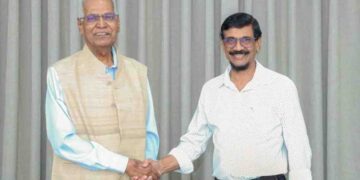
Exactly as reported, senior ICC officials met in Ahmedabad, India, on the day of the IPL final under the leadership of Jay Shah.
One particularly significant development was that neither the Bangladeshi nor the Sri Lankan cricket board presidents were invited to the meeting because both countries were operating under interim administrations.
Signal from ICC
Many observers interpreted this as a serious signal from the ICC to Sri Lanka.
Bangladesh has already assured the ICC that it will complete its cricket elections before 31 July.
Sri Lanka, however, has not yet given a similar commitment.
Under the present circumstances, many believe that Sri Lanka, like Bangladesh, will inevitably be compelled to hold elections within three months.
According to further information available to us, the Government is also quietly preparing for the possibility that the ICC will limit the tenure of the interim committee to three months.
Several rounds of discussions chaired by the President have reportedly taken place in recent days.
If the ICC orders elections within three months, discussions are already underway to field a team headed by Eran Wickramaratne in those elections.
Battle from the Courts
As one issue ends, the Government appears to be confronted by another.
The latest controversy emerged last week over the Government’s decision to extend the retirement age of the Chief Justice and other senior judges.
The issue became contentious following an incident on 1 June, when the President met representatives of the Judicial Officers’ Association and the High Court Judges’ Association.
Before the discussions commenced, the President reportedly informed judicial officers that he was firmly committed to extending the retirement age of senior judges, including the Chief Justice.
Sources indicate that Justice Minister Harshana Nanayakkara and Justice Ministry Secretary Ayesha Jinasena were not present when the President made the statement.
Officials representing the judicial associations reportedly offered no significant response at the time.
The first public figures to reveal that the President was considering such a move were opposition politicians and lawyers Sujeewa Senasinghe and Dayasiri Jayasekara.
Addressing Parliament, they alleged that the proposal could undermine judicial independence.
Dayasiri subsequently argued during opposition meetings that extending judges’ retirement ages should be opposed because it could create serious complications within the judiciary.
Initially, however, few appeared to take these warnings seriously.
That changed when media reports emerged revealing that the President had indeed made such remarks before meeting judicial officials.
Bar Association
Accordingly, the first institution to formally oppose the President’s proposal was the Bar Association of Sri Lanka (BASL), the country’s most influential legal body.
The BASL issued a special statement strongly condemning the proposal.
Following the BASL’s intervention, the main opposition party, the Samagi Jana Balawegaya (SJB), also released a statement sharply criticising the President’s actions.
Another significant development followed when the High Court Lawyers’ Association submitted a lengthy letter expressing its opposition to the move.
As a result, a serious controversy has now emerged within the legal community regarding the proposal.
Conflicts between the Executive and the judiciary are not unprecedented in Sri Lanka. Similar confrontations occurred during the administrations of former Presidents J.R. Jayewardene, Ranasinghe Premadasa, Chandrika Bandaranaike Kumaratunga, and Mahinda Rajapaksa.
In many cases, such conflicts ultimately contributed to political difficulties for the governments concerned.
Although it remains unclear what objective the President hopes to achieve by extending the retirement age of the Chief Justice and senior judges, current developments suggest that the proposal will not be implemented easily.
Recognising the seriousness of the matter, Opposition Leader Sajith Premadasa convened an urgent meeting last week.
He entrusted Sujeewa Senasinghe, Dayasiri Jayasekara, and Faiszer Musthapha with leading the parliamentary campaign against the proposal.
They were instructed to coordinate with other political parties and take the necessary steps to advance the issue within Parliament.
Worry for the Rajapaksas
Against this backdrop, the Government appears to have intensified its actions concerning members of the Rajapaksa family.
The first indication emerged last week when a court imposed overseas travel bans on former President Gotabaya Rajapaksa and two former military officers.
The decision reportedly stemmed from statements made by former Director of Intelligence Suresh Sallay, who is currently in custody in connection with investigations into the Easter Sunday attacks.
The travel ban caused significant concern among senior members of the Rajapaksa family.
At a meeting of leading family members last week, the travel restriction was reportedly viewed as a serious warning sign.
Discussions are said to have focused on the possibility that efforts may be underway to arrest Gotabaya Rajapaksa in the near future.
The travel ban came at a time when another prominent Rajapaksa family member, Basil Rajapaksa, was already facing arrest warrants issued by two courts.
Basil currently resides in Los Angeles, United States.
According to information available to Rajya Rahas, the Government has quietly begun discussions aimed at obtaining an international Red Notice against him.
If successful, authorities could seek his arrest in the United States and his return to Sri Lanka through international legal mechanisms.
Chamal Also Be Arrested?
Another rumour currently circulating in political circles suggests that preparations may also be underway to arrest Chamal Rajapaksa, the most senior member of the Rajapaksa family.
Several allegations have reportedly been levelled against him, and he has already been questioned by relevant authorities on multiple occasions.
As a result, discussions among the Rajapaksas last week reportedly focused on the possibility that several family members could face arrest in the coming weeks.
The family is also said to have held extensive discussions regarding legal representation and strategies to address any such developments.
Twig Given to Kutti
While the Government was taking action against the Rajapaksas and the Rajapaksas were launching political attacks against the Government, another curious development emerged last week. Former SLPP MP Tissa Kuttiarachchi, instead of concentrating his attacks on the Government, appeared to launch a campaign against the main opposition party, the SJB, and its leader, Sajith Premadasa.
In recent times, the SLPP has generally refrained from attacking the SJB or Sajith directly. There had been an unofficial understanding among opposition forces that they should unite against the Government. However, according to Inside Politics, Tissa Kuttiarachchi launched a particularly low and offensive attack against Sajith and the SJB, apparently under a contract intended to divide the opposition.
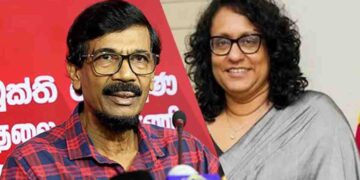
Among other remarks, he reportedly questioned whether Sajith was truly the son of former President Ranasinghe Premadasa. This was not the first occasion on which Kuttiarachchi had attracted criticism for controversial comments. While serving in Parliament, he had previously made remarks that were widely viewed as insulting toward MP Rohini Kaviratne and Sajith Premadasa’s wife, Jalani Premadasa.
Call with Ranil
According to information received by Inside Politics, Kuttiarachchi’s latest attack was not undertaken on his own initiative but rather at the request of former President Ranil Wickremesinghe and his associates. While Ranil was recovering in Singapore, Kuttiarachchi reportedly telephoned him through the phone of a close associate, spoke with him at length, wished him well, and expressed hope that he would once again become President and rescue the country.
At the same time, numerous complaints had already been made within the SLPP regarding Kuttiarachchi’s conduct. As a result, party leaders, including Namal Rajapaksa, had increasingly marginalised him and excluded him from major political activities. His claim that he would become an “unofficial president” once Namal became President had also generated considerable opposition within the party. Senior SLPP figures had reportedly even issued warnings instructing him to be more careful with his public statements.
Out of the SLPP?
Following Kuttiarachchi’s latest attack on Sajith Premadasa, the SJB responded immediately.
One of the first to react was Niroshan Padukka, who strongly condemned Kuttiarachchi’s remarks during a media briefing held at the Opposition Leader’s Office.
Padukka also referred to Kuttiarachchi’s political history while launching a strong counterattack.
In addition, specialist doctor Chamal Sanjeewa held a separate press conference condemning Kuttiarachchi’s statements.
The controversy soon began affecting the SLPP itself.
Consequently, Namal Rajapaksa convened a special meeting and made it clear that the SLPP’s battle was against the Government, not against the SJB.
He warned party members, particularly Kuttiarachchi, against launching unnecessary attacks on Sajith or the SJB.
This intervention followed repeated complaints from senior party figures, who argued that Kuttiarachchi’s statements were damaging the party’s public image and creating unnecessary divisions within the opposition.
Some even suggested that he was acting on behalf of external interests. As a result, senior SLPP members reportedly concluded that Kuttiarachchi was causing serious harm to the party and that disciplinary action was necessary.
According to information available to Inside Politics, a decision has now been taken to expel him from the SLPP.
Only Thing Ranil Is Doing
After returning from Singapore following heart surgery, UNP leader Ranil Wickremesinghe has been resting at his residence on Fifth Lane.
However, he has reportedly continued meeting various politicians and engaging in political manoeuvring.
As we revealed last week, one such move involved inviting former Minister Wimal Weerawansa to his residence.
In addition, Ranil is said to be meeting social media operators and directing campaigns against the SJB and Sajith Premadasa in an effort to create internal divisions within the opposition.
Rather than focusing on rebuilding the UNP, which many argue has weakened considerably during his 32-year leadership, Ranil is allegedly devoting much of his energy to undermining the SJB.
According to the column, he has entrusted these social media operations to two relatives whose identities are known to inside politics but are not being disclosed.
Every Monday, Ranil reportedly meets this social media team along with the two relatives.
During these meetings, he allegedly instructs them on how to attack Sajith and the SJB throughout the week.
Topics promoted online reportedly include narratives such as:
- “Crisis within the SJB”
- “Conflict between Sajith and Harsha”
- “Champika as the common candidate”
- “Harsha to become UNP leader”
According to the column, these themes are disseminated on social media, per Ranil’s guidance.
Sujeewa–Ranil Meeting
Ranil Wickremesinghe is also said to be using politicians who visit him to enquire about his health as part of his social media strategy.
According to the instructions allegedly given to his media team, any SJB or opposition MPs who visit him should be portrayed as individuals moving closer to Ranil politically.
A good example, according to Inside Politics, was Sujeewa Senasinghe’s recent visit.
Before visiting Ranil, Sujeewa reportedly met Sajith Premadasa and informed him that he intended to visit the former President and inquire about his health.
Sajith immediately responded that there was no issue and encouraged him to do so.
According to the column, the discussion between Sujeewa and Ranil lasted only about five minutes.
After exchanging greetings and discussing Ranil’s recovery, Ranil reportedly told Sujeewa that he was now in good health.
As Sujeewa prepared to leave, Ranil is said to have asked:
“So, what is happening with the effort to bring the two parties together?”
Smiling, Sujeewa reportedly replied:
“Oh, Sir, why don’t you simply speak to Sajith yourself and settle the matter?”
After leaving Ranil’s residence, Sujeewa reportedly went directly to meet Sajith and briefed him on everything that had been discussed.
However, shortly afterwards, social media accounts linked to Ranil allegedly began publishing posts suggesting that Sujeewa had met Ranil to offer him political support.
Sajith Assigns New Responsibilities
While the Government and Ranil’s camp were engaged in various political operations, Opposition Leader Sajith Premadasa spent last week assigning several important responsibilities to members of his parliamentary group.
The first assignment involved the campaign against the proposal to extend the retirement age of the Chief Justice and Supreme Court judges.
This task was entrusted to Sujeewa Senasinghe and Dayasiri Jayasekara.
Sajith also established a separate committee tasked with exposing alleged irregularities within the Government.
The leadership of this committee was assigned to Mujibur Rahman.
In addition, Sajith directed S.M. Marikkar to continue investigating and exposing issues relating to the controversial importation of allegedly substandard coal, a matter that has recently generated considerable public attention.
This decision was reportedly influenced by information provided by experts in the power sector warning of the possibility of a serious energy crisis in the future.
Furthermore, Sajith met representatives of civil society organisations last week to discuss launching a broader campaign against the Government.
The Government Bends
An interesting development occurred during last week’s meeting of party leaders in Parliament.
For a long time, Government representatives had generally dominated such meetings and adopted a rigid approach toward opposition proposals.
This time, however, events unfolded differently.
Senior ministers including Bimal Rathnayake and Wasantha Samarasinghe attended on behalf of the Government, while Sajith Premadasa and other opposition leaders represented the opposition.
During the meeting, Sajith first raised concerns regarding a proposed environmental law that has reportedly attracted strong opposition from environmental organisations.
He urged the Government to postpone the legislation until the concerns raised by environmental groups could be addressed.
Generally, such a request might have triggered a confrontation.
Instead, the Government agreed to postpone the proposed legislation until its contentious issues could be resolved through discussion.
Another notable development occurred when the opposition requested a parliamentary debate on the emerging economic difficulties facing the country.
Following the discussion, the government agreed to the request.
Observers noted that the Government appeared considerably more flexible and conciliatory toward the opposition than it had been in the past.
A New Provincial Council Campaign
Last week, Sajith Premadasa also held a special meeting at the Opposition Leader’s Office involving former Provincial Council members from across the country.
What made the meeting particularly noteworthy was that it included not only former Provincial Council members affiliated with the SJB but also some who remained associated with the UNP.
Even Sajith reportedly expressed surprise at the level of participation.
According to those present, they told Sajith that regardless of whether the UNP formally joined forces with the SJB, they were prepared to contest future Provincial Council elections alongside the SJB.
As a result, Sajith has reportedly decided to launch a new campaign calling for Provincial Council elections while seeking to unite the various opposition parties around that effort.
A New Archbishop Is Coming
Several months ago, through the inside politics column, we revealed details of Cardinal Malcolm Ranjith’s visit to the Vatican, where he met Pope Leo and requested an extension of his tenure.
We also reported that the Pope had declined the request, explaining the established practice that archbishops retire after reaching the age of 75.
At the same meeting, the Pope reportedly asked Cardinal Malcolm Ranjith to submit three names for consideration as his successor.
Now, Pope Leo has summoned cardinals from around the world to the Vatican on the 26th and 27th of this month.
A total of 237 cardinals are expected to attend, and several important matters are scheduled to be discussed.
According to information available to us, Cardinal Malcolm Ranjith also plans to attend the gathering.
During the visit, he is expected to submit three new names to the Pope for consideration as the next Archbishop.
Unofficial reports suggest that among the names likely to be considered is that of the Auxiliary Archbishop of Colombo, although the article provided to us ends at this point and does not contain the remainder of the paragraph.