The International Monetary Fund (IMF) has recommended that Sri Lanka’s central bank shift to a single policy rate, focusing on the midpoint of the policy corridor as part of broader measures to control inflation. This suggestion is part of a technical assistance report, aiming to strengthen monetary policy signaling and improve market rate guidance.
The report comes amid ongoing concerns about inflationary policies, which have led to significant economic challenges, including currency depreciation. The central bank’s previous decisions have driven millions of Sri Lankans to seek employment abroad, particularly in stable regions like the Middle East.
Policy Adjustments and Market Influence
The IMF emphasized the need for the Central Bank of Sri Lanka (CBSL) to adopt a single policy rate. According to the report, doing so would improve communication and clarity regarding the monetary policy stance. The move is expected to steer market rates more effectively and restore control over domestic interest rates, which have weakened following the recent economic crisis.
The recommendation also follows IMF-imposed foreign reserve targets under the current assistance program. Meanwhile, macroeconomists have influenced policy changes under the new Central Bank Act, allowing for inflation levels between 5-7%, despite public expectations for tighter inflation control.
The IMF’s report advises against using restrictions on access to standing facilities, warning that liberal access could lead to reckless lending practices. Such liquidity operations have the potential to destabilize the country’s external sector and deepen its financial vulnerabilities.
Liquidity Challenges and Mid-Corridor Targeting
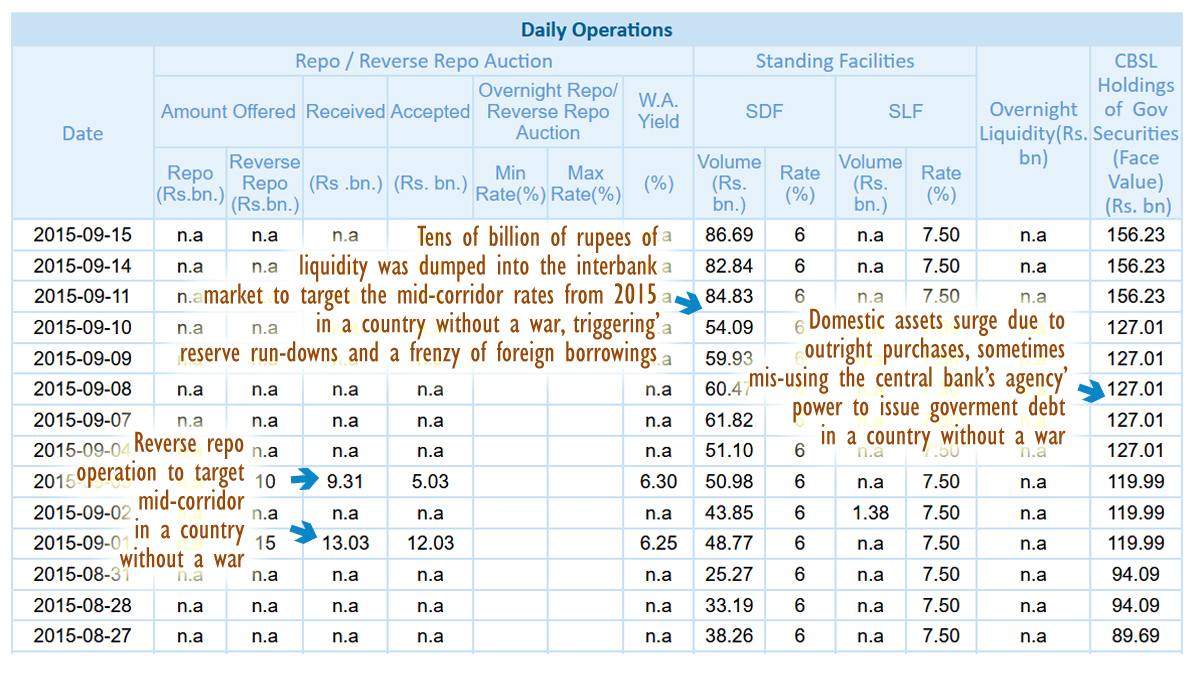
A key component of the IMF’s advice is the management of liquidity through open market operations (OMOs). The report urges the central bank to align the interbank rate with the midpoint of the policy corridor to avoid excessive volatility in interest rates.
However, this recommendation comes with its own set of challenges. Analysts have criticized the CBSL for triggering previous currency crises by injecting excess liquidity to maintain a mid-corridor rate. These actions, particularly during the 2015-2018 period, led to a significant depreciation of the Sri Lankan rupee, escalating energy and food prices, and undermining the economic agenda of the former Yahapalana government.
Restoring Monetary Transmission
The IMF report acknowledges the weakened state of Sri Lanka’s monetary transmission mechanism, citing the debt restructuring process, financial instability, and operational issues within the central bank. These factors have diminished the CBSL’s ability to control domestic interest rates effectively, contributing to the country’s repeated currency crises from 2015 to 2022.
Despite these setbacks, Sri Lanka’s economy has shown signs of recovery, with market rates playing a critical role in stabilizing the currency. However, the path to sustainable economic stability remains uncertain, with high nominal rates continuing to erode fiscal health.
In conclusion, while the IMF’s recommendations provide a roadmap for monetary reform, the central bank’s ability to implement these changes effectively will determine whether Sri Lanka can avoid further financial turbulence. The focus on a single policy rate and mid-corridor targeting, if executed correctly, may help restore confidence in the country’s economic future.