
New Delhi, India — In early July, Indian Prime Minister Narendra Modi praised Russia as New Delhi’s “trusted ally” and “all-weather friend” during a visit to Moscow, highlighting the decades-long strategic partnership between the two nations.
However, this relationship is now under scrutiny following reports that Ukrainian forces are using Indian ammunition in the ongoing Russia-Ukraine war. An investigation by Reuters revealed that Indian artillery shells, initially purchased by Italy and the Czech Republic, have found their way to Ukraine. Recent battlefield images have surfaced showing Ukrainian troops using Indian-made ammunition to counter Russian forces.
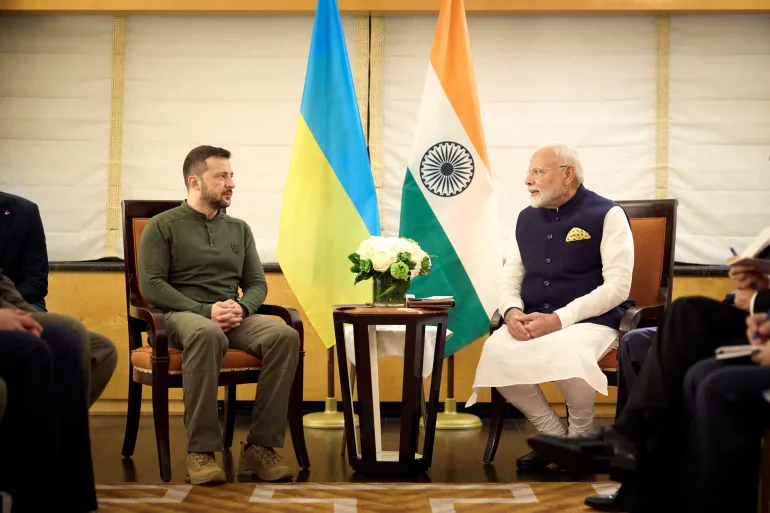
In parallel, Modi has engaged in several high-profile meetings with Ukrainian President Volodymyr Zelenskyy, beginning in June in Tokyo, followed by a historic visit to Kyiv in August, and most recently during the United Nations General Assembly in New York.
India’s Ministry of External Affairs spokesperson, Randhir Jaiswal, dismissed reports of Indian ammunition being used in Ukraine as “speculative and mischievous.” He emphasized that India had not violated any regulations but did not directly deny the possibility of Indian shells being part of Ukraine’s arsenal.
Russia, however, appears unconvinced. Russian officials are questioning whether India has ensured that buyers of its arms have prevented their transfer to Ukraine. “There is ample proof of Indian artillery shells being used by Ukrainian forces,” a Russian official told Al Jazeera, citing end-user agreements that require military exports to be tracked. “Show us proof that India followed up with Italy or Czechia regarding how the shells ended up in Ukraine,” he added, speaking anonymously.
While India may not have intended for its ammunition to reach Ukraine, this would not be the first time Indian arms have surfaced in international conflicts. In June, reports indicated that rockets and explosives made by Indian companies were being used in Israel’s conflict with Gaza, which has claimed over 41,000 lives.
Waheguru Pal Singh Sidhu, a professor at New York University’s Center for Global Affairs, pointed out that this isn’t unprecedented. “During the apartheid era, British-made Centurion tanks belonging to India, sent for upgrades, ended up in South Africa,” Sidhu explained.
Some analysts believe India is navigating this situation carefully, aware that its defense exports may not always be used as intended by importers. As India develops its defense industry and boosts arms exports—reaching $3 billion between 2018 and 2023—its global reach has grown. Notably, exports by Munitions India, Yantra, and Kalyani Strategic Systems to Italy and the Czech Republic surged from $2.8 million to $135.24 million between 2022 and 2024, bolstered by the Ukraine war.
“India will increasingly face the reality that arms buyers don’t always follow the exporter’s guidelines and sometimes may even violate restrictions,” said Christopher Clary, an assistant professor at the University at Albany, State University of New York.
Interestingly, there are also reports that Indian electronics sold to Russia are being used for military purposes. Sidhu compared India’s position to that of Milo Minderbinder, the fictional character from Catch-22 who profited by supplying both sides of a conflict. “India seems to be an equal opportunity supplier,” Sidhu noted.
Impact on India-Russia Relations
Despite the potential friction, some experts believe that India’s strategic ties with Russia, deeply rooted in their Cold War-era cooperation, will not face significant disruption. Even as New Delhi has reduced its military dependence on Moscow, two-thirds of India’s defense imports over the past two decades have come from Russia.
Estimates suggest that Indian shells account for only about 1 percent of Ukraine’s ammunition needs. “Given the relatively small quantity of Indian ammunition in the Ukraine conflict, any strain on India’s foreign relations, including with Russia, will likely be modest and manageable,” Clary said.
However, Russian officials seem to view the situation with more concern. One official pointed out that after Modi’s August trip to Kyiv, he promptly updated U.S. President Joe Biden but did not call Russian President Vladimir Putin. Instead, Putin had to initiate the call to Modi, signaling a potential shift in diplomatic dynamics.
As India walks a fine line in the global arms trade, its balancing act between longstanding allies and new strategic interests will continue to shape its foreign policy.