First Torpedo Strike Since World War II Rocks the Indian Ocean
Sri Lanka Pulled Into the Storm as US–Iran War Reaches Its Waters
‘Hunduwe’ Firestorm: President Dragged Into Explosive New Controversy
The Deeper Fault Lines of the China–Sri Lanka Rift
Three Iranian Ships Arrive
A week has now passed since the outbreak of war between the United States and Iran, one of the Middle East’s most powerful states. During this week, the United States, acting in concert with Israel, launched a massive aerial assault on Iran. Tehran has responded in kind, striking not only Israel but also American military installations across the Middle East — including bases in Bahrain, Qatar, Saudi Arabia, Jordan, Iraq and Dubai.
The rapid escalation has inflicted heavy losses on both sides, with significant damage to life and property reported throughout the region. In one of the most dramatic developments of the conflict, American and Israeli strikes reportedly succeeded in killing Iran’s Supreme Leader, Ayatollah Ali Khamenei, along with several members of his family.
Yet, even before the opening salvos of this conflict, a series of intriguing developments involving Sri Lanka and the United States had quietly unfolded.
Delhi Summit
The first occurred when President Anura Kumara Dissanayake attended an international summit on artificial intelligence in New Delhi. On the sidelines of the event, he held a special meeting with Sergio Gor, the U.S. Assistant Secretary of State responsible for South and Central Asia under President Donald Trump. While the Sri Lankan leader was engaged in discussions with the American official in India, another notable development was taking place simultaneously in the region.
Steve Koehler, the commander of the United States Pacific Fleet in the Indo-Pacific, made an unexpected visit to Sri Lanka. During his trip, he held a series of discussions with senior Sri Lankan officials. With the United States launching its strikes on Iran only a few days after these meetings and visits, many observers have begun to speculate whether there might have been a broader strategic context linking these developments to the unfolding conflict.
Within days of the war’s outbreak, Sri Lanka found itself drawn into the wider drama in an unexpected way. An Iranian naval vessel — the IRIS Dena — sank roughly 19 nautical miles south of Sri Lanka’s southern coast.
The ship had been returning to Iran after participating in a naval and security conference in Visakhapatnam, India, which it had attended at the invitation of the Indian government. The gathering brought together a large number of naval vessels representing several countries. Following the conclusion of the conference, the IRIS Dena was sailing back toward Iran through Sri Lanka’s Exclusive Economic Zone. Reports indicated that approximately 180 sailors were aboard the vessel.
Although initial reports focused on two Iranian ships connected to the visit, it later emerged that, in fact, three vessels had travelled from Iran to India for the event.
And it is here that the story begins to take a far more intriguing turn.
Hit by a Torpedo
When reports first emerged that an Iranian naval vessel had come under attack, both the Sri Lanka Navy and Air Force were immediately mobilised and dispatched to the area. However, by the time they reached the location, no ship was visible. What they did find instead were the bodies of more than 80 sailors floating in the waters.
By that stage, the vessel had already sunk beneath the sea. The surviving sailors, along with the recovered bodies, were transported by security forces to the Karapitiya Hospital in Galle.
But the real controversy began while the rescue operation was still underway.
The international news agency Reuters reported that the Iranian vessel had been sunk by an American submarine strike. Soon afterwards, several international media outlets — followed by local Sri Lankan media — began reporting that the incident was not a naval accident but the result of a deliberate attack by the United States.
Striking twist
Yet, in a striking twist, when the Sri Lanka Navy later held a press briefing to update the media on the situation, naval officials publicly rejected the claim. Responding to questions from journalists, they insisted that no such attack had been confirmed and that by the time Sri Lankan forces reached the area, the ship had already gone down.
However, only a few hours after this denial, the narrative shifted dramatically.
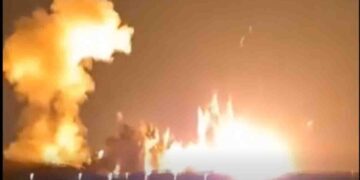
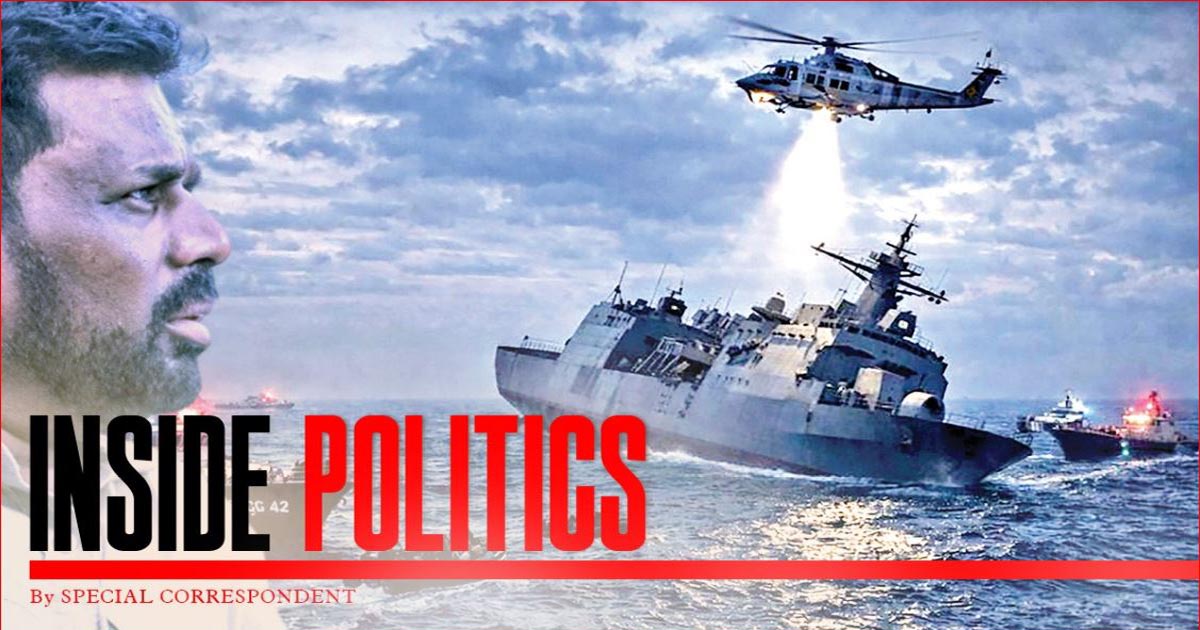
The United States Secretary of Defense, Pete Hegseth, issued an official statement confirming that an Iranian naval vessel had indeed been targeted by a U.S. submarine strike in the Indian Ocean. According to the statement, the attack involved the use of torpedoes. Media reports later described the incident as the first time since the Second World War that a vessel had been sunk using torpedoes in a modern naval confrontation.
The repercussions of the strike immediately placed both Sri Lanka and India in an extremely delicate position.
India dragged
India found itself drawn into the controversy because the Iranian vessels had travelled to the country at New Delhi’s invitation to participate in a naval security conference in Visakhapatnam. Some reports even suggested that the attack might have been launched after the ship departed from an Indian port, prompting speculation that Indian territory had been used in the operation.
India moved swiftly to deny the allegation. In an official statement, New Delhi stressed that no Indian territory had been used to launch any attack against the Iranian vessel.
Sri Lanka, meanwhile, was drawn into the unfolding crisis in a different way.
Another Iranian naval vessel, which had also travelled to India for the same conference, remained in waters close to Sri Lanka and requested permission to enter the Port of Colombo. Fearing that it too could become a target following the attack on the first vessel, the ship had stopped within Sri Lanka’s Exclusive Economic Zone.
Reports indicated that more than 200 sailors were aboard.
Sri Lanka suddenly found itself facing a difficult decision: whether to allow the vessel to enter the Port of Colombo or deny it access. Discussions between relevant authorities began almost immediately as the government grappled with the implications of whichever decision it might take.
The First Call Came at 5:08 a.m.
The first message informing Sri Lankan authorities of the naval emergency arrived at the Ministry of Foreign Affairs at 5:08 a.m. last Wednesday (March 4). A distress signal had been received by the country’s security apparatus, prompting urgent discussions among senior officials on how the situation should be handled.
A special National Security Council meeting was convened later that morning under the chairmanship of President Anura Kumara Dissanayake. After reviewing the circumstances, the authorities initially decided to treat the situation as an emergency humanitarian matter.
The plan was to bring only the sailors ashore to Sri Lanka without taking responsibility for the vessel itself. Under this proposal, the Iranian crew would be transported to Sri Lanka by special naval boats without requiring immigration or customs clearance procedures.
However, Iran quickly communicated its position through both the ship and the Iranian Embassy in Colombo.
Tehran insisted that the sailors must not abandon their vessel. Iranian authorities made it clear that the crew should only travel to a Sri Lankan port if the ship itself was allowed to accompany them. According to the message relayed to Colombo, no Iranian sailor would leave the vessel behind.
At the same time, comments made by former minister Wimal Weerawansa during a media briefing drew considerable public attention. He warned that if one Iranian vessel had already been destroyed by an American torpedo strike, bringing another Iranian ship close to Sri Lanka’s coast could create the risk of a similar attack.
Should such an incident occur within Sri Lanka’s maritime vicinity, he cautioned, the consequences could be extremely serious.
Weerawansa’s claim
Whether Weerawansa’s claim was accurate or not remained unclear. Yet notably, no official authority moved to publicly refute his statement.
By Wednesday afternoon, Sri Lanka had decided to proceed with the earlier plan — bringing only the sailors ashore without the vessel.
Naval ships, including the SLNS Nandimithra and two additional vessels, sailed from Colombo Harbour toward the Iranian ship that was anchored about 19 nautical miles away. Their mission was to bring back the 208 personnel on board — including 53 officers, 48 senior sailors, 23 sailors and 84 cadets.
Sri Lankan naval personnel began transferring the Iranian crew members onto their vessels as soon as they arrived.
But the operation was halted almost as soon as it began.
A sudden message from Tehran reached the Iranian ship. It instructed the sailors not to leave their vessel unless it too was permitted to sail into the Port of Colombo. Without that assurance, they were told not to abandon the ship and travel with the Sri Lankan Navy.
Upon receiving the order, the Iranian sailors who had already begun boarding the Sri Lankan ships turned back and returned to their own vessel.
Sri Lankan naval officers suddenly found themselves in a deeply awkward position, unable to proceed with the mission they had been assigned.
After informing their superiors of the situation, the vessels — including Nandimithra — were forced to return to Colombo Harbour empty-handed.
Iran Takes a Firm Stand
While this drama was unfolding at sea, the same message from Tehran had simultaneously reached officials at the Iranian Embassy in Colombo. They too were instructed to urgently reopen discussions with the Sri Lankan government and insist that Iranian sailors would not travel to Colombo without their vessel.
Iranian diplomats quickly conveyed the message to Sri Lanka’s Ministry of Foreign Affairs and senior government officials.
Foreign Minister Vijitha Herath subsequently briefed the President on the development, and discussions were initiated with several Middle Eastern countries, including Iran and Saudi Arabia.
Given the rapidly evolving situation, Sri Lanka’s authorities convened yet another emergency security council meeting.
According to information reaching the Inside politics column through unofficial channels, Iranian officials themselves were involved in the discussions. There are also indications — though not yet confirmed — that American representatives may have been informally linked to the consultations.
After lengthy deliberations covering international conventions, maritime law and Sri Lanka’s own legal obligations, the government finally reached a compromise.
Sri Lanka would allow not only the Iranian sailors but also the vessel itself to enter its maritime zone.
However, a key condition was imposed.
Only the Iranian sailors would be brought ashore to the Port of Colombo. The Iranian vessel itself would not be allowed to enter Colombo Harbour but would instead be directed toward the Port of Trincomalee.
The decision suggested that Sri Lankan authorities were mindful of the potential security risks that could arise if the ship were brought directly into Colombo. In many ways, the government’s cautious approach appeared to echo the very concerns raised earlier by Wimal Weerawansa.
Even then, according to sources familiar with the discussions, the plan was to keep the Iranian vessel anchored off the coast near Trincomalee rather than allowing it to dock inside the harbour.
Three Iranian Ships and Sri Lanka’s Strategic Dilemma
A week has now passed since the war between the United States and Iran — one of the most powerful nations in the Middle East — erupted into open confrontation.
During this short span of time, the United States, acting together with Israel, launched massive air strikes against Iran. Tehran responded swiftly and forcefully, targeting Israel as well as American military installations across the Middle East, including bases in Bahrain, Qatar, Saudi Arabia, Jordan, Iraq and even Dubai.
The exchange of attacks has resulted in heavy casualties and extensive damage on both sides within a matter of days. Among the most dramatic developments was the reported killing of Iran’s Supreme Leader, Ayatollah Ali Khamenei, along with several members of his family, in strikes carried out by the United States and Israel.
Yet, even before the conflict escalated, a series of developments involving Sri Lanka and the United States had quietly taken place.
The first occurred when President Anura Kumara Dissanayake, while attending an Artificial Intelligence summit in New Delhi, held a special meeting with Sergio Gor, the U.S. Assistant Secretary of State responsible for South and Central Asian Affairs under President Donald Trump’s administration.
At almost the same time, the Commander of the United States Pacific Fleet in the Asia-Pacific region, Admiral Steve Koehler, made an unexpected visit to Sri Lanka. During this visit, he engaged in a series of discussions with senior Sri Lankan officials.
Within days of these diplomatic interactions, the United States launched its attacks on Iran. Unsurprisingly, this sequence of events has raised questions among observers about whether these meetings and visits had any indirect connection to the unfolding conflict with Iran.
The Sinking of an Iranian Vessel
Sri Lanka soon found itself directly linked to the crisis.
A few days after the war began, the Iranian naval vessel IRIS Dena sank approximately 19 nautical miles south of Sri Lanka. The ship had been returning to Iran after participating in a naval security conference held in Visakhapatnam, India, at the invitation of the Indian government.
The conference had drawn numerous naval vessels representing several countries. Following the event, the IRIS Dena had been travelling through Sri Lanka’s Exclusive Economic Zone on its return journey to Iran. Reports indicated that around 180 sailors were on board.
Although early reports referred to only two Iranian vessels operating in the area, it has since emerged that three Iranian ships had actually travelled from Iran to India for the conference.
The “Hunduwe” Controversy
Meanwhile, President Anura Kumara Dissanayake addressed Parliament on Wednesday to brief lawmakers on the rapidly evolving Middle Eastern crisis.
During his speech, the President explained a number of risks that could arise from the conflict. However, public attention quickly shifted away from the substance of his remarks and focused instead on a controversial phrase he used during the address.
At one point in the speech, the President remarked, “Are these even countries? These are ‘Hunduwe’.”
The term immediately went viral on social media, sparking widespread debate. Critics accused the President of insulting sovereign nations, while supporters argued the remark had been taken out of context.
But beyond this controversy, another striking development emerged from the parliamentary debate.
In previous years, when the United States carried out military actions in places such as Palestine, Gaza, Iraq, Venezuela and Cuba, leaders of the Janatha Vimukthi Peramuna (JVP) — including Bimal Rathnayake, Vijitha Herath and Nalinda Jayatissa — had staged protests outside the U.S. Embassy in Colombo.
This time, however, there was no such condemnation.
Neither the President nor senior members of the ruling movement directly denounced the American attack on Iran. Instead, the President limited himself to a general statement that no country has the right to wage war in a manner that violates another state’s sovereignty.
Opposition Takes a Different Line
Opposition Leader Sajith Premadasa took a markedly different approach.
In his speech to Parliament, he strongly condemned the American strikes on Iran. At the same time, he also criticized Iran’s retaliatory attacks on other Middle Eastern countries, stressing that both sides had contributed to the escalation of violence.
Another notable moment came when Sri Lanka Muslim Congress leader Rauff Hakeem questioned Foreign Minister Vijitha Herath regarding the government’s position on the killing of Ayatollah Khamenei.
Herath’s response was noticeably restrained. He stated that he would not provide answers merely to satisfy Hakeem’s expectations, offering little clarity on the government’s stance.
This response only deepened speculation among political observers.
For decades, the JVP maintained a strong anti-imperialist position, often sharply critical of U.S. foreign policy. Yet as Washington carried out major attacks on Iran, the government led by figures associated with that tradition appeared reluctant to issue any direct condemnation.
The question many are now asking is whether some form of quiet strategic understanding may be emerging between Sri Lanka’s current leadership and the United States.
Two Weeks Earlier: Praise for Iran
Another intriguing contradiction lies in the government’s posture just weeks before the conflict erupted.
Only two weeks earlier, Sri Lanka had expressed warm diplomatic sentiments toward Iran during celebrations marking the anniversary of the Islamic Republic held in Colombo.
The event, organized by the Iranian Embassy, took place at the ITC Ratnadipa Hotel at Galle Face and was attended by senior government officials, opposition figures, military commanders and other dignitaries.
Representing the Sri Lankan government was Health Minister Nalinda Jayatissa.
During the ceremony, the Iranian ambassador delivered a strongly worded speech condemning U.S. policies toward Iran and warning against possible military actions targeting the country. His remarks were widely interpreted as provocative and critical of Washington.
All eyes then turned to Minister Jayatissa.
Would he align with Iran’s position, or attempt to strike a diplomatic balance?
In his speech — delivered in English — Jayatissa chose to warmly thank Iran for its longstanding support to Sri Lanka.
He highlighted the Uma Oya multipurpose development project, funded by Iran, noting that it had significantly strengthened Sri Lanka’s irrigation sector. He also acknowledged Iran’s role as a supplier of fertilizer and as an important buyer of Sri Lankan tea, emphasizing the economic benefits these relationships bring.
The minister’s remarks amounted to a clear expression of gratitude toward Iran, with no suggestion that Sri Lanka intended to curtail its economic ties with Tehran — despite mounting pressure from the United States.
It is widely believed that these diplomatic signals did not go unnoticed in Washington.
Some analysts now warn that this could complicate ongoing tariff negotiations between Sri Lanka and the United States. Should Colombo maintain a firm position in those discussions, Sri Lanka’s export sector could face serious challenges.
Opposition Closes Ranks
Amid the growing geopolitical tensions, Opposition Leader Sajith Premadasa convened a meeting of opposition party leaders and MPs at his parliamentary office on Tuesday morning.
The discussion, which lasted nearly an hour, focused on the Middle Eastern crisis and its implications for Sri Lanka.
Participants agreed that the opposition should adopt a balanced position — condemning not only the American strikes on Iran but also Iran’s attacks on other countries in the region.
They also argued that the unilateral assault on Iran violated several provisions of the United Nations Charter, as Iran is a sovereign nation.
The opposition further decided to appoint an expert committee to study the crisis and prepare a report on its implications.
Premadasa subsequently voiced these concerns in Parliament and later visited the Iranian Embassy in Colombo to express condolences to the families of those killed in the attacks. He became the first Sri Lankan party leader to meet the Iranian ambassador after the strikes.
Plans were also made to stage a protest outside the U.S. Embassy in Colombo.
In a remarkable development, the Iranian ambassador himself appeared at the protest alongside former MP Mujibur Rahman.
War Clouds Over Sri Lanka’s Economy
Meanwhile, the escalating conflict in the Middle East is beginning to produce economic ripple effects.
Mediterranean Shipping Company (MSC), one of the world’s largest shipping firms, has announced the introduction of a “war risk surcharge” on cargo transported from the Indian subcontinent — including Sri Lanka, India, Pakistan and Bangladesh — to Africa and island nations in the Indian Ocean.
The surcharge, effective from March 5, is intended to offset security risks and attacks on maritime routes in the region.
MSC announced an additional charge of $500 for standard 20-foot containers and $1,000 for refrigerated containers, with even higher fees planned for shipments from the Gulf to Africa.
Shipping insurers are also raising premiums for vessels operating in the region, while some companies are limiting coverage altogether.
For Sri Lanka — a country heavily dependent on maritime trade — these developments could result in higher import and export costs, increased freight charges and rising insurance expenses.
China Raises Questions
The situation has become even more complicated following reports that an American submarine carried out an attack on an Iranian vessel within Sri Lanka’s Exclusive Economic Zone.
China has reportedly decided to question the Sri Lankan government over the matter.
Beijing’s argument is straightforward: if an American submarine can enter Sri Lanka’s maritime zone, on what basis are Chinese research vessels denied access to Sri Lankan waters?
This dispute has deeper roots.
In the past, several Chinese research vessels were permitted to conduct activities in Sri Lankan waters. However, strong objections from India led the previous government under Ranil Wickremesinghe to impose a one-year ban on such visits.
China interpreted that decision as a serious affront to its national prestige and subsequently withheld economic support despite Sri Lanka’s deep financial crisis.
When President Dissanayake visited Beijing during his first official trip as head of state, he reportedly gave verbal assurances that the issue would be resolved and that the relevant procedures would be revised.
Nearly a year later, however, those assurances remain unfulfilled.
As a result, China has slowed down several development projects in Sri Lanka and could adopt a tougher stance on debt restructuring negotiations.
If Beijing concludes that Sri Lanka is allowing Iranian and American naval activities near its waters while continuing to block Chinese research vessels, the consequences could be severe for Colombo.
Strategic Crossroads
Sri Lanka now finds itself navigating a dangerously complex geopolitical environment.
Caught between the United States, Iran, India and China — while simultaneously grappling with economic recovery and IMF commitments — the island nation faces a delicate balancing act.
The decisions made in the coming months could shape not only Sri Lanka’s foreign policy trajectory but also its economic survival in an increasingly polarized world.
Last Trump Card
Under the current circumstances, the government’s most powerful — and perhaps only — remaining political card appears to be the campaign to arrest corrupt figures.
Since coming to power, the administration has launched several nationwide initiatives aimed at addressing the country’s deep-seated problems. Yet despite these efforts, the dominant sentiment lingering in the public mind seems to be a far simpler one: “Whatever the government does, at least they are catching the thieves who ruled before.”
However, over the past few months, the momentum behind this anti-corruption drive appears to have slowed somewhat for various reasons.
According to the latest information reaching political circles, a special internal discussion was recently held within the government following the sudden emergence of fuel queues across the country — a development that occurred within hours of tensions escalating in the Middle East.
Aditional Challenges
During that discussion, many participants reportedly warned that the crisis could trigger a series of additional economic and social challenges for the government in the near future. In that context, it was suggested that the anti-corruption drive should be intensified in order to maintain public confidence in the administration.
Sources indicate that a highly confidential meeting involving five or six senior figures was convened last week to review the progress of ongoing investigations. The discussions reportedly focused at length on the status of several high-profile probes.
Following the meeting, steps were allegedly taken to summon certain individuals for further discussions. Although it remains unclear whether that meeting eventually took place, news of the invitation itself quickly leaked — even reaching a prominent opposition figure.
Since meetings of this nature are rarely convened, many believe the information must have been leaked by someone directly involved in organizing it.
Some insiders suggest the meeting may have been called by influential figures seeking to issue firm instructions against attempts by certain parties to delay or derail ongoing investigations.
Whatever the truth may be, one thing is increasingly clear: the next two or three months could prove to be a period of significant political change in Sri Lanka.
“Master of Trouble”
Meanwhile, a particular opposition MP — widely regarded as something of a political “troublemaker extraordinaire” — has reportedly become a persistent headache for the President.
Sources say the MP frequently telephones the President, attempting to offer unsolicited advice. The President himself has reportedly told close associates that these calls have become something of an irritation.
Last Wednesday, when the President arrived in Parliament, the same MP allegedly followed him around the premises, setting aside all hesitation in an effort to corner him into a conversation.
According to insiders, this is not the first time the outspoken politician has behaved this way. In the past, he had similarly attempted to offer “advice” to former presidents — often from the opposition benches.
After addressing Parliament last week, the President proceeded to the parliamentary dining hall with several MPs. Not long afterwards, the same opposition “strategist” walked in and seated himself at the very table where the President was sitting.
At that table were former Finance Minister Ravi Karunanayake and opposition MP Dayasiri Jayasekara.
During the conversation, Karunanayake briefed the President on the possible economic and geopolitical risks Sri Lanka might face as a result of the Middle East conflict. Observers noted that the President listened attentively and engaged in a detailed exchange of views with him. Several matters raised during the discussion were reportedly acted upon immediately.
However, while the President appeared receptive to Karunanayake’s observations, the economic theories put forward by the self-styled “expert” at the table did not receive much attention.
Insiders suggest this may be because the MP in question tends to dwell more on theoretical arguments than on the practical realities facing the country.
The Astrologer of Politics
Another curious development has been unfolding within the United National Party.
A crafty political operator holding a senior position in the party has reportedly been making phone calls to friends and allies — not to discuss policy or strategy, but to share an astrological prediction.
Ironically, this comes shortly after the party proudly announced that it had “digitised” its operations.
According to those who received the calls, the UNP figure predicted — based on astrological calculations — that the present government would collapse before the end of the year, paving the way for Ranil Wickremesinghe to return to the presidency.
Many who heard this prediction reportedly burst out laughing.
Their reaction was simple: the same party that boasted about becoming a modern “digital” political organisation now appears to be clinging to horoscopes for its political hopes.