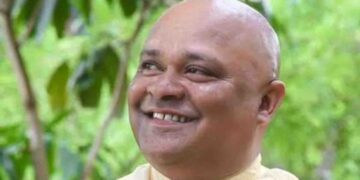


Former Nepali Prime Minister Sharma Oli comes from a poor farming family. His mother passed away when he was just four years old. In 1958, his family lost their farmland due to floods, forcing them to abandon their village. It was during this period that Oli was influenced by the Naxalite movement, which rose against Nepal’s then Panchayat system of rule. Taught communist ideology by an uncle, Oli later joined Nepal’s Communist Party.
For his role in communist uprisings against the Panchayat system, Oli spent 14 years in prison from 1973 to 1987. After his release, he rejoined communist politics. Following the unification of Nepal’s divided Marxist and Leninist communist factions, Oli became a central committee member. He later emerged as a key figure in the 2006 revolution that overthrew Nepal’s monarchy and established a democratic constitutional order.
Oli first became Nepal’s Prime Minister in 2015, and went on to serve three times in total. However, he faced heavy criticism from within his own party, accused of betraying communist principles.
In Sri Lanka, the Millennium Challenge Corporation (MCC) aid project, approved in 2015 under the Sirisena–Ranil government at the request of the U.S., was later rejected in 2019 by the Gotabaya Rajapaksa administration. Rajapaksas and the SLPP led a major campaign against it, claiming it would turn Sri Lanka into a U.S. colony. As soon as Gotabaya became president, the project was scrapped.
But Oli warmly welcomed the same project in Nepal. This triggered widespread protests even within his own Communist Party, accusing him of signing away Nepal’s sovereignty to the U.S.
Oli, once a radical who fought against the monarchy and the Panchayat regime, was later accused of abandoning his revolutionary ideals and becoming part of a corrupt system. The Nepali people had expected him to bring “system change.”
Ironically, the leader who led people to the streets against monarchy and authoritarianism under the slogan of “system change” himself became a prisoner of the very system he opposed. The people, realizing this betrayal, turned against Oli using the same revolutionary politics he had once taught them. Eventually, Oli was forced to resign and flee his post as Prime Minister.
Nepal’s protesters did not learn their struggle from Bangladesh or Sri Lanka. They learned it from Oli himself and Maoist leader Prachanda. Similarly, Sri Lankans learned protest politics from the Janatha Vimukthi Peramuna (JVP). The JVP first came to power as a result of such struggle. But just as Oli used communist and Marxist rhetoric only to later adopt pro-U.S., World Bank, and IMF policies, today’s JVP too has shifted to strongly pro-Western economic policies while keeping the post-1948 political system intact.
In short, leaders who came promising “system change” ended up preserving the same system. The question now is: Will JVP leaders meet the same fate as Oli?
The difference is, in Nepal and Bangladesh, the struggle succeeded because leaders like Ranil (in Sri Lanka) were not present to sabotage it. In Sri Lanka, Ranil Wickremesinghe struck a deal with the Rajapaksas, disrupted the struggle, and repressed it. In Bangladesh, there was no opposition leader like Ranil to save Sheikh Hasina. As a result, Nobel Peace Prize winner Muhammad Yunus now leads an interim all-party government there.
Nepal too is moving in the same direction. Discussions are underway to appoint the former Chief Justice as interim Prime Minister and hold elections under an all-party government.
This is what should have happened in Sri Lanka after the Aragalaya (struggle). In fact, all parties, the Speaker, and military and police chiefs had been in talks to form such an interim all-party government after Gotabaya’s resignation. Ranil too took part in these talks. Party leaders and the Speaker asked both Gotabaya and Ranil to step aside and allow the interim government to take over. Gotabaya agreed. But Ranil broke his promise. Instead of resigning, he struck a deal with the Rajapaksas, sought to protect them, and demanded to be appointed Acting President.
The Aragalaya that was about to give birth to a new system in Sri Lanka was destroyed by Ranil in this way. He even used Wimal Weerawansa, Udaya Gammanpila, and Vasudeva Nanayakkara to block the interim government. When Ranil announced he would not resign, Vasudeva declared on behalf of Wimal and Udaya that if an interim government was formed, they would oppose appointing Sajith Premadasa as Prime Minister. That statement killed the interim arrangement, enabling Ranil to become Acting President with Rajapaksa support.
If Sri Lanka had formed an interim government and gone for elections, today the JVP would not be in power. The only reason they hold both the presidency and government is because Ranil sabotaged the struggle with the help of the Rajapaksas, Wimal, and Udaya.
Today, politicians hiding in fear of imprisonment should take this as a serious lesson.