
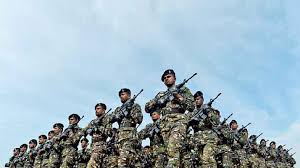
Sri Lanka’s armed forces have been mobilised to support nationwide police operations against narcotics and organised crime, marking a coordinated effort by all three military branches.
Naval patrols have been placed on heightened alert along coastal waters, while Air Force drones and aircraft monitor movements from above. Army detachments are assisting on the ground, particularly in providing security during raids. Intelligence units from the Army, Navy, and Air Force have also been integrated into the campaign.
Describing the initiative as a “collective effort,” Police Media Spokesman ASP F.U. Wootler said the primary goal was to bring major traffickers before the law.
“The aim is to target the big traffickers, the godfathers of the narcotics trade, who for years have been amassing wealth through illegal means,” he said.
ASP Wootler further described the narcotics crisis as one of the most critical challenges facing the country.
“We want to cut down the supply while also managing demand,” he added.
Navy’s Role
Navy Media Spokesman Commander Buddhika Sampath said the Navy had “activated its full range of operational capabilities” to disrupt smuggling routes, particularly at sea.
“Every day, we work with the police to arrest those engaged in illegal activities,” he said.
He highlighted recent interceptions of Kerala cannabis and Kendu leaf smuggling attempts, noting that naval personnel have also been deployed on land to support police-led operations.
Commander Sampath pointed out that trafficking networks extend across maritime borders and often operate from within prisons, with syndicates showing a high degree of adaptability.
“Our task is to support law enforcement and ensure these operations succeed. Legal proceedings, however, remain the responsibility of the police,” he explained.
Air Force’s Role
The Air Force has been tasked mainly with surveillance. Group Captain Eranda Geeganage, the Air Force Media Spokesman, said drones and Beechcraft aircraft are being deployed to detect narcotics-related activity.
“We also provide intelligence, deploy dogs trained in narcotics detection, and offer troop support if requested,” he said. “If required, we can even provide airlift capacity for joint operations under the Ministry of Defence’s direction.”
Army’s Role
While less directly involved in raids, the Army plays a critical role in securing perimeters and providing manpower when required.
“We are there to support the police,” Army Media Spokesman Brigadier Waruna Gamage said.
“Most of the time, we provide security around an operation, while arrests and investigations are handled by the police.”
He added that the Army contributes intelligence to narcotics investigations, though it does not operate specialised counter-drug units.