

Sri Lanka faces the risk of its dominant Marxist ruling party steering the country toward a one-party state, M. A. Sumanthiran, Acting General Secretary of the Ilankai Tamil Arasu Kachchi (ITAK), has warned, adding that the government is already establishing a parallel power structure in the Tamil-majority North.
At the same time, Sumanthiran, a lawyer-turned-politician, emphasized that while President Anura Dissanayake is pragmatic, he is surrounded by individuals he described as “hardliners” who oppose political cohabitation.
“The greatest danger facing the country—not just the Tamils—is that the Janatha Vimukthi Peramuna will move towards a one-party state,” Sumanthiran said in an interview during a brief visit to New Delhi. “It is a very serious situation.”
According to Sumanthiran, 62, the government’s anti-poverty programme, Praja Shakthi, is being implemented at the grassroots level through handpicked representatives, effectively bypassing existing institutions and elected political actors.
Civil society representatives, professional groups, lawyers, and community organizers in the Tamil-majority Northern Province have also alleged that the JVP is restricting major civic initiatives that fall outside its influence or oversight.
Sumanthiran further claimed that the government had appointed five Members of Parliament from the region to function as shadow ministers, thereby usurping the powers of the Northern Provincial Council, for which elections have not been held for several years.
A senior JVP figure recently stated that while the party has formed a government, it now seeks “state power”—a remark critics interpret as indicative of an ambition for monopolistic political control.
Sumanthiran recalled a warning issued in 1971 by veteran Tamil leader S. J. V. Chelvanayakam, often compared to Mahatma Gandhi for his advocacy of non-violence: “We (Tamils) are also for socialism. But we are not for a one-party rule.”
While acknowledging that the JVP’s electoral success in the Tamil-majority North reflected a loss of confidence in traditional Tamil parties, Sumanthiran expressed confidence that the ITAK would regain dominance if provincial council elections are held in the North and East.
He noted that Tamil voters had significantly shifted back toward Tamil parties in local government elections after delivering a setback in parliamentary polls. According to him, the ITAK now controls 34 of the 40 local bodies in the North and East.
“We are confident of forming a government in the North and East after the provincial elections,” Sumanthiran said, adding that he aspires to be his party’s chief ministerial candidate. He also clarified that forming an administration in the Eastern Province would require the support of Muslim political parties.
Sumanthiran revealed that he has maintained a friendship with President Dissanayake and a select group within the JVP for nearly 15 years, though he acknowledged that the relationship is now weakening.
He said that while Dissanayake remains open-minded and willing to reconsider established positions, hardliners within his party are resistant to engaging with other political forces—particularly after securing a two-thirds parliamentary majority.
Addressing reports that he had declined an offer to serve as Justice Minister, Sumanthiran clarified that the offer was made before Dissanayake assumed the presidency. He said he could not accept it due to his party’s decision not to support Dissanayake in the presidential election.
That decision, he added, had angered Dissanayake, quoting him as saying at the time: “I will win the presidential election. If I lose, it will be because of you.”
One of Sri Lanka’s most prominent legal figures, Sumanthiran said he continues to engage with the President and has offered assistance in drafting a new constitution if requested. “But we are drifting apart. He himself has said it,” he noted.
He attributed part of the divide to fundamental differences on the Tamil issue between the JVP and Tamil political parties, including the ITAK. “Because of this, it is difficult to be seen working with them. We are also their primary political opponents in the North and East,” he said.
Sumanthiran further stated that while the armed struggle led by the Liberation Tigers of Tamil Eelam may have had relevance at a certain point in history, he has consistently opposed violence and advocates a political approach that includes the majority Sinhalese community.
He also criticized sections of the Tamil political leadership for making hardline statements that he believes are counterproductive.
“Is a separate state an option now? Why then use rhetoric that suggests it? It is counterproductive,” he said.
“It is only with the consent of the Sinhalese people that progress can be made,” he added, echoing a perspective increasingly gaining acceptance within the Tamil community. “We need to convince them and avoid reinforcing counterproductive narratives.”
He pointed out that some factions within Tamil leadership, supported by segments of the Tamil diaspora in the West aligned with the LTTE, continue to promote concepts such as federalism and self-determination—terms that, he said, are viewed unfavorably by both Sinhalese and Tamil-speaking Muslim communities.
According to Sumanthiran, such rhetoric has contributed to Tamil voters distancing themselves from traditional Tamil parties and supporting the JVP in the 2025 parliamentary elections, enabling the predominantly Sinhalese party to gain a foothold in Jaffna and other parts of the North.
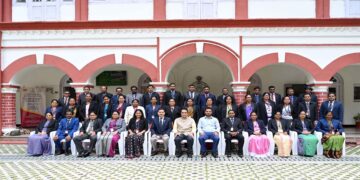
Sumanthiran was in India as part of an official delegation from the Bar Association of Sri Lanka, visiting at the invitation of the Bar Association of India. During the visit, the delegation was received at the Supreme Court of India, where India’s Chief Justice interacted with the Sri Lankan representatives.
He spoke to this writer at his hotel following the conclusion of the official engagements.