
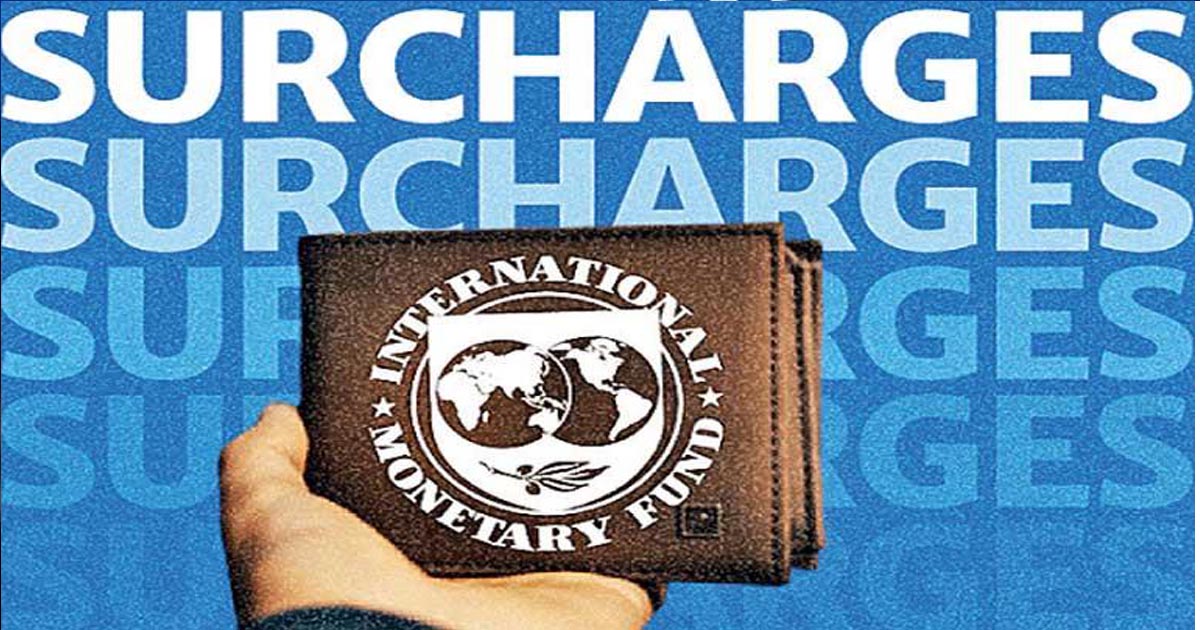
Sri Lanka finds itself among the 22 heavily indebted countries subjected to contentious surcharges imposed by the International Monetary Fund (IMF) in recent times, igniting debates and raising concerns about financial strain.
According to a recent report from the United States-based think tank, Center for Economic and Policy Research (CEPR), Sri Lanka joins a list that includes countries such as Benin, Côte d’Ivoire, Kenya, Moldova, North Macedonia, and Senegal, underscoring the shared financial challenges faced by these nations.
The island nation incurs these surcharges after the disbursement of two tranches totalling US$ 670 million from the approved US$ 3 billion Extended Fund Facility (EFF) by the IMF, which amounts to 395 per cent of Sri Lanka’s SDR quota with the IMF.
Based on the IMF’s Query Tool, Sri Lanka is expected to pay US$ 1.06 million (SDRE 803,360) in GRA Level Based Surcharges from February to the end of the year solely for the funds disbursed thus far.
The IMF’s surcharge policy encompasses both level-based and time-based measures, triggered when a country’s outstanding credit surpasses specific thresholds or remains outstanding for three or more years. These measures aim to manage and mitigate risks associated with high debt levels but have drawn heavy criticism from global leaders, economists, and civil organizations.
Critics argue that surcharges, with their pro-cyclical nature, penalize countries facing severe liquidity constraints, heighten the risk of debt distress, and divert resources away from crucial areas such as healthcare, climate action, and social development.
Despite claims that surcharges discourage overreliance and help maintain precautionary balances, CEPR contends that recent data challenges these assertions. The increasing number of surcharge-paying countries and the substantial growth in total surcharge payments indicate a growing burden, which CEPR argues is unnecessary for the IMF to maintain its precautionary balances at levels well above targets.