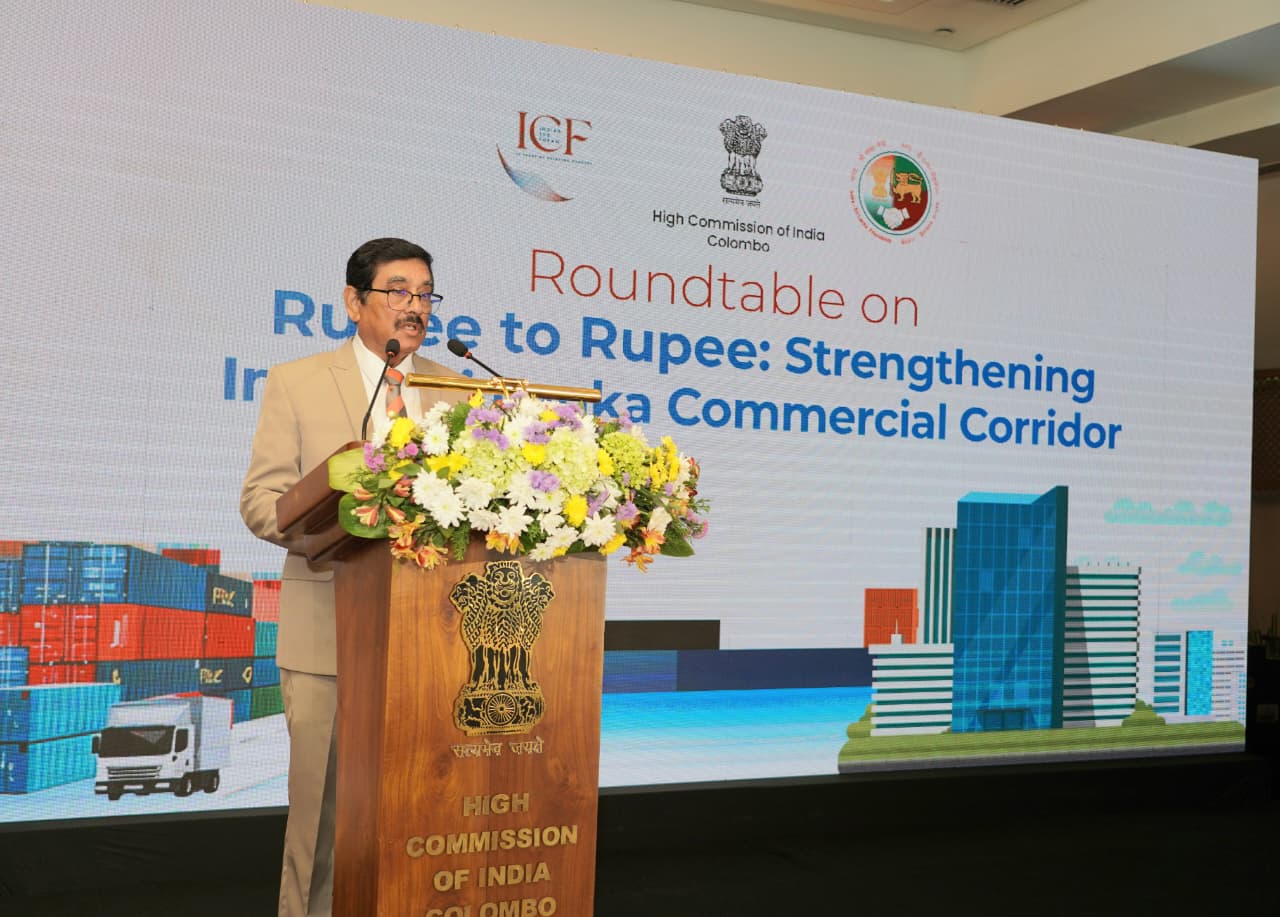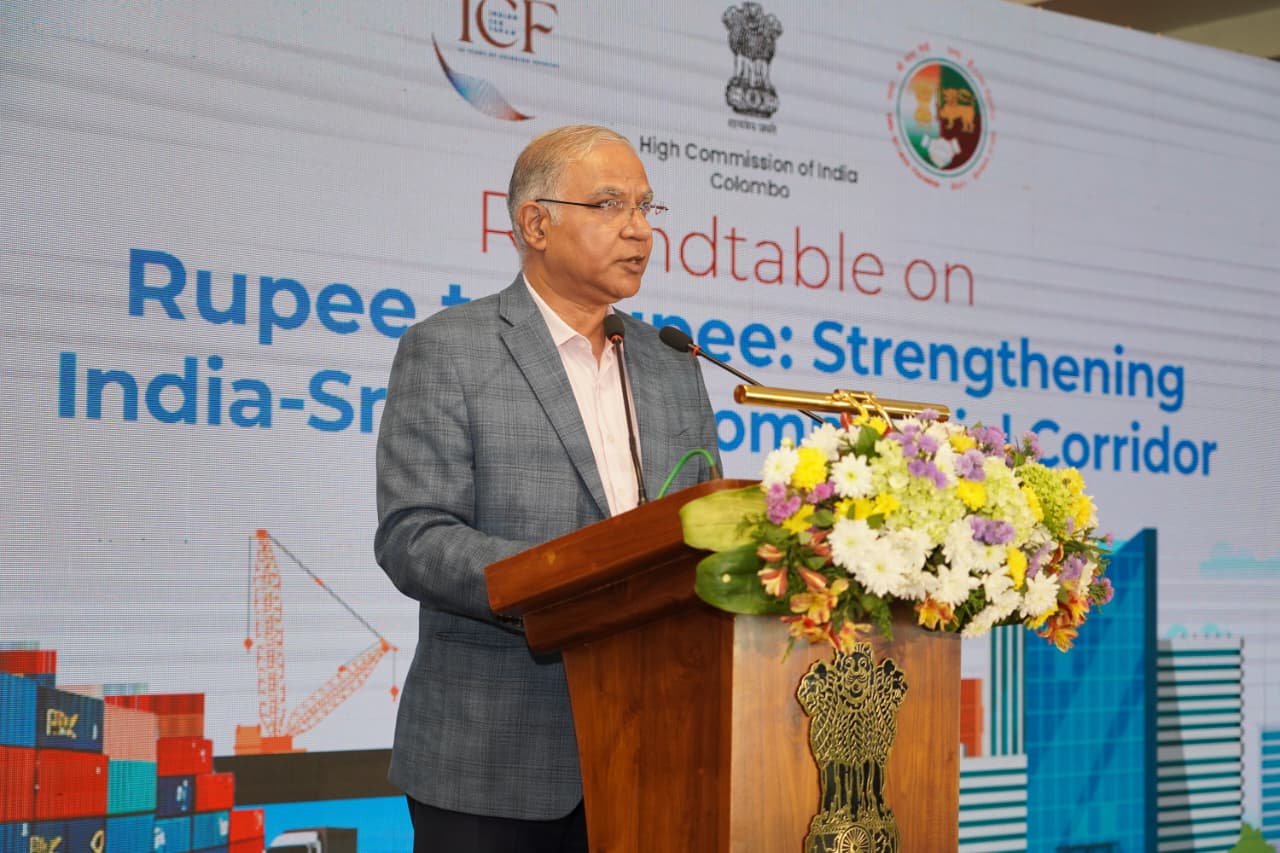

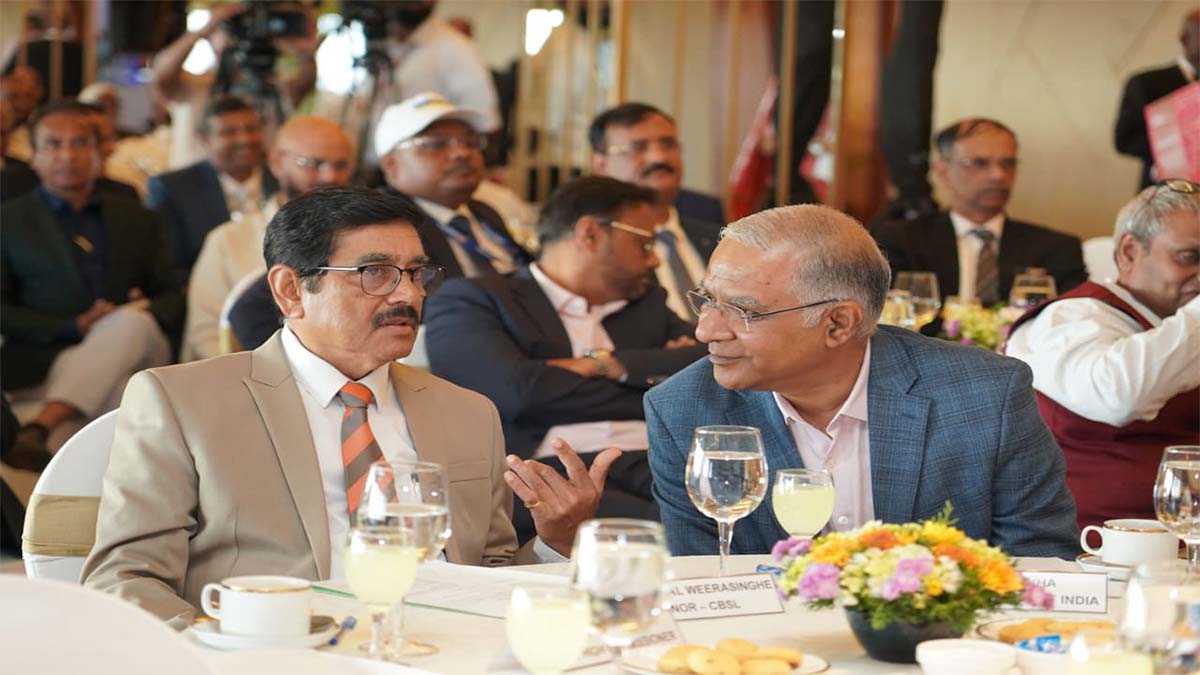
The High Commission of India in Sri Lanka organised a roundtable titled “Rupee to Rupee: Strengthening the India-Sri Lanka Commercial Corridor” on 15 June 2026. The event brought together senior representatives from government institutions, banking and financial sector organisations, industry leaders, importers, exporters, and business stakeholders from both countries to discuss opportunities for deepening India-Sri Lanka economic and commercial engagement through enhanced use of local currencies.
The roundtable commenced with welcome remarks by H.E. Santosh Jha, High Commissioner of India to Sri Lanka, who highlighted the growing economic partnership between India and Sri Lanka and underscored the importance of local currency settlement mechanisms in facilitating bilateral trade, investment and financial connectivity. The keynote opening remarks were delivered by Dr. P. Nandalal Weerasinghe, Governor of the Central Bank of Sri Lanka (CBSL), who outlined the recent policy measures undertaken to strengthen the financial framework supporting INR-LKR transactions and emphasised the need to strengthen trade and investment linkages between both countries.
Presentations were subsequently made by State Bank of India and Indian Bank, focusing on the operational aspects of INR-LKR trade settlements, available banking solutions, and recent policy guidelines permitting the disbursement of Indian Rupee-denominated loans through Authorised Dealer Banks in Sri Lanka.
A dedicated industry panel brought together leading voices from Sri Lanka’s banking and corporate sectors, including representatives from Commercial Bank, Seylan Bank, Standard Chartered Bank, AMW, DHT Cement, Lanka Spin Pvt. Ltd., Nithya Paper and Boards Lanka Pvt. Ltd.
Representatives shared practical experiences, benefits, challenges and opportunities related to the use of local currencies in trade and investment transactions and explored pathways for further strengthening the commercial corridor between India and Sri Lanka.
Discussions during the Roundtable highlighted the growing acceptance of the INR-LKR settlement mechanism and its potential to facilitate smoother cross-border transactions, improve liquidity management, lower transaction costs, and enhance resilience in bilateral trade. Participants also emphasised the need for continued awareness-building, stronger banking linkages, and greater private sector participation to unlock the full potential of local currency settlements.