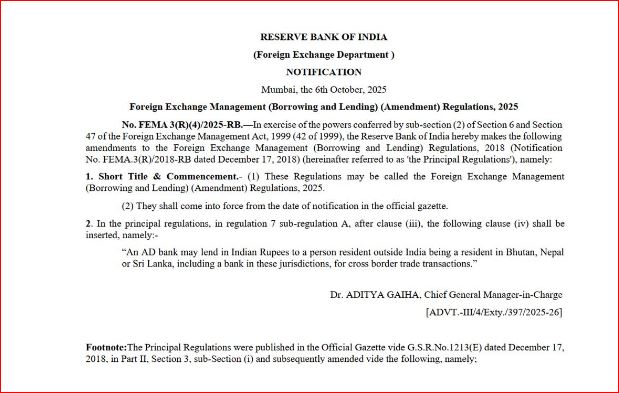
The Reserve Bank of India (RBI) has allowed Indian banks to extend loans in Indian rupees to customers in Sri Lanka, Bhutan, and Nepal, strengthening regional financial integration.
Indian bank branches in Sri Lanka will now be able to provide rupee-denominated loans not only to individuals but also to local banks. The Indian Embassy in Colombo welcomed the move, calling it a step that will “make credit more accessible for businesses in Sri Lanka,” while also reducing exchange rate risks and deepening cross-border trade links.
Analysts point out that Sri Lankan borrowers may find Indian rupee loans more attractive than dollar borrowings, particularly given the steady depreciation of the rupee since 2011, though interest rates could be higher. With India being one of Sri Lanka’s largest sources of imports, the acceptance of Indian rupees by exporters could pave the way for more trade to be settled in the currency.
Sri Lanka’s credit rating remains weak following its recent financial crisis, which has made foreign borrowing costly. During the crisis, Indian banks had stepped in to support Sri Lanka by confirming letters of credit, while Indian exporters often shipped goods without formal banking guarantees.
Currently, Sri Lankan banks hold stronger dollar reserves after monetary tightening curbed inflation, allowing them to finance Indian firms as well.
The Indian rupee once played a dominant role across South Asia, the Middle East, and even parts of Africa under British administration, before a series of devaluations and policy shifts eroded its overseas use. With this new RBI measure, the currency is regaining a role in regional trade and financial flows.