For the second consecutive year, Japan has a new leader, and Beijing is watching closely. Takaichi Sanae, now head of Japan’s ruling Liberal Democratic Party (LDP), has made history as the country’s first female prime minister.
In a nation long dominated by male politicians, her ascent shatters a long-standing glass ceiling. Beyond the symbolic significance, Takaichi’s leadership signals potential shifts in Japan’s domestic politics, regional posture, and approach toward China.
Takaichi is widely regarded as an ultraconservative and political hardliner, closely aligned with former Prime Minister Abe Shinzo. Her worldview mirrors Abe’s: assertive on defense, hawkish on China, and keen to strengthen Japan’s role in the Indo-Pacific. While allies may welcome her clarity, decisiveness, and assertiveness, Beijing is already wary of her rise to power.
She has consistently framed China as a strategic threat. Long-standing points of tension, including Taiwan and historical memory, are expected to face more rigid policies under her leadership. Past Japanese leaders have warned that any conflict over Taiwan could directly affect Japan’s security—a stance Takaichi is likely to reinforce. She has also repeatedly visited Yasukuni Shrine, which honors Japan’s war dead, and has not ruled out similar visits as prime minister.
Her rise comes at a sensitive historical juncture. This year marks the 80th anniversary of China’s victory in the People’s War of Resistance Against Japanese Aggression, a memory that continues to shape Chinese leadership and public sentiment. China commemorated the milestone with a victory parade attended by over 25 world leaders.
On Chinese social media, Takaichi is labeled “anti-China” and an “extreme right-winger.” Critics accuse her of smearing China, denying the Nanjing Massacre, exaggerating the so-called “China threat,” and stoking controversy over Taiwan. Analysts in Beijing are particularly wary that she could challenge the “three red lines”: Taiwan, territorial disputes, and historical interpretation. Economically, she has already promoted “decoupling” initiatives, advocating supply chains that bypass China during her tenure as Japan’s first minister of economic security.
Domestic issues may also become points of friction. Japan is home to over 800,000 Chinese residents, contributing to rising rents and living costs and stirring local resentment. Takaichi’s immigration policies are expected to tighten restrictions, a move with potential economic, geopolitical, and security ramifications.
Regionally, Takaichi’s leadership may signal renewed energy in Japan’s engagement with the Quad. Abe Shinzo delivered his landmark “Confluence of the Two Seas” speech in India in 2007, advocating for a greater role for India and a more assertive Japanese presence in the Indo-Pacific. As Abe’s protégé, Takaichi is expected to continue his vision of a stronger, more confident Japan. The Free and Open Indo-Pacific initiative could see renewed focus, with Japan playing a central role alongside the United States, India, and Australia.
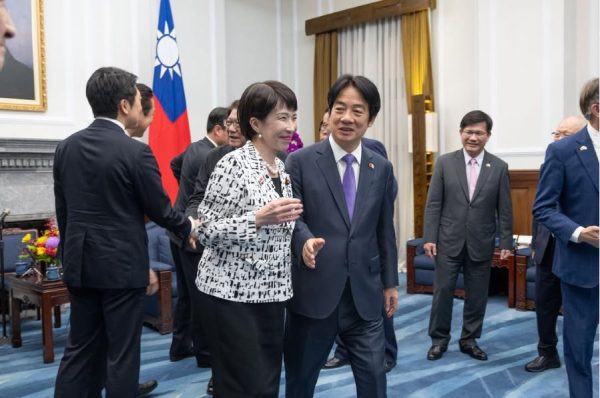
Taiwan is likely to remain a flashpoint in Sino-Japanese relations. Takaichi has maintained a friendly stance toward Taipei, expressing openness to a security partnership. Just a week before her confirmation, she referred to Taiwan as a “cherished friend” and sent a handwritten letter to President Lai Ching-te, accompanied by a delegation of Japanese parliamentarians. While bold security moves are unlikely in the early stages, her consistent support positions Taiwan as a key element of Japan’s regional strategy and a contentious issue in China-Japan relations.
If Takaichi follows Abe’s legacy, Japan is likely to strengthen its military capabilities, deepen strategic partnerships across the Indo-Pacific, and assert itself more decisively in regional affairs. For China, her premiership may herald a more challenging chapter in bilateral relations, as Japan becomes less pacifist, more confident in its defenses, and more vocal on Taiwan and regional security issues.
Takaichi’s premiership is historic not just for Japan but for the Indo-Pacific region. For China, it may signal a period of strategic discomfort. However, it is too early to tell whether she can break Japan’s “one prime minister a year” cycle, bring political stability, gain popular support, and redefine Japan’s role in the Indo-Pacific.
How Takaichi navigates this delicate balance and addresses pressing domestic and regional challenges will determine whether she emerges as a trailblazer, a hawk, or both. One thing is clear: her leadership is good news for Indo-Pacific security, even if the road ahead is fraught with challenges.