
Malima vs SJB Set for May Day Showdown
‘News Plants’ Resurface—And Fail Again
Champika Reverses Stance on ‘Easter Attackers’
Questions Upon Questions
A government that commands a two‑thirds majority often enjoys a “honeymoon period” lasting three to four years. During this time, it rarely encounters serious challenges, and even when difficulties arise, they are usually overshadowed by the government’s popularity. Much like a newly married couple, a new administration experiences a phase of relative ease and stability. Yet, once this period passes, problems inevitably surface, and the honeymoon—whether of a family or a government—comes to an end.
The Malima government, despite holding a two‑thirds majority, has been in office for only a year and a half. Nevertheless, it already finds itself beset by crises of a magnitude unseen in previous administrations, compelled to navigate a new and turbulent political culture. Each controversy seems to give way to another, leaving the government in a state of perpetual firefighting.
Disputes
The protracted dispute over substandard coal imports, which lingered for months, was resolved only after the dismissal of Power and Energy Minister Kumara Jayakody, a close ally of the President. Simultaneously, the administration faced scrutiny over Minister K.D. Lal Kantha, who had erected a lavish three‑storey residence in Weliwita, Kaduwela. Further embarrassment followed when the CEO of HSBC alleged that Sri Lanka had purchased diesel at the exorbitant price of $286 per barrel.
As if these troubles were not enough, a fresh crisis erupted last Wednesday: the Treasury mistakenly transferred $2.5 million intended for an Australian company into a fraudulent account. Many observers regard this blunder as even graver than the earlier controversies—whether it was the coal imports, Lal Kantha’s opulent house, or the inflated diesel purchase.
Although the sum lost is modest compared to the Central Bank bond scandal under the Yahapalana government, the nature of the incident suggests it could herald a major political storm. The matter first came to public attention through a letter addressed to the Speaker by Attorney‑at‑Law Maithri Gunaratne, who deserves full credit for exposing it. In his letter, he urged immediate investigation, stressing the gravity of such a lapse within the Treasury.
Copy- Maithri Gunaratne’s letter to the Speaker
Hon. Speaker,
Parliament of Sri Lanka
Sri Jayawardenepura Kotte
Honourable Speaker,
Request to initiate a Parliamentary investigation into whether USD 2.5 million from the Treasury has been diverted to a computer hacker.
I respectfully request that a Parliamentary investigation be conducted to determine whether a sum of USD 2.5 million from the Treasury has been transferred into the hands of a computer hacker.
By the end of September 2025, Sri Lanka was due to repay a total external debt of USD 22.9 million to a particular country. As part of this repayment, an amount of USD 2.5 million was settled by the Treasury from December 2005 to January 31, 2026. However, it has come to light that this payment may not have been made to the relevant creditor country, but instead directed to a computer hacker (or a third party).
At present, a “technical investigation committee” has been appointed on or around 24 March 2026 to probe this incident. By now, two Deputy Treasury Directors, two Directors, and the Head of the IT Division have been suspended in connection with the matter.
As you are aware, until recently, the responsibility for servicing foreign debt—including loan repayments and interest—was handled by the Central Bank of Sri Lanka. Following the enactment of the new Monetary Act, this responsibility was transferred to the Department of External Resources and the Public Debt Management Office. Accordingly, the documentation and execution of this payment were carried out by those institutions.
It is not possible for a Deputy Treasury Secretary, an Accountant, and an IT officer alone to execute a payment of USD 2.5 million. Such a transaction would necessarily require the involvement of both the Deputy Treasury Secretary and the Treasury Secretary.
The ultimate responsibility for public finance rests with Parliament. However, the current investigation is being conducted under the supervision of an Additional Treasury Secretary, who also bears responsibility for debt repayment and continues to oversee the operations of the relevant department while conducting this inquiry.
Furthermore, as the Secretary to the Ministry of Finance is also the Secretary to the Treasury, we believe that any investigation into this matter should be carried out by an independent body outside the Ministry of Finance and the Treasury.
Therefore, I kindly urge that Parliament, which holds the ultimate responsibility for public finance, take appropriate steps through a suitable mechanism to conduct a full and independent investigation into this incident.
Yours faithfully,
President’s Counsel Maithri Gunaratne
Chairman, Free Lawyers Association
Copies to:
- Leaders/General Secretaries of all political parties represented in Parliament of Sri Lanka
- Committee on Public Finance (Parliament)
- Auditor General / National Audit Commission
- Hon. Harsha de Silva, MP – Chairman, Committee on Public Financ
The bomb explodes
Anyone who saw that letter on Wednesday initially assumed that the incident must have occurred just a few days earlier within the Treasury. However, it turned into a major political “bombshell” against the government when it was revealed that this had actually taken place five months earlier—in December—and had been kept hidden by the authorities until now.
As a result, many began questioning what had been done about this issue during those five months, especially when there are individuals within Parliament and its committees who are widely regarded as economic experts. Despite projecting themselves as highly knowledgeable figures in economic matters, critics now argue that either these “experts” were merely repeating hollow theories or were acting in ways that favored the government whenever trouble arose.
That said, according to available information, none of these so-called experts had access to details of the Treasury incident. The information had instead reached Maithri Gunaratne from within the relevant institutions. This has raised serious questions among many as to whether senior officials deliberately withheld this information from others and provided it only to Gunaratne, possibly due to suspicions that powerful figures within the government, along with certain opposition elements, were attempting to suppress the matter.
Exposed
Once the incident was exposed to the public on Wednesday morning, it quickly escalated into a major political controversy by evening, with statements being issued from all sides. The issue was first raised at the Cabinet media briefing held that morning. When journalists questioned Cabinet Spokesperson Minister Nalinda Jayatissa, he stated that although he had seen the letter, he had no official information and was only aware of what was stated in it. He added that the Ministry of Finance would soon issue a clarification.
This response itself raised eyebrows, as many questioned how the Cabinet Spokesperson could remain unaware of such a serious happening for five months. It was also notable that despite having the letter in hand, he had not sought clarification from the Finance Ministry before the briefing, choosing instead to sidestep the issue.
However, within a few hours of his statement, the Ministry of Finance issued a special announcement confirming that the incident was true and that the funds had been transferred to another account due to a hacking attack. Later that night, after 9:30 p.m., Deputy Finance Minister Professor Anil Jayantha stated at a media briefing that the government had already taken necessary steps regarding the matter.
Following this, Opposition Leader Sajith Premadasa also made a special statement regarding the disappearance of USD 2.5 million from the Treasury. Meanwhile, Dr. Harsha de Silva, Chairman of the Committee on Public Finance, stated at a press conference on Thursday morning that immediately upon learning of the incident, he had contacted committee members via WhatsApp and requested the Finance Ministry Secretary to appear before Parliament at 1:00 p.m. However, despite five reminders, there had been no response.
Explanation
Instead of appearing before the Committee, Finance Ministry Secretary Dr. Harshana Suriyapperuma addressed the media later that afternoon. He explained that although the incident had occurred five months earlier, it had not been disclosed publicly due to concerns that revealing it might alert the hackers and allow them to evade detection.
Many observers now view this controversy as the beginning of a second chapter similar to the Central Bank bond scandal that plagued the previous ‘Yahapalana’ government—this time targeting the Malima administration. The issue has sparked intense debate on social media, and much like the earlier coal controversy, critics argue that this is not something the government can easily dismiss or “wash away.”
Notably, since the payment in question was linked to Australia, social media discussions have even gone as far as naming individuals allegedly connected to Australia, intensifying the political backlash against the government.
Why CID Didn’t Step In?
At this point, the opposition has raised several difficult questions that the government appears to struggle to answer. The first is why such a serious incident was kept hidden for five months. The second question is why, despite a recent pattern of referring even relatively minor matters to the Criminal Investigation Department (CID)—including issues related to academic titles—this far more serious natter was not reported to the CID for months. Another key concern is why a process that had previously been handled by experienced specialists at the Central Bank was suddenly handed over to less experienced officials within the Treasury. Some argue that this shift was made in line with recommendations from the International Monetary Fund (IMF), which led to the transfer of debt repayment responsibilities from the Central Bank to the Treasury.
There are reports suggesting that when information about this transaction first emerged, a Central Bank official had flagged it as suspicious and advised Treasury to recheck the account details. If true, this raises further questions about how the payment was ultimately processed. As a result, it is already clear that this issue is likely to develop into a major political debate.
Meanwhile, when these details surfaced, Opposition Leader Sajith Premadasa was on a tour in the southern region. Upon receiving the information, he immediately convened a discussion via Zoom with five economic experts from his party. During the discussion, he sought clarity on how such an incident could occur, who might be responsible, the potential consequences, and what preventive measures should be taken.
Sensitive Details
By that time, those experts had already gathered substantial information about the incident. However, some sensitive details were shared with him cautiously, with requests not to disclose them immediately. Premadasa listened carefully, paying particular attention to the technical aspects of the issue. Following this, he held another Zoom discussion with a distinguished former Governor of the Central Bank. Their roughly 20-minute conversation focused on how such transactions are typically carried out, how they were handled under the Central Bank in the past, and the safeguards that had been in place to prevent such misses. He then went on to hold a further discussion with his party’s management committee to decide on the next steps—both within Parliament and outside—regarding how to respond to the issue.
“Shammi” in the Spotlight
Amid these crises—from the substandard coal issue to the Lal Kantha housing controversy, the $286 diesel purchase, and now the $2.5 million transfer—the government appears to have realized that its public popularity has been significantly declining. During internal discussions last week, there were calls to take quick, popular decisions to regain public confidence.
In this context, a front-page report in the Daily Mirror suggested that Shammi Silva, the President of Sri Lanka Cricket, might be removed from his position. Cricket, being a sport that unites the entire country regardless of political divisions, has seen growing criticism in recent times due to the team’s poor performances, with many calling for leadership changes.
Public attention
At the same time, the Sirasa Media Network had been dedicating significant airtime in its main news broadcasts to criticize the cricket administration. This led to speculation that a broader narrative was being shaped—possibly with encouragement from higher authorities—to build public support for removing Silva and presenting it as a government success. However, despite these efforts, public attention remained more focused on the economic and political controversies rather than cricket-related issues. Earlier public sentiment had suggested that if changes were to be made in cricket administration, the role should be given to a widely respected and clean figure such as Roshan Mahanama. The President had also reportedly considered appointing an interim committee led by an independent individuel.
Yet, in a surprising twist, media reports named Eran Wickramaratne—a member of the opposition party—as the chairman of the proposed interim committee. This raised eyebrows, as many questioned how a figure from the opposition came to be associated with plans emerging from the government side. Previously, it had been reported that certain economic advisors within the opposition were quietly providing advice to the government. These same individuals were also said to have assisted past administrations, including that of Ranil Wickremesinghe. There were even claims that some opposition-linked advisors had contributed to drafting the government’s budget while publicly criticizing it. While such revelations have reportedly caused friction between some of these advisors and the media, the argument remains that these are political realities the public has a right to know.
Eran Come into the Picture?
Against this backdrop, when the entire country was calling for a widely respected and clean figure like Roshan Mahanama, how did the name of Eran Wickramaratne—an electoral organizer of the Samagi Jana Balawegaya (SJB)—suddenly emerge for the post of cricket board chairman? This has led many to question whether there is any connection between earlier reports and Wickramaratne’s appearance in this context.
As media reports suggested that the government was preparing to appoint him as the head of an interim cricket committee, even SJB MPs began raising serious concerns. Internally, they questioned whether Wickramaratne could continue his political career within the party if he were to accept a position offered by the government. At the same time, speculation grew about whether there was some form of “behind-the-scenes” understanding between him and the ruling party.
As these discussions intensified within the party, several MPs directly contacted Sajith Premadasa to seek clarification. Premadasa reportedly told them that Wickramaratne had not informed him of any such move and that he had no intention of raising the matter proactively. However, he made his position clear: if Wickramaratne were to accept a government-appointed role, he would no longer be able to continue politics within the SJB and would instead have to align his political future with the ruling side.
Interim Cricket Committee
Before the media reports surfaced, it is learned that the President had already been studying the possibility of appointing an interim committee for cricket administration. This is a sensitive matter because, under the rules of the International Cricket Council, government interference in cricket administration can lead to serious consequences, including suspension.
A similar attempt during the tenure of Ranil Wickremesinghe ended with Sri Lanka facing suspension by the ICC. Therefore, concerns have been raised again about whether such a move could once more put Sri Lanka cricket at risk of sanctions.
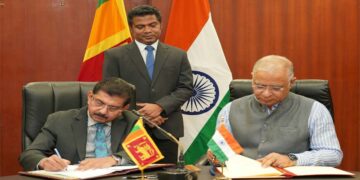
In response to such concerns, it is reported that the President has indicated confidence in handling the situation. This confidence may partly stem from the current leadership of the ICC under Jay Shah, who is also the son of Amit Shah. Given the reportedly close ties between the present Sri Lankan administration and the Indian government, some believe the President feels he can manage any potential fallout.
Shammi Silva?
At the same time, it is no secret that the President shares a close relationship with Shammi Silva, the current head of Sri Lanka Cricket. During a previous parliamentary controversy involving Silva under the Wickremesinghe administration, Anura Kumara Dissanayake—who was then in the opposition—was criticized for avoiding the debate.
Given this background, it is highly unlikely that Silva would be removed abruptly without prior discussion. According to available information, a meeting between the President and Silva is expected in the coming days, during which key decisions will likely be discussed—whether Silva will step down, how such a transition would occur, and what the next steps for cricket administration would be.
However, when questioned at last week’s Cabinet media briefing, Cabinet Spokesperson Nalinda Jayatissa stated that there had been no discussion within the Cabinet regarding the removal of Shammi Silva.
Daily Mirror “….Plant”?
It was the Daily Mirror—a paper often associated with the family of Ranil Wickremesinghe—that first reported the claim that Shammi Silva would be removed and Eran Wickramaratne would be appointed in his place.
In recent times, the newspaper has faced repeated allegations of publishing inaccurate or agenda-driven stories. Critics have even mockingly referred to it as the “Daily Error.” Reflecting this skepticism, when journalists questioned S. M. Marikkar at a press briefing, he responded with a smile, saying he could not comment and that no one had confirmed whether the report was true.
Meanwhile, journalist Saroj Pathirana also addressed the issue in an article, stating that upon checking, he found the report is entirely false.
Rumours, Speculation, and Political Noise
Following the publication of the story, a wave of speculation swept through political circles, with various names and theories being floated—some stretching credibility. One such rumour suggested that after the report surfaced, Shammi Silva had held discussions with Jay Shah, the chairman of the International Cricket Council.
Another claim alleged that a meeting related to cricket had taken place at the residence of a well-known businesswoman said to have close ties with senior government figures, with even a prominent pastor reportedly in attendance. According to this rumour, Eran Wickramaratne’s name had been proposed for the cricket leadership role on a religious basis—though such claims remain unverified.
Political Damage Control
All of this unfolded at a time when the Treasury controversy had already dented the government’s public image. With popularity reportedly declining, internal discussions have focused on regaining public confidence. Removing Shammi Silva was seen as one possible “popular” move—but not the only one.
According to reports, the government is also considering several high-profile appointments aimed at sending a positive signal to both the business community and the international arena. One such plan involves bringing back a former chairman from the era of Chandrika Kumaratunga to lead a currently loss-making and controversial state institution.
This is particularly striking because the current administration had earlier emphasized that it was backed by a new generation of highly skilled professionals—experts in technology, economics, and modern governance. Yet, despite those claims, turning back to figures from past administrations suggests a shift in approach, likely driven by immediate political pressures rather than long-term reform strategy.
The Disillusioned Twelve
In addition, there are reports that in early or mid-June, the government is planning to appoint a well-recognized private sector figure—known as a popular advisor—to a high-ranking position. This move, like several others down the line, appears to be part of a broader strategy to recover the government’s steadily declining popularity. However, by last week, it had become increasingly clear that even within the ruling camp, many were beginning to realize the government’s declining popularity. This perception was reinforced by a widely circulated report on social media claiming that 12 MPs from within the government had jointly sent a letter to the party headquarters in Pelawatte.
MPs dissatisfied
According to the report, these MPs expressed dissatisfaction over recent developments and warned that if immediate corrective action was not taken, they would be compelled to make tough decisions. Notably, neither the government nor the Pelawatte party headquarters moved to deny these claims, which has added further weight to the speculation.
The reported details of the letter suggest that the group includes two Cabinet ministers, three deputy ministers, and seven backbench MPs. Two of them are said to be currently overseas. This group reportedly consists of professionals from diverse fields—university lecturers, former senior security officials, lawyers, and doctors—many of whom entered politics through the Malima alliance rather than as long-standing party activists.
One of their main grievances appears to be economic. Before entering politics, many of them earned significantly higher incomes in their professional careers. Now, with restrictions on MPs’ privileges, they reportedly find themselves living at what they describe as a “subsistence level.” Alongside these personal concerns, they have also raised criticisms regarding certain actions of the government.
Party insiders indicate that a high-level discussion may take place in the coming days to address the concerns raised in the letter.
Not a New Development
Although some media outlets reported last week that a growing number of government MPs are disillusioned, this is not a new revelation. In fact, as far back as February 2025, earlier reports had already indicated that around 15 MPs within the Malima government were experiencing serious dissatisfaction and could, at some point, be pushed toward decisive action.
What is different now is that these concerns appear to be surfacing more openly—and, if the reports are accurate, in a more coordinated manner.
15 Break Away from Malima?
In recent days, social media has been abuzz with claims that nearly 15 MPs from the Malima government may soon break away. While some platforms are now amplifying this story, it is not entirely new—similar concerns had reportedly surfaced just weeks after the government secured its two-thirds majority.
At the time, early signs pointed to internal tensions within the broader alliance—particularly between the core Janatha Vimukthi Peramuna (JVP) bloc and other groups aligned under the Malima umbrella. Disagreements over academic credentials, policy directions, and internal dynamics were said to be creating friction, occasionally even leading to heated discussions within party leadership circles.
Different Backgrounds, Different Pressures
Out of the 159 Malima MPs, around 107 are from the broader National People’s Power (NPP)-aligned bloc, while 52 are core JVP members. These 52 are full-time JVP activists accustomed to a more austere political lifestyle.
However, a large portion of the remaining MPs come from very different backgrounds. Many are highly qualified professionals—academics, corporate executives, and specialists—who previously held senior positions, earned high salaries, and enjoyed substantial privileges before entering politics. They gave up those careers and benefits to join Parliament.
During the election campaign, Malima representatives had also pledged that they would not rely on traditional perks—such as high salaries, official vehicles, fuel allowances, and extensive staff. Now, that very promise is creating a dilemma.
For full-time party members, living without such perks may be manageable. But for professionals who transitioned from high-income careers, the reality of reduced income and limited privileges has reportedly become a growing challenge.
A Crossroads Moment
As a result, some MPs are now said to be weighing a difficult decision:
Should they continue in Parliament for five years under these constrained conditions, or step away and return to their previous professions and lifestyles?
According to available information, these discussions within certain circles have intensified in recent weeks. While nothing has been officially confirmed, the possibility of a small group eventually breaking away is now being openly speculated about.
If such a move were to materialize, it would not just be a numerical shift—it could also signal deeper structural tensions within the coalition between ideological and professional pragmatism.
“If They Leave, It May Suit Them”
If a group of Malima MPs does decide to step down, what happens next? From what’s being discussed, the leadership within the Janatha Vimukthi Peramuna (JVP) is not unaware of this brewing situation. In fact, there’s an argument that they may be quietly waiting for such resignations to happen.
The reasoning is straightforward: if these MPs vacate their seats, those positions could potentially be filled by full-time JVP members. That would increase the current number of 52 core JVP MPs, strengthening the JVP’s internal grip within the broader Malima structure. From that perspective, some hardline voices within the party reportedly see such a development as advantageous rather than damaging.
This is why speculation about “around 15 MPs preparing to quit” has been gaining traction online—it ties into this broader internal calculation and political strategy.
Malima vs SJB: The May Day Showdown
At the same time, the government is planning a major political push around May Day to rebuild its public image.
Initially, the plan was to hold three main rallies—in the North, the hill country, and Colombo. But after emergence of recent controversies, the strategy has shifted dramatically. The new plan is to organize 21 rallies across all districts, aiming to showcase strong grassroots support and counter the narrative of declining popularity.
The idea is simple: visible turnout = perceived political strength.
• The President will attend major rallies in the hill country (covering Badulla and Nuwara Eliya) and in Maharagama.
• Prime Minister Harini Amarasuriya is set to attend the Ratnapura rally.
• Party General Secretary Tilvin Silva will be present in Tangalle and Matara.
• K. D. Lal Kantha is expected at rallies in Kandy, Kegalle, and Kurunegala.
• Vijitha Herath will attend events in Puttalam and Gampaha.
• Bimal Rathnayake is set to lead the northern rally.
• Other like Sunil Handunnetti, Nalinda Jayatissa, Anura Karunatilaka, and Harshana Nanayakkara will also take part at district level.
This year’s theme has been framed as “People’s Power for the Republic”, signaling an attempt to reconnect with the grassroots and reassert legitimacy.
What It All Means
Put together, two parallel tracks are emerging:
• Internal strain → possible MP exits, ideological vs practical tensions
• External optics → mass mobilization, narrative control, and political signaling
Whether the May Day push can offset the internal rifts is still an open question—but the next few weeks look politically decisive.
SJB moves to Maligawatta
Amid the emerging issues, as the government appears to be losing popularity in this manner, the opposition seems to have gained momentum, which is now clearly visible. Against this backdrop, following the resignation of Minister Kumara Jayakodi over the coal scam, the Samagi Jana Balawegaya (SJB) decided to proceed with the May Day rally that it had earlier planned to cancel.
Generally, given the current political situation, there are fewer than a handful of parties capable of organizing a well-attended and properly coordinated May Day rally. The National People’s Power (NPP) had already announced in advance that it would hold its May Day rally this year. The SJB has now decided to hold its rally at the P.D. Sirisena Grounds in Maligawatta, while the Sri Lanka Freedom Party (SLFP) has decided to hold its rally at Campbell Park in Borella. The Frontline Socialist Party has chosen Hyde Park in Colombo as its venue.
Shift ‘Vesak’
Although the government had earlier decided, following requests from senior monks, to shift Vesak Poya Day to May 30, the United National Party (UNP) and the Pohottuwa (SLPP) announced in advance that they would not hold May Day rallies, claiming that Vesak Poya falls on May 1. The UNP plans instead to conduct religious observances on that day and organize a biryani almsgiving. However, the real reason appears to be its inability to gather even a thousand participants, which has led it to avoid holding a May Day rally.
However, the issue is not there. As we have reported on several occasions in this column, there have been ongoing covert operations by a few individuals within the UNP aimed at disrupting the growing unity between the SJB and the UNP.
SJB leader Sajith Premadasa held several rounds of discussions with senior UNP figures to bring the two parties together, and both sides publicly stated that the talks were successful. However, it was UNP senior Ravi Karunanayake who first revealed that “two ghosts” within the UNP are working to destroy both Ranil Wickremesinghe and the party itself while operating close to him. We have also, on several occasions, substantiated these claims with evidence in this column.
SJB and UNP
Following successful discussions with figures such as Ruwan, Navin, Akila, Thalatha, and Sagala, Sajith’s plan has now reached the stage of formalizing the agreement. However, since there is no immediate election or major political event, Sajith prefers to finalize the alliance closer to an election in a more ceremonial, public manner rather than through an early written agreement.
Although the two parties have not yet formally merged, grassroots supporters of both the SJB and UNP are already working together. One of the key ideas discussed by Sajith with senior party members while planning the May Day event was to invite UNP leaders and hold the rally as a grand occasion symbolizing unity between the SJB and UNP.
A few days before May Day, Sajith had also planned to publicly extend this invitation at a special media briefing along with SJB Chairman Kabir Hashim and General Secretary Ranjith Madduma Bandara, followed by a formal written invitation sent through Madduma Bandara.
Two Ghosts
However, this plan was reportedly discovered early by the so-called “two ghosts” within the UNP. Agitated like snakes splashed with lamp oil, they immediately began working to sabotage the planned unity at the May Day event.
Initially, they used Ranil’s “news plant” network to publish a story on the Lanka Deeepa website (linked to Ranil’s circle), claiming that Buddhist monks had requested political rallies be avoided on Vesak Poya and that religious observances should be given priority. However, the article did not mention the name of the journalist or any monk making such a request, raising suspicion. The aim of this move was to disrupt the SJB May Day rally.
Afterwards, one of these “ghosts” began organizing so-called opposition joint meetings in various places and used attendees to spread messages suggesting that the UNP respects Vesak Poya and will therefore not hold May Day rallies. This was part of an attempt to shift the narrative away from May Day.
The other “ghost” frequently visited the residence of G.L. Peiris, holding meetings labeled as “joint opposition” gatherings that were largely ignored, while giving statements to the media. The objective was also to disrupt the planned SJB–UNP unity rally.
UNP seniors reportedly informed Sajith about these developments via phone calls. Sajith responded calmly, saying:
“Don’t worry. Some in the UNP are accusing me of not working to unite the parties. But I have always worked according to a plan. Let’s follow our strategy. If they want to disrupt it, let them. We will do our duty. Anyone who comes to our May Day rally will be warmly welcomed.”
Champika changes stance
In politics, changing statements, lying, and misleading the public occur in different forms at different times. Today, many people clearly understand this when comparing statements made by NPP leaders before coming to power and their actions after gaining power.
Last week, a new example of such a change in stance emerged involving former minister Patali Champika Ranawaka regarding the Easter Sunday attacks. Three years ago, at a press briefing, Champika had said there were four unresolved issues and had also accused military intelligence units.
However, at a press conference last week, he stated that the Easter attack was entirely carried out by a radical jihadist group and that this was also confirmed by an FBI report. He further said that he had previously been misled by statements from those involved in the investigations and had therefore changed his position.