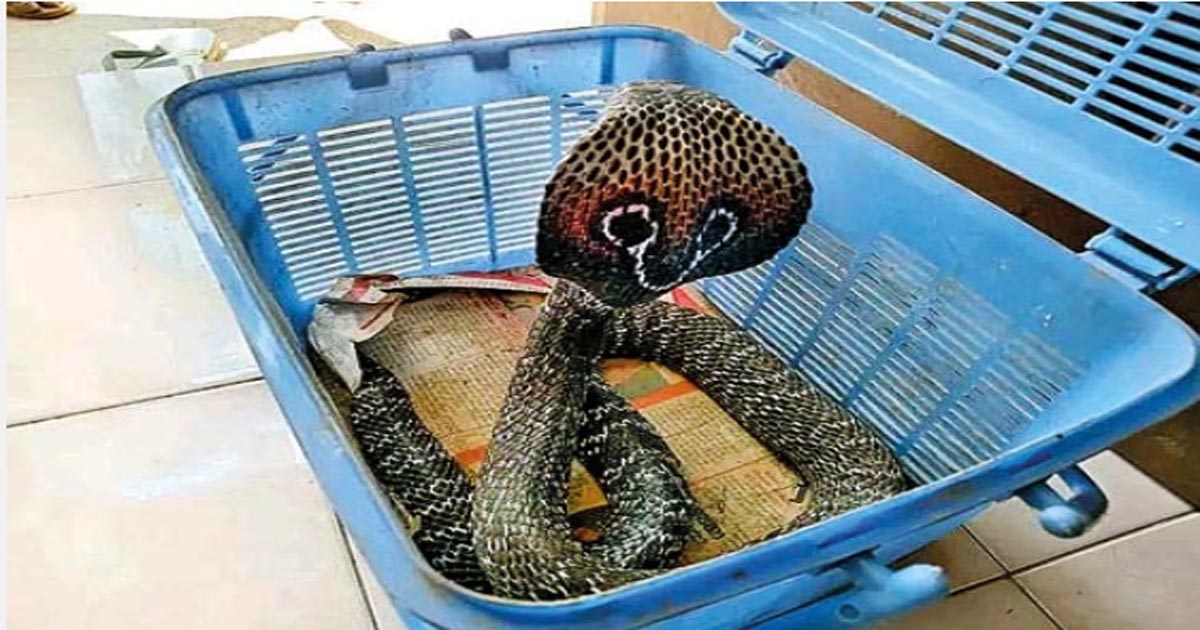
The Department of Wildlife Conservation is advising people to stay calm if reptiles and amphibians come into their homes or gardens due to the soaring heat.
Plants have withered due to prevailing arid conditions that have dried up the humid and cool natural areas where reptiles and amphibians spend the hottest part of the day.
The ectothermic (animals whose regulation of body temperature depends on external sources) reptiles and amphibians find it difficult to regulate their body heat and are forced to reach human settlements to escape the heat.
The DWC advises caution when dealing with reptiles that are found near human habitations.
DWC Director General Chandana Sooriyabandara said the arid weather conditions and the scarcity of water drive animals to seek refuge in human habitations.
He said an animal’s response to arid weather conditions is correlated to environmental destruction and degradation caused by humans. When natural habitats are destroyed, animals enter human settlements.
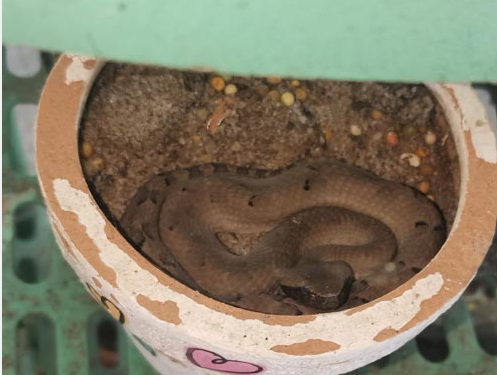
He urged people not to panic and confront reptiles and amphibians who venture into gardens, garages, washrooms, kitchens, living rooms, or interior gardens.
“I advise people to be calm. They should not hurt animals or get hurt. The best is to identify, keep track of, find the exact location of the reptile, and drive them away calmly.’’
The DWC responds to help requests on the hotline 1992, but officers can’t attend to all calls, he said.
Recent incidents have been reported in urban and suburban areas, as well as in remote parts of the country.
Kiribathgoda resident R. Priyani de Silva said she and her two sons had to spend hours removing a large water monitor that had come into the living room on Monday.
Relating the harrowing experience, she said she noticed a nearly six-foot monitor in the house after her dog started barking while turning its attention to the living room. She was afraid as the animal was hissing and was under a settee.
Ms. de Silva said she called her sons who were studying upstairs and asked them to come to the ground floor and keep an eye on the reptile until she chained the dog outside and confined her two cats in a room.
Afterwards, the three of them blocked off the entrances to the kitchen and the staircase by placing furniture.
Ms. de Silva said her sons used broomsticks to tap the ground and drive it towards the door. But the monitor lizard had other ideas and was whipping its tail, hissing, and standing its ground.
“After futile attempts to drive it away, we were forced to wait about three hours with the door open to allow it to get out by itself. Luckily, it went out the door after a while,’’ she said.
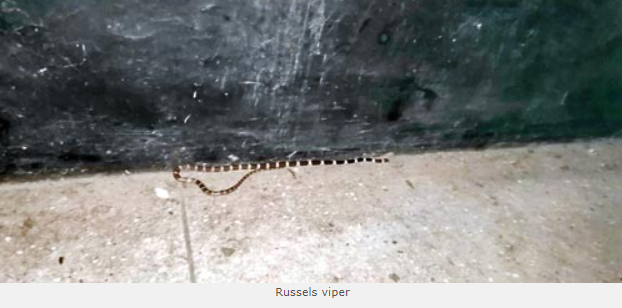
In a separate incident, a Wellampitiya resident, Chandrawathi Gunasekara, 58, said her son had seen a snake slithering into her kitchen two weeks ago. But then it could not be found. “We thought the snake left the house, but to our surprise, three days later, we found the snake coiled up underneath the kitchen cabinet.’’
Ms. Chandrawathi said neighbours helped her remove the animal from the house.
Meanwhile, a teacher at a remote school in Hambantota was concerned over the safety of students as snakes slither into classrooms.
Reptiles and amphibians seek cool, shady spots to take refuge and end up in garages, attics, home gardens, washrooms, and uninhabited rooms.
Wildlife officers said they normally get many calls to remove cobras, vipers, and land and water monitors.
DWC field officer and reptile researcher Asanka Jayasuriya said our ancestors designed their gardens to deter snakes from entering houses by adding a two-to-three-foot-cleared sandy area around the house. This was devised by observing the fact that snakes prefer not to traverse open areas due to fear of predators.
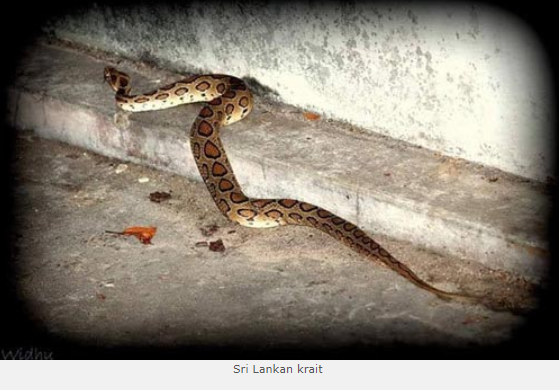
People could also keep reptiles away from homes by providing preferred habitats on the border of their properties, he said. “One way is to keep flat, clay water containers in a shady area near the edge of the property, allowing reptiles to drink and cool off.’’
He suggested that people call the DWC hotline and ask them to remove the reptile.
And if a picture could be sent via a smartphone, officials could identify a serpent and give instructions on how to safely remove the animal, he said.
| Zoo not a place of refuge for animals that crawl into homes | |
| The National Zoological Garden is conserving species within its walls and is not a rescue centre for animals that end up inside houses and home gardens, Director General Ranjan Marasinghe said.But rare animals handed over by people would be accepted in some cases. Also accepted are animals seized by customs, provided that a court order has been issued.Animals that crawl into homes due to extreme heat are not accepted.He said the zoo’s mandate is to conserve rare animals and create captive insurance groups that would be released through rewilding projects. The zoo employees do not remove animals from people’s homes. Mr. Marasinghe said there are space limitations, too. |
| Allow intruders to escape | |
| Reptiles that take refuge in garages, attics, or washrooms are only seeking cool spots to escape the heat, and they are not the aggressors. All they want is to flee when confronted, DWC’s Director General Chandana Sooriyabandara said.He said people should remain calm and allow the animal to flee, rather than cornering it and killing it. |