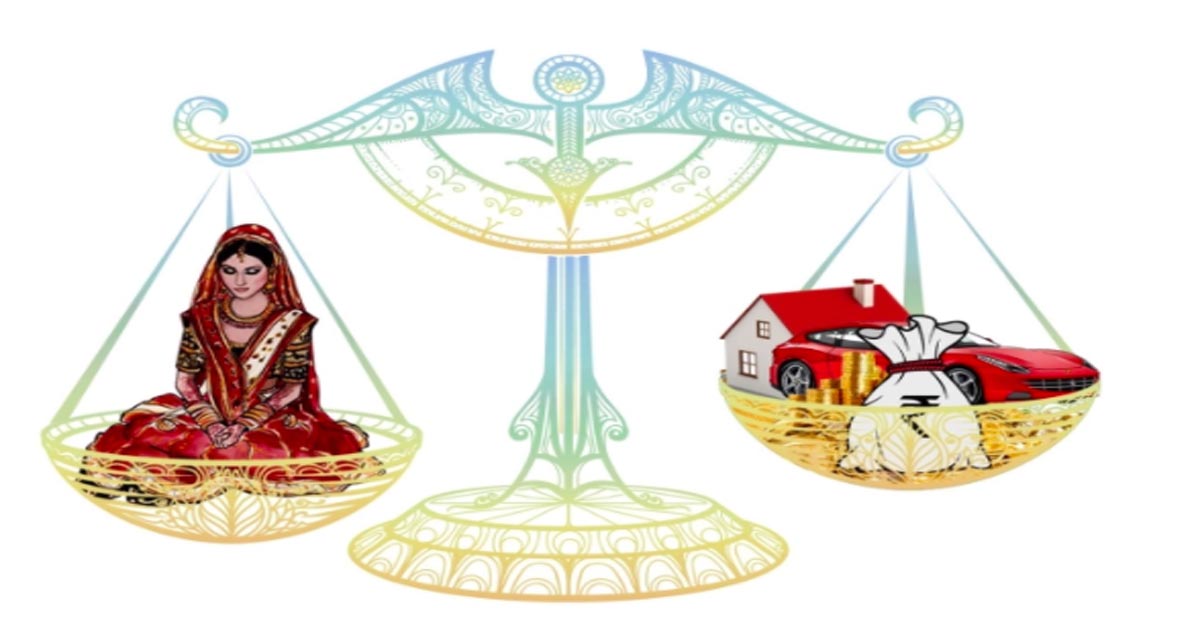
In traditional terms, dowry refers to the transfer of property from parents to their daughter, the bride, and sometimes to the groom during marriage. Typically, assets like houses, land, and jewellery are bestowed upon the bride, while the groom may receive monetary gifts. Sandarasi Sudusinghe, an acclaimed Poet, Novelist, Archaeologist, and Sociologist, delves into the pervasive impact and societal implications of the dowry system across various communities in Sri Lankan society
Among the properties entrusted to the Department of Trustees in Sri Lanka, there is one property given under an unusual condition. The condition is that “the income from these properties should be used to provide dowries to young women who do not have one.” The trustee of the property was Don Arthur de Silva Mudaliyar, the owner of Kalutara Richmond Castle. Although no one knows whether this condition was ever fulfilled, it provides strong evidence of how significant the issue of dowries was in the past Sri Lankan society. To understand how influential this “dowry” is even in the twenty-first century, it is sufficient to look at the matrimonial advertisements in Sinhala, Tamil, and English newspapers over a weekend.
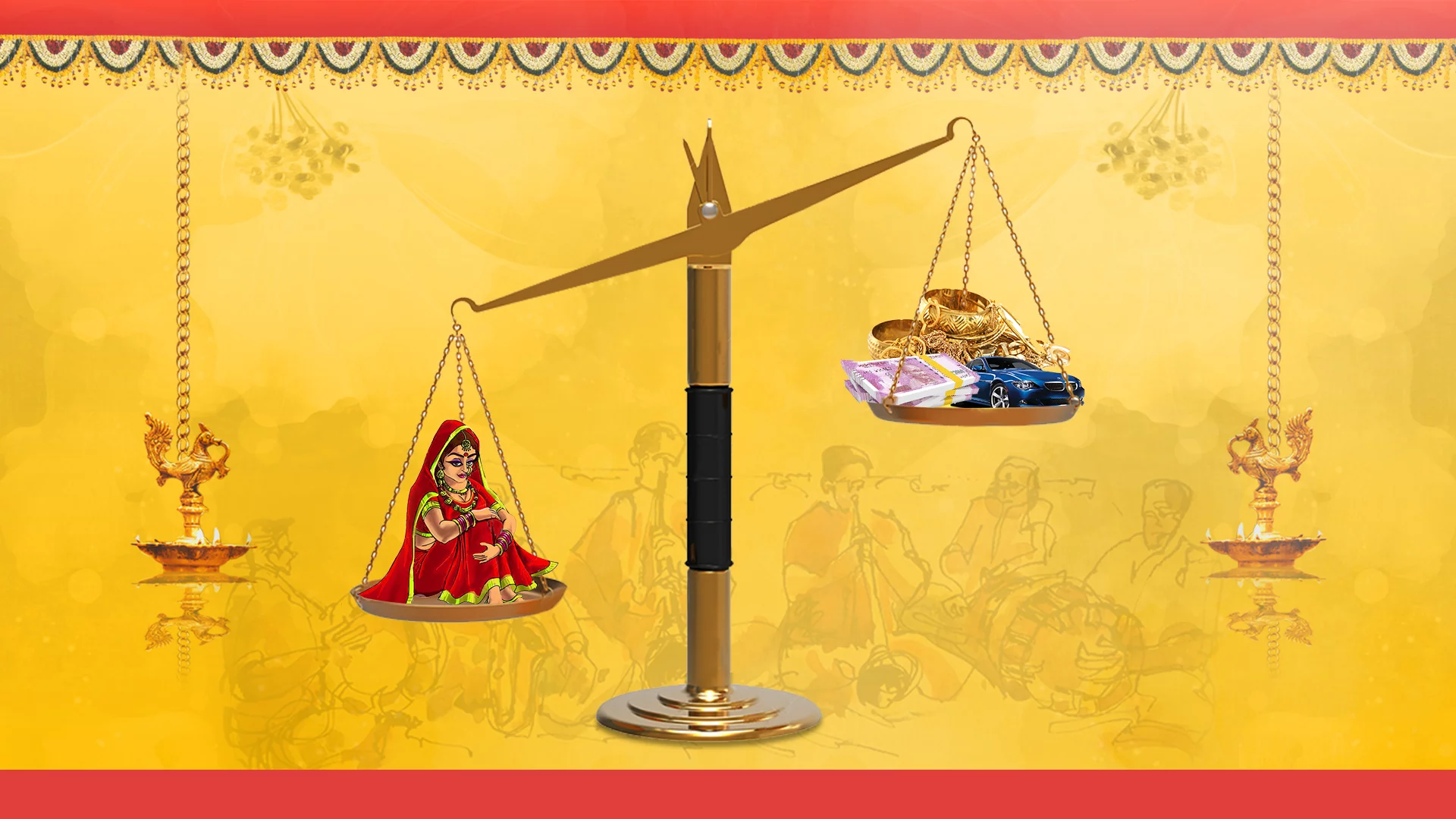
The dowry is one of the subjects in Sri Lankan society that is often not openly acknowledged but operates powerfully within. Caste differences, the divisions between the upcountry and low country, and the northern and eastern divides are other such discriminations that become apparent in marriage. Among the Sinhalese, Tamil, and Muslim communities in Sri Lanka, there are similarities and significant differences concerning these matters.
In Sinhalese society, while dowry is often not prioritized in love marriages, it is considered very serious in arranged marriages. However, in Tamil society, regardless of how the marriage occurs, the “dowry” is an unavoidable mandatory step. Although dowry should be given from the woman’s side in both Sinhalese and Tamil communities, in the Muslim community, it is given from the man’s side to the woman. In that sense, the Muslim society, often accused of oppressing women, has freed their women from the dowry custom.
The Dowry and Tamil Society
While this article addresses the dowry issue in the entirety of Sri Lankan society, it naturally pays more attention to the Tamil community, where this concept has deeply rooted and changed minimally over time. When looking into the criteria for marriage in their culture, although many factors such as race, caste, religion, education, profession, dowry, and appearance are considered, extremely crucial.

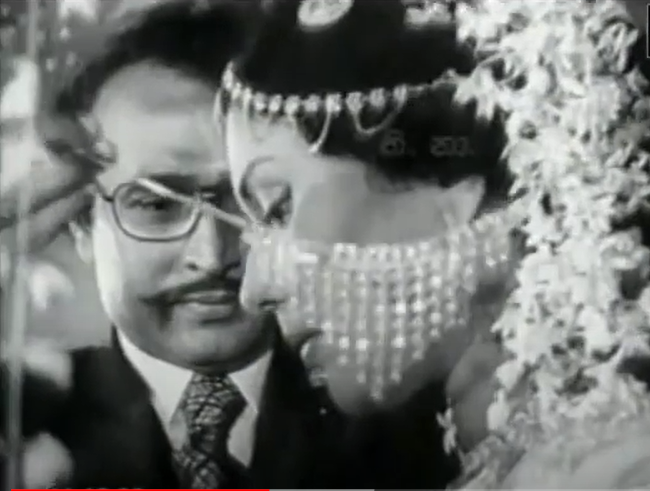
The Tamil film ‘Ponmani,’ produced by Mr. Dharmasena pathiraja in the 70s, emphasizes this issue. Despite decades having passed since then, there has been little qualitative change in the situation. This is one reason why the problem is not openly discussed within Tamil society.
Devaki, who lives in Puloli, Jaffna, is one of those who openly expressed her views on this matter. At 45 years old, she remains unmarried because her family could not afford the substantial dowry required for a suitable partner.
“I’m quite old now. I couldn’t get married because I didn’t have a large enough dowry to offer a groom. My brother lives in a European country. He wanted me to marry someone with a high position like him. But for someone with such a job, we would have to give a large dowry. But my brother didn’t want to give that much dowry. So, my marriage didn’t happen.” Her words were filled with sadness.
Dowry Ban under LTTE Rule
During the LTTE-controlled era, the burden of dowry was somewhat controlled or suppressed in Jaffna society.
“In the past, during the LTTE rule in the North, dowry was somewhat controlled. Their Penal Code states that dowry was banned. They punished those who demanded dowry. Those who had love affairs with girls and then wanted dowry to marry them were punished. So, during that time, people were afraid to ask for dowry. It was a kind of relief. Now, even if a girl is educated, if she wants to marry a doctor, they have to give a dowry of gold sovereigns, a house, or even a million rupees. The amount of dowry required depends on various professions. For a marriage to happen, caste, dowry, and horoscope matching are essential.”
The dowry system, known as ‘dāyāda dīma’, has been a significant part of both Dravidian and Sinhalese societies, often burdening the bride. In modern Sinhalese society, there appears to be a noticeable relaxation regarding this tradition. However, Dr. Prabha Manuratne of the Department of English at the University of Kelaniya argues that the superficial changes are not reflective of deeper societal attitudes.
“Internal attitudes haven’t changed” Dr. Prabha Manuratne explains, “In the past, women were considered as exchangeable goods. Although in an agrarian society, dowries were given to add economic value to a woman, this tradition is no longer relevant today. Now, women contribute significantly to the economy. Considering the current socio-economic system, dowries are outdated. Yet, it’s rare to find people in Sinhalese or Tamil societies who outright reject the dowry system.
Karl Marx said, ‘All that is solid melts into air,’ but even though society’s surface appears to have changed, the way people think and social relationships haven’t changed rapidly. While thinking about modern lifestyles, people still maintain Victorian morals. Nowadays, young women have to face various markets – the job market and the marriage market. The state of dowries in Sinhalese society can be well understood by looking at marriage proposal advertisements. Despite the apparent modernization, dowries are still deeply entrenched in Sinhalese society. Dowries are not only burdensome for women but also for men. For instance, sometimes a man cannot marry a woman he loves because he cannot afford a dowry.”
Muslim Women – Free from Dowries
In Sri Lankan Muslim society, the dowry system is different from that of Sinhalese and Dravidian cultures. Senior journalist Rishar M. Saleem explains this.
“In Muslim society, the dowry is known as ‘Mahr’. According to Muslim culture, the dowry or gift must be given by the groom for the bride. The idea here is to thank the bride’s parents for raising their daughter well. Sometimes, the father asks his daughter how much Mahar should be requested from the groom, or the father decides it himself. Whether asked for or not, the father gives the dowry received for his daughter to her.”

“This does not imply that the groom entirely rejects a dowry from the bride. Despite Mahar being a requirement, there are many instances where dowries are demanded that exceed the Mahar. It is believed that Sri Lankan Muslim society inherited the practice of dowry through interactions with Tamil society, and that it originated from South India” he said.
We also sought opinions from Dr. Farzana Haniffa, Head of the Department of Sociology at the University of Colombo. Dr. Farzana Haniffa said, “When discussing this, we have to think from every perspective. The middle-class Muslim society in the east gives their daughter a house. This provides the daughter with economic strength, which is positive as it can create equality to some extent in the marital relationship. But a poor person cannot do this. Some reject dowries as un-Islamic. I haven’t researched the dowry status in Tamil society, so I cannot comment on that. These practices vary based on ethnicity, caste, and region.”
Post-War – Returning to the Old Ways
Nagalingam Kamala, 65, from Mullaitivu, described how the dowry tradition resurfaced even after being forgotten during the hardest times of the conflict.
“During the war, while living in camps, many people, whether reluctantly or willingly, forgot about caste and dowries. We only wanted to escape the suffering. Marriages happened without regard to dowry or caste. But after returning to the villages, dowry and caste came back to mind.”
The pressure of dowries in northern Tamil society is a deeply ingrained issue that is hard for outsiders to understand. Sindhuja Jackson, 39, living in Chundikuli, shared her painful experience.
“I am a graduate and now work in a government job. Several reasons affected my unmarried status. One major reason is my lack of a dowry. My elder sister’s marriage consumed all we had. Now we have nothing left to give. Also, my age is a factor. Older brides require larger dowries. Earlier, many marriage proposals were rejected because my job was not permanent.”
Rebeka Parthipan, a social activist working in Pooneryn, Kilinochchi, said, “In almost every village here, there are ten or twelve women who couldn’t marry because of the dowry. Their lives are wasted.”
Many people were reluctant to disclose their identities when discussing this issue. Although several universities in Sri Lanka, including the University of Jaffna, have conducted research on dowries, the information is not widely shared.
Diaspora and Dowries
Surprisingly, the diaspora communities often react in unexpected ways to the dowry issue. It is important to understand how the diaspora perceives dowries.
Nadarajah Arumugam, 70, living abroad, narrated a surprising story. “There was a good boy I knew who had citizenship abroad. He wanted to come to Sri Lanka and marry a Tamil girl. He said he wanted a good girl and didn’t want any dowry. We looked at many girls, but many families refused. They suspected why he was the only one not asking for a dowry and wondered if he had a hidden illness. This shows how deeply entrenched the dowry system is in our society.”
Giving his sister in marriage to a groom residing abroad is yet another heart-wrenching story narrated by Thabodaran of Vallipuram. Every story has tears and compassion intertwined.
“My younger sister got married through an arranged proposal. The groom lived abroad. That brother-in-law didn’t ask for any dowry from us. However, his relatives made comments about it. Ultimately, we had to sign over this small house we had to my sister. We also gave 20 pounds of gold. We planned to take a loan to pay for the wedding expenses. They wanted a grand wedding. We ended up heavily in debt. When I got married in Trincomalee, I didn’t ask for a dowry. Because of that, my relatives criticized me. But I questioned why we needed to take dowries from the women who leave everything to come and live with us?”
The dowry system has become so entrenched in Tamil society that men with attitudes like Thabodaran are rare and should be encouraged. S. Sivagurunathan, a seasoned language translator and university lecturer, highlighted additional aspects of diaspora marriages.
S. Sivagurunathan: “Many aunts from Tamil families abroad prefer marrying their daughters off to someone from Sri Lanka rather than someone from abroad. They first ask about the region in Sri Lanka to determine the caste. Then they inquire if the dowry is located in Colombo or Jaffna. They want to know where the house that will be given as dowry is situated. The marriage is then conducted by writing the house in the groom’s or his family’s name. This issue was somewhat suppressed during the war but has now resurfaced. Wherever they are in Sri Lanka, many people still expect a dowry.”
Kabeeshan Murugesu, a forty-year-old living in Point Pedro, shared his experience, which shed light on rare instances of humanity amidst tradition’s darkness.
“I was born into a modest family. I had two older sisters. My eldest sister married someone living in Canada. That brother-in-law didn’t take a single penny from us. He bore all the wedding expenses. My second sister married an engineer. He too didn’t want a dowry, but his mother insisted. At that time, we had no money. That brother-in-law said he would give money to show his mother as dowry. My family refused. We wanted to maintain our dignity. We took a loan and gave the dowry. Because of this, my mother told me to marry a poor girl without asking for a dowry. I married a poor girl and provided everything for her wedding myself. We are living happily.”
Kaveri Amma, a sixty-year-old from Chavakachcheri, talked about another aspect of these transactions.
“Sometimes, even when the families don’t discuss dowry, the wedding broker thinks about his commission and tells both parties about the dowry. Sometimes these brokers ruin families more than arranged marriages.”
The dowry system can be as deadly as a venomous snake, as illustrated by Durga Kandiah’s story. The word “dowry” has the power to destroy a person’s family life, happiness, and even life itself.
“I know a family where both the groom and bride were engineers. They demanded a dowry of one hundred lakhs. Despite paying it, the groom’s family still harassed them about the dowry. Ultimately, the bride committed suicide. If she had remained unmarried, she would still be alive. Hearing these stories makes me very angry about dowry. Some people agree to give dowries within a few years of marriage. Others collect dowries to marry off their sisters. They burden one family to free themselves.”
This dowry system instils fear of marriage in many young women. Bhavani Ambalanwar, an unmarried young woman from Kilinochchi, shared her thoughts:
“I am 28 years old and work as a research assistant. My family is modest. My father earns money by working in the sun. How can I give the money he worked so hard for to someone else? Isn’t my presence enough? I will never marry someone who demands a dowry.”

Doctoral candidate in sociology Anushka Kahandagama expressed her views on dowry:
“Dowry humiliates women. The post-war environment and the high levels of militarization and loss have made marriage and the security it provides essential for women in the North and East. In such conditions, the Tamil woman of the North and East is trapped in the painful mechanisms created by the patriarchal structure of the dowry system.”
Many young women today are more discerning. They value their pride, abilities, and worth and resist acting as mere puppets.
The dowry issue is also legally entrenched. According to Tesawalamai law, dowries are classified into various types of property. Under the sixth section of the Tesawalamai law, a married woman can use her property for any legal purpose with her husband’s consent. However, to deal with immovable property, her husband’s written consent is required.
Dr. Kausalyaa Mathan, head of the Department of Legal Studies at Jaffna University, shared her thoughts on this:
“The dowry is a great tragedy and a significant headache in this society. The dowry and caste systems place tremendous pressure on people. These regressive traditions need to change quickly. No matter how educated or successful one is, it’s hard to escape the pressure of dowry and caste.”
Paul Arul Vandana, a social activist working with a non-governmental organization, shared her experiences with the dowry system.
“In some villages, thousands of young women are suffering because of dowry issues. The Tesawalamai law states that a wife needs her husband’s consent to sell any property, making it difficult for families of missing persons to sell property for their children’s education. This is a serious issue in society. It’s another bad example when parents demand dowry for their sons while they didn’t give dowry for their daughters-in-law.”
It’s also important to consider how marriages for orphaned children, especially those from orphanages, are conducted. Many young women from such orphanages are married off with the help of various Western grants, including dowries. However, how long will this tradition continue?
A senior lecturer from the Sociology Department at Jaffna University mentioned, “The dowry system is financially motivated in a patriarchal society.”
“This system operates in Asian and African countries. In the North of Sri Lanka, the dowry system is very strong. During the war, this situation was somewhat moderated, but now dowry discussions have resurfaced. Most of the current divorces are due to dowry issues. Some ask for dowries not out of need but to show off their status. This dowry system, despite its injustice, is reinforced by the Tesawalamai law regarding dowries. In my family, none of us wanted to marry men who demanded dowries. We all married men who didn’t ask for dowries. However, for a woman from a financially weak family, dowry can be beneficial.”
The dowry system also affects the Indian Tamil community living in the hill country plantations. These people live in dire poverty, making dowry a severe burden. Despite their hard life, these innocent people are oppressed by the dowry concept, leading to numerous problems.
Father Jeevanth Peiris commented on this issue:
“The dowry system is considered essential in the hill country community. They value gold jewellery as wealth since they can’t give land or vehicles as dowry. Young girls know their parents can’t afford dowries, leading them to elope at 16 or 17. They often end up living in a small hut in a plantation. Such marriages are often illegal, leading to substance abuse and domestic violence. The dowry system directly causes these issues, necessitating social, economic, political, and educational changes.”
Renowned Dravidian writer S. Ganeshlingam, in his book ‘To Liberate Women,’ discusses dowry:
“The aristocratic feudal society initiated the dowry practice to assert status. Property ownership was reserved for men, and dowries were a way to confirm status through gifts. This practice became a heavy burden among the middle class, making dowries a significant issue for families. A girl’s birth meant worry about dowry. Having five daughters was said to make a king a beggar. The dowry system remains an entrenched and pressing issue that needs immediate attention and reform.