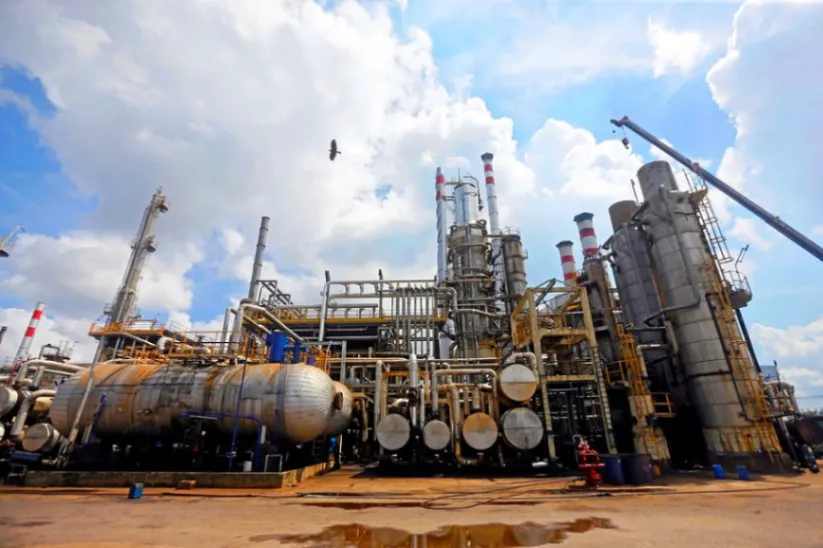
The highly-anticipated $3.7 billion oil refinery project in Hambantota, spearheaded by China’s energy giant Sinopec, is facing significant uncertainty due to an unresolved deadlock regarding the proportion of refined products permitted for sale within Sri Lanka’s domestic market.
Despite the scale of the project, which is expected to be the single largest Foreign Direct Investment (FDI) in the country’s history, no investment has been made by Sinopec thus far, as negotiations remain at a standstill.
The original tender issued by the Government of Sri Lanka clearly stipulated that only 20% of the refinery’s output could be distributed within the local market, with the remaining 80% earmarked for export. This provision was aimed at boosting the country’s foreign exchange reserves through international sales. However, Sinopec’s counter-proposal has created a stalemate in discussions.
Speaking to The Sunday Morning, Ceylon Petroleum Corporation (CPC) Managing Director Dr. Mayura Neththikumarage clarified that any changes to the agreed-upon 20% local supply limit would require either a new agreement or a formal amendment to the existing tender terms.
“The issue lies in the negotiation. The 20% limit is a condition of the original tender. If they want to supply more locally, that would require a separate agreement or amendment to the terms. But this matter is between the investor and the Government, not the CPC,” he said.
Echoing this position, Ministry of Energy Secretary Prof. Udayanga Hemapala acknowledged the ongoing uncertainty surrounding the project timeline, stating, “We don’t know how long it will take for the agreement to be finalised.”
The Government remains firm on its stance that any deviation from the current terms must go through official channels. According to Dr. Neththikumarage, this approach is vital to safeguarding the interests of state-owned entities such as the CPC and maintaining national energy security, which could be compromised by the unrestricted entry of a global oil player into the local market.
When questioned whether the CPC had hindered local market access and thus delayed the finalisation of the agreement, Prof. Hemapala categorically denied such claims. “No, it has nothing to do with the CPC. There is a separate Cabinet-appointed committee engaging with Sinopec. The progress of negotiations rests with them,” he clarified.
Both Dr. Neththikumarage and Prof. Hemapala confirmed that the project remains in preliminary stages, with no official investment from Sinopec made to date.
Initially formalised during President Anura Kumara Dissanayake’s state visit to Beijing in January, the Sinopec refinery project envisions a modern, high-capacity facility capable of processing 200,000 barrels of crude oil per day. The venture aims to leverage its strategic location next to the Chinese-managed Hambantota International Port, with a significant portion of production intended for export markets.