When Mrs. Bandaranaike’s left-wing government swept into power with a two-thirds majority in 1970, it inherited a business landscape dominated by the UNP. Previous attempts at nationalization by S.W.R.D. Bandaranaike in 1956 and Mrs. Bandaranaike herself after the July 1960 election had failed to dismantle the UNP’s extensive multinational business network.
This time, Mrs. Bandaranaike took a different approach. She handed the Finance Ministry to N.M. Perera of the Lanka Sama Samaja Party, and together they set about creating an entirely new local business class. Their strategy was simple: ban imports and let local entrepreneurs fill the vacuum.
The textile trade became the breeding ground for this new business elite. Dasa Mudalali led the pack with his Duro shirts brand and pioneered Sri Lanka’s first supermarket chain. Gnanam built Sintex Mill in Wellawatte, the country’s largest textile factory at the time. Others included U.K. Edmund Macallans in books, Jinadasa Mudalali with his water motors, Vipula Dharmawardena in batik, and Seelanatha Kuruppu who manufactured marble flooring, parquet, and handwoven carpets.
By the time the Bandaranaike government fell in 1977, these were Sri Lanka’s leading businessmen. Among them was Upali Wijewardena, who had married Seevali Ratwatte, Mrs. Bandaranaike’s niece. His Fiat vehicles dominated the market. Ironically, Upali was also J.R. Jayewardene’s relative—his mother’s nephew. It was at Upali’s house that J.R. plotted the downfall of the Bandaranaike government, even arranging meetings with Anura Bandaranaike to sow discord within the family.
When J.R. stormed to power in 1977 with a five-sixths majority, he systematically dismantled the business class that Mrs. Bandaranaike had nurtured. He introduced an open economy, welcomed back multinationals, and created his own network of business leaders, including Lalith Kotelawala. The flood of foreign goods exposed businessmen like his own relative Upali Wijewardena, who had thrived in a protected economy. But J.R. didn’t bail out Upali. He stuck to his economic philosophy.
The UNP itself became a house of competing business networks. While J.R. built his western business connections, Premadasa, Gamini, and Lalith each cultivated their own circles. Premadasa focused on businessmen who could thrive in the open economy. Nawaloka and Aloysius were his creations.
After becoming president in 1988, Premadasa secured garment quotas from America and Europe, building Sri Lanka’s dominant garment industry. Omar Ashraf and Mahesh Amaleen emerged as his business champions. He also elevated Harry Jayewardene, who had been a minor businessman with Bandaranaike family ties, into a major player.
Chandrika Kumaratunga, who came to power in 1994, took a different approach. She didn’t clash with existing businessmen. She continued J.R.’s open economic policies and allowed them to operate freely, even helping Harry Jayewardene reach the top tier. But she kept them at arm’s length. They could do business and help during elections, but she didn’t seek their advice on governance.
Mahinda Rajapaksa followed a similar pattern after 2005. He created a new business class without destroying the old one. Like Chandrika, he welcomed their electoral support but didn’t consult them on running the country or the economy.
Then came the Maithri-Ranil government in 2015. They slapped tax after tax on Mahinda’s business class, but the burden fell on the entire business community. These businessmen pushed back, getting involved in politics. Their champion was Gotabaya Rajapaksa, who promised to cut their taxes. They rallied around him through the ‘Viyath Maga’ movement.
When Gota won in 2019, he delivered. He removed the taxes and, for the first time in Sri Lankan history, appointed businessmen as heads of key government institutions. He formed economic committees staffed with business leaders and sought their advice on budgets and economic policy.
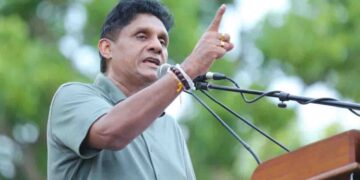
Then came 2022 and bankruptcy. Ranil Wickremesinghe became president and dissolved Gota’s business advisory committees. He didn’t consult them. Neither did opposition leader Sajith Premadasa, who only approached them for donations—buses for schools, equipment for hospitals, computers for education.
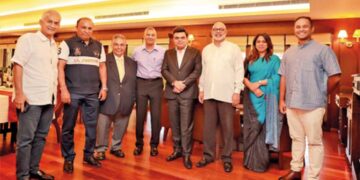
These businessmen had lost the influence Gota gave them. Under Gota, they had advised the government, made substantial profits, received business concessions, and avoided paying their full taxes. Now, both Ranil and Sajith ignored them. That’s when Anura Dissanayake and the JVP stepped in, asking for the same support they had given Gota. The ‘Viyath Maga’ crowd met with Anura and advised him on economic management.
On the night of the presidential election, they met with Anura and briefed him on running the economy. After winning, Anura appointed Duminda Hulangamuwa as the coordinator for these businessmen. Hulangamuwa had been a key member of the 14-person advisory committee Gotabaya formed in 2022 when the country faced bankruptcy. The same businessmen Gota had appointed to chair government institutions are now the ones Anura has appointed to similar positions.
So are these businessmen now JVP theorists? That’s how it looks. If Wijeweera were still around, he’d be eating dirt.