

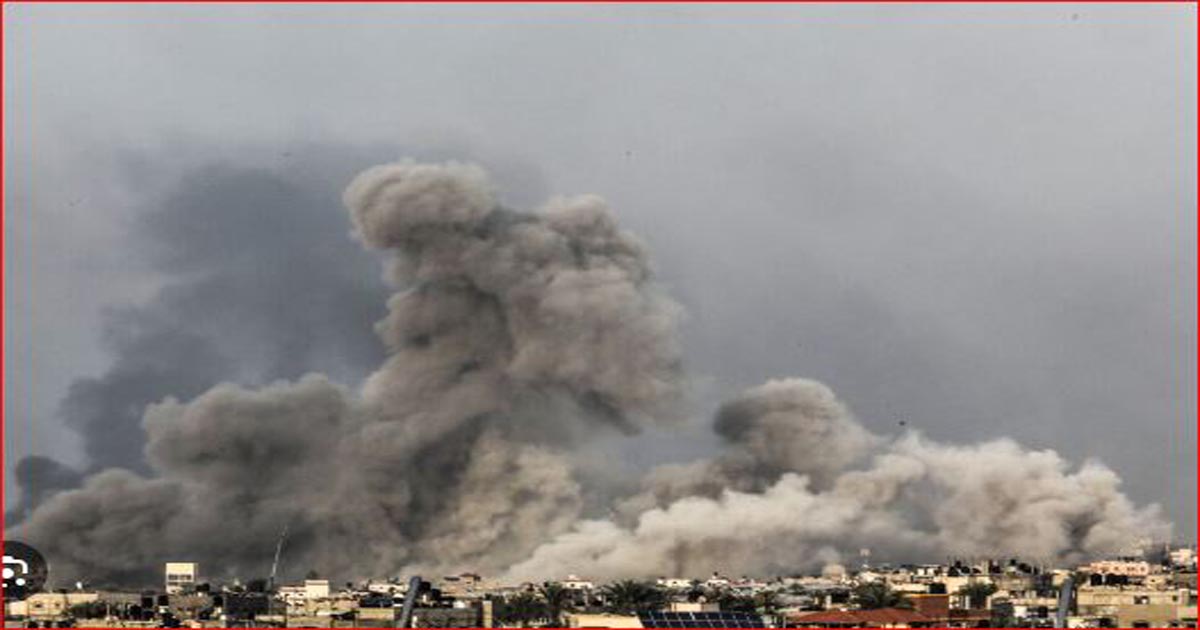
The bombs are falling, the death toll is climbing, and the world is watching a conflict spiral toward catastrophe
In less than a week, joint strikes by the United States and Israel have killed more than 1,000 people inside Iran. Israeli jets are simultaneously pounding targets in Lebanon, threatening to drag yet another front into a war that is already dangerously wide.
And in Washington, the United States Senate had its moment to draw a constitutional line — and stepped back.
By voting 53–47 against advancing a War Powers Resolution, senators effectively handed President Donald Trump a green light to continue a military campaign that is expanding by the day. The debate was framed as one of strength versus weakness. But the real question was accountability.
The framers of the U.S. Constitution did not entrust the power of war to one person. Yet once again, Congress has deferred, citing urgency and national security, even as the region teeters on the edge of wider conflagration.
This is no longer a limited strike operation. It is a rolling escalation.
Each new air raid deepens the human toll. Each retaliatory threat raises the risk of a broader regional war. The Strait of Hormuz — a lifeline for global energy markets — hangs under the shadow of potential disruption. Oil prices jitter. Markets react. Diplomacy fades into the background.
Meanwhile, southern Lebanon risks becoming a second furnace. If Hezbollah fully commits to the fight, Israel’s northern border could ignite in a sustained campaign that reshapes the balance of power across the Levant.
The strategic objective remains murky. Is this about deterrence? Regime destabilization? Retaliation? Without a clearly articulated endgame, military momentum can become its own justification — and history shows how quickly such momentum can outrun political control.
Supporters of the campaign argue that decisive force prevents future threats. Critics warn that force without a defined political outcome invites endless war. Both sides claim to be acting in defense of security. But security built on perpetual escalation is fragile at best.
What is undeniable is this: the Middle East is closer to a multi-front war than at any point in recent years.
Congress had an opportunity to assert oversight before the conflict expanded further. It chose not to. The White House now holds the initiative — and the burden.
The coming days will determine whether this remains a brutal but contained confrontation, or whether it becomes the spark that redraws the region’s fault lines for a generation.
When history judges this moment, it will not only count the missiles launched — it will count the warnings ignored.