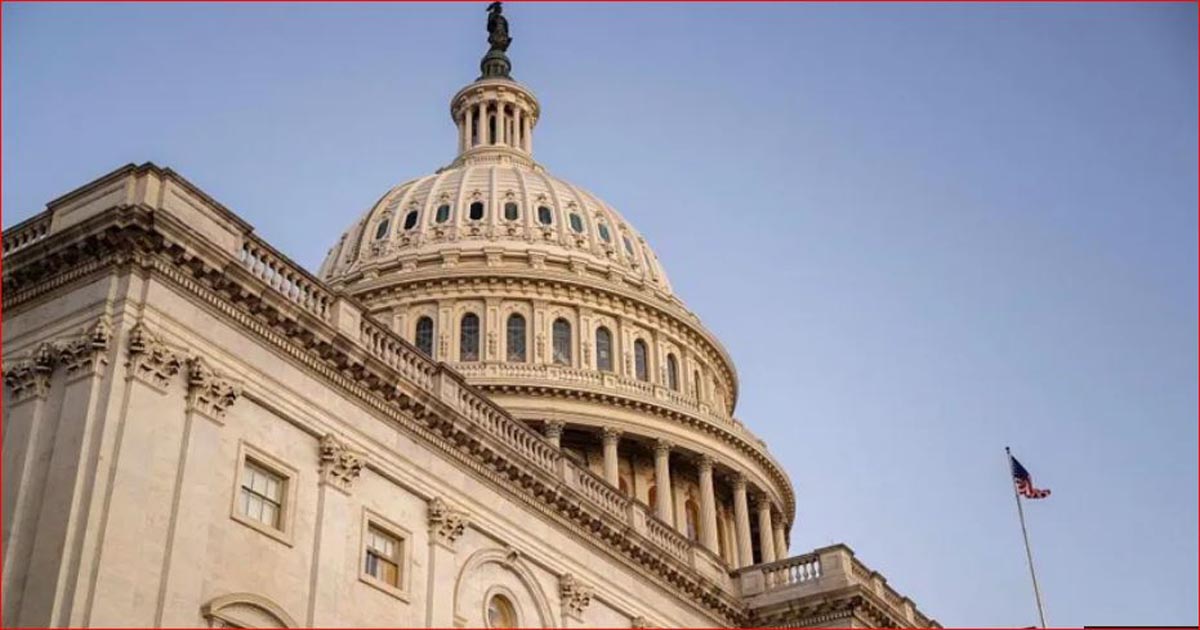
The United States Senate on Wednesday narrowly voted 53 – 47 against advancing a resolution that would have forced President Donald Trump to seek congressional authorization before continuing military operations against Iran. The move effectively allows the White House to press ahead with a widening U.S.–Israeli military campaign that has now killed at least 1,045 people in Iran since Saturday, while Israeli forces have also intensified bombardment in southern Lebanon.
The bipartisan War Powers Resolution, introduced by Senators including Tim Kaine (D-Va.) and Rand Paul (R-Ky.), sought to rein in the president’s authority and require explicit legislative approval for sustained engagement. Republicans in the Senate argued that Trump has the constitutional power to conduct the strikes and that limiting his authority during an active conflict would weaken U.S. deterrence. Democrats countered that the administration had bypassed Congress and failed to show an imminent threat justifying unilateral action.
As the Senate debated, U.S. and allied forces continued aggressive air and naval operations across Iran, targeting military infrastructure and leadership. Iranian authorities reported that the death toll from the strikes — which include attacks on major cities and strategic sites — has now crossed 1,000, with additional casualties in Lebanon and Israel from the spillover of hostilities.
Israeli military jets also hit targets in southern Lebanon linked to Hezbollah, as the conflict threatens to further destabilize the region. The fighting has disrupted global energy routes, particularly around the Strait of Hormuz, and sparked evacuations of foreign nationals from several Middle Eastern countries.
In Washington, the Senate vote marked a significant moment in congressional oversight of the conflict, with lawmakers sharply divided along party lines. Supporters of the resolution vowed to continue pushing for legislative checks on executive power, while opponents maintained that national security interests required a unified front.
The House of Representatives is expected to take up a similar measure, though prospects for passage are uncertain given the current political landscape. Even if approved, any legislation curbing the president’s war powers would likely face a presidential veto, which would require a two-thirds majority in both chambers to override.