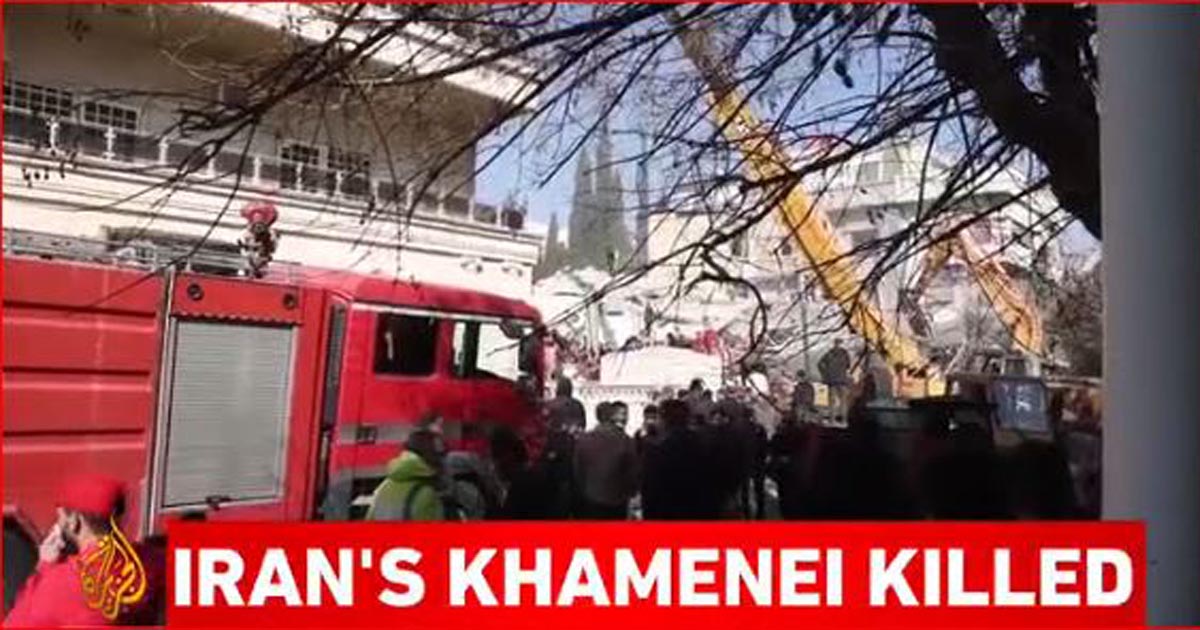
Iranian state media have confirmed the killing of Supreme Leader Ayatollah Ali Khamenei in a sweeping wave of joint US and Israeli attacks that have plunged the Middle East into one of its most dangerous crises in decades.
According to official reports from Tehran, Khamenei was killed along with his daughter, son-in-law and grandson as bombardments intensified across multiple provinces. The announcement marks a dramatic turning point in Iran’s political landscape and is expected to trigger profound regional and global repercussions.
US President Donald Trump, who earlier confirmed the launch of “major combat operations” in Iran following Israeli missile strikes, declared that the bombing campaign would continue “uninterrupted throughout the week or, as long as necessary” to achieve stated objectives. Washington has framed the operation as a decisive move against what it describes as escalating security threats.
Iranian state media reported that one of the strikes hit a school in southern Iran, killing at least 108 people. Nationwide, at least 201 fatalities have been reported across 24 provinces, though independent verification remains difficult amid ongoing attacks and communications disruptions.
Tehran has responded with retaliatory strikes targeting Israeli positions and US-linked assets across the Middle East. Iranian attacks have reportedly reached multiple countries, including Qatar, United Arab Emirates, Kuwait, Bahrain, Jordan, Saudi Arabia and Iraq, raising fears of a widening regional war.
Several countries across the Gulf and broader region have closed their airspace as missiles and drones continue to be exchanged. International airlines have suspended flights, and global markets are bracing for further instability.
The death of Khamenei — Iran’s most powerful political and religious authority for decades — creates immediate uncertainty over succession and governance in Tehran, while dramatically escalating tensions between Iran, Israel and the United States.
With military operations ongoing and retaliation intensifying, the region now faces a volatile and unpredictable chapter that could reshape the Middle East’s strategic order.