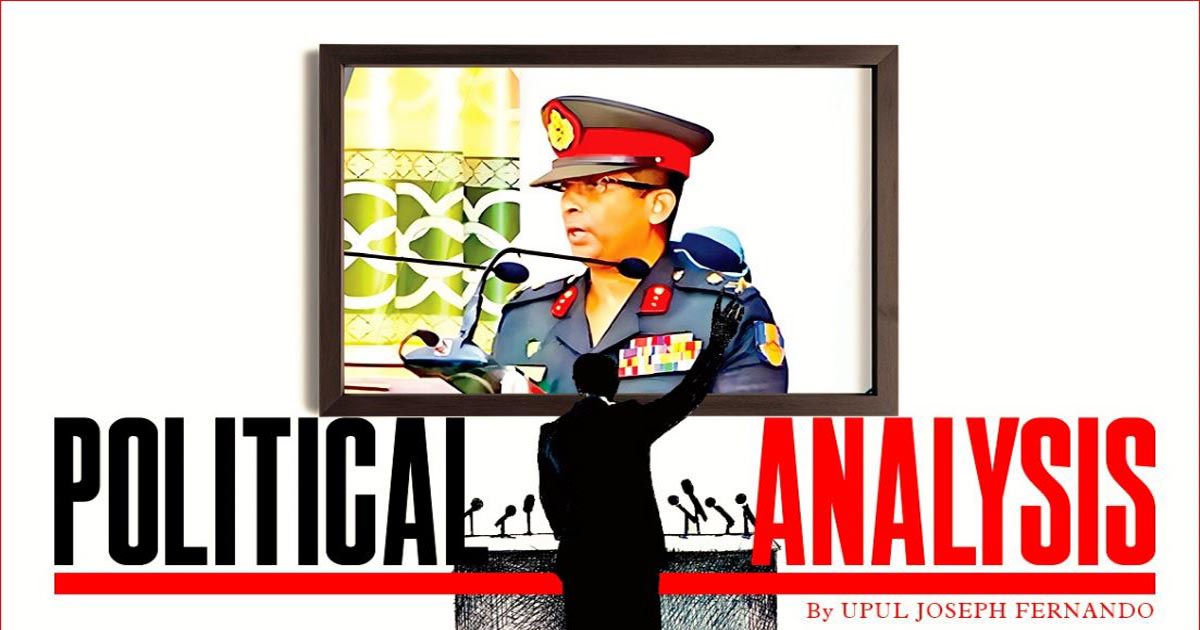
The name Suresh Sale became widely known across the country in 2016, during the Yahapalana government of Maithripala Sirisena and Ranil Wickremesinghe. At the time, Sale was serving as Director of Military Intelligence. He had originally been appointed to that position by Gotabaya Rajapaksa when Gotabaya was Secretary of Defence.
Although Mahinda Rajapaksa lost the 2015 presidential election and Gotabaya stepped down as Defence Secretary, newly elected President Sirisena did not remove Sale from his post. He continued as Director of Military Intelligence.
Shortly after Sirisena became President, Gotabaya secretly visited him at his official residence. This was during a period when the Sirisena–Ranil government was pursuing multiple investigations against Gotabaya, including allegations related to the Avant Garde controversy and the MiG aircraft deal. As investigative teams were preparing to arrest Gotabaya, he obtained a court order preventing his arrest. Following this ruling, President Sirisena made a surprising statement, saying the court’s decision in Gotabaya’s favour demonstrated the independence of the judiciary.
Later, when Gotabaya and eight military commanders were summoned to court over the Avant Garde case, President Sirisena strongly criticised the Bribery Commission and the Financial Crimes Investigation Division. He declared that war heroes who had won the war should not be humiliated by being brought before courts, arguing that seating them on court benches in such a manner was an insult to the nation.
Through this speech, Sirisena effectively turned against the Ranil-led government. Overnight, Gotabaya and the military commanders—previously branded as corrupt figures from the Rajapaksa era—were portrayed as heroes. The UNP government and the civil society groups that had backed the Sirisena–Ranil administration were thrown into disarray. Sirisena had ignited a political bomb—and it was the government itself that felt the explosion. The Rajapaksas re-emerged as heroes.
According to information that reached Ranil and the UNP, Sirisena’s remarks were based on intelligence provided by Suresh Sale. The intelligence reportedly warned that arresting or summoning Gotabaya and senior military officers could trigger unrest within the armed forces against the government, and that such tensions could escalate into a serious threat.
It was believed within Ranil’s camp that Sirisena, fearing this intelligence assessment, publicly attacked his own government. The UNP suspected that Sale had acted in line with the interests of Gotabaya and the Rajapaksas, and that Sirisena was being influenced through him. Privately, the UNP urged Sirisena to remove Sale immediately.
Publicly, however, criticism of Sale was voiced by civil society activists who had supported Sirisena’s rise to power, as well as by then powerful minister Rajitha Senaratne. Representing Purawesi Balaya, Professor Sarath Wijesuriya, Gamini Viyangoda, and Ven. Dambara Amila Thero held a press conference demanding Sale’s removal, alleging he was conspiring to topple the government in line with Rajapaksa interests. Rajitha Senaratne further claimed that Sale was attempting to create instability in Jaffna to embarrass the government.
Despite mounting pressure, Sirisena initially refused to remove Sale, insisting that he was providing accurate intelligence. However, under sustained pressure from the UNP, civil society, and particularly the JVP—led by Anura Kumara Dissanayake—Sirisena eventually relented. The JVP had taken a firm stance that Gotabaya must be brought before the law, warning that he would otherwise become a future threat. JVP leaders reportedly met Sirisena and argued that the Rajapaksas were manipulating him through Sale. Ultimately, Sirisena asked Sale to step down.
The first major crack in the Sirisena–Ranil government began with the Sale issue. Thereafter, Sirisena moved increasingly closer to Gotabaya and attempted to rebuild strained ties with the Rajapaksas. At one stage, it was suggested that if Sirisena contested the 2019 presidential election, Gotabaya would support him as a prime ministerial candidate. Close Sirisena allies such as S.B. Dissanayake and John Seneviratne even publicly floated the idea of “Sirisena as President, Gotabaya as Prime Minister.”
In hindsight, the unraveling of the Sirisena–Ranil government arguably began with the Sale controversy.
As the JVP had predicted, Gotabaya eventually became President. After assuming office, he appointed Suresh Sale as head of the State Intelligence Service. The first major political attack against Gotabaya’s government by the Samagi Jana Balawegaya and the UNP centred on the Easter Sunday attacks. Key opposition figures at the time, including Harin Fernando and Manusha Nanayakkara, alleged that the “mastermind” behind the Easter attacks was within the government—implicitly targeting Sale. They referred to a mysterious message containing the word “Sonic,” claiming that “Sonic” was a senior security official.
Public anger against Gotabaya’s government first intensified around these Easter-related allegations. The Catholic Church also launched its campaign for justice largely on this basis.
After Gotabaya was forced out amid the Aragalaya protests, Ranil Wickremesinghe became President, and Harin and Manusha joined the government as ministers. Notably, neither Ranil nor his administration took action against Suresh Sale. On the contrary, they defended him against Easter-related allegations. The same Ranil and UNP who had once called for Sale’s removal in 2016 now stood as his protectors.
Anura Kumara Dissanayake was elected President with significant support from the Catholic community. He had pledged to remove Sale from the State Intelligence Service and uncover the true mastermind behind the Easter attacks. Yet it took him a month to remove Sale—and a full year to arrest him.
Why?
Because Suresh Sale is no ordinary official. He is a political bomb—one capable of shaking governments. Whether Anura fully understands that remains to be seen.