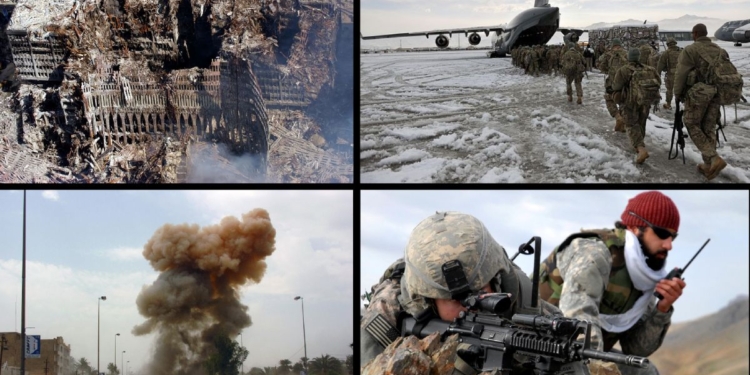
Summary
In 2026, intense geopolitical competition and counterterrorism efforts will shape and influence the global threat environment. Simultaneously, non-state armed groups driven by religious, ethnic, and extreme ideological motives will continue to pose threats to governments and societies across various countries.
Details
In 2026, insurgents and terrorist organizations will carry out attacks across Asia, the Middle East, Africa, Latin America, and Western countries. Based on observations of terrorist statements and reports from government sources, more than 95% of these attacks are expected to occur in conflict zones such as Sudan, Mali, Somalia, Libya, Nigeria, Afghanistan, and Pakistan, while isolated attacks may take place in North America, Europe, Australia, and New Zealand.
Due to heightened security concerns and recent domestic disruptive incidents, several major Western cities have scaled back or canceled New Year celebrations for 2025–2026. Nevertheless, the main theaters of terrorism will remain concentrated in the Global South, particularly in Asia, the Middle East, and Africa.
The decline in attacks in Western countries will nonetheless draw global attention to incidents like the family-based attack at Bondi Beach in Sydney in December 2025. Migrant and diaspora communities that remain fragmented, along with radicalized groups operating in physical and digital spaces, will continue to pose threats, and Western countries will periodically experience attacks in 2026.
The center of global terrorism has shifted from the Middle East to Africa and Asia. However, threat groups remain active in Iraq, Syria, Lebanon, and Yemen. Iran’s axis of resistance—which includes Shia groups in Iraq, Syria, Lebanon, and Yemen, as well as Sunni groups in the Gaza Strip—has been unable to prevent Israel from striking Iran.
To assert control over Israel, Iran has recently renewed support to Hezbollah in Lebanon and Ansar Allah in Yemen, both weakened by Israeli actions, attempting to restore its sphere of influence. Except for Iran, Middle Eastern governments publicly reject terrorism. Following the Hamas attack on Israel on October 7, 2023, the destructive conflict in the Gaza Strip has deeply eroded public support for either cooperation or extremism.
In Western countries, both far-right and far-left movements have gained a foothold, sometimes contributing to attacks. The rise of far-right political parties in 2026 and the foreseeable future may provide space for far-right extremism. Strengthened security and intelligence cooperation in Western countries have disrupted many attacks planned by far-left, far-right, and Islamic groups. For example, the FBI successfully thwarted coordinated bomb attacks at five locations in Los Angeles during New Year’s celebrations. The Kashbah Islands Liberation Front, a far-left, pro-Palestinian, anti-state, and anti-capitalist group, reportedly has 939 followers on Instagram, with posts containing phrases like “Death to America” and “Peaceful protest will never be enough.”
Like 2025, many attacks in 2026 will occur in the Global South. According to counterterrorism data sets, about 60–70% of terrorist attacks are expected to occur in African countries. In 2026, the Islamic State and Al-Qaeda-affiliated organizations in Africa will remain deadly terrorist threats.
Based on interviews with counterterrorism actors and detained terrorist leaders, if the war between Israel and Hamas and its allies does not resume, only about 15–20% of attacks are expected in the Levant and Gulf regions. In 2026, attacks by Tareek-e-Taliban Pakistan targeting Pakistan will exceed attacks carried out by the Islamic State’s Khorasan Province and the Islamic State in Pakistan Province.
Al-Qaeda-linked TTP attacks from Afghanistan could trigger conflict between Afghanistan and Pakistan. Similarly, attacks by Pakistan and India could spark conflict between the two nuclear powers. Terrorism is also rising in Bangladesh. Throughout 2025, as Bangladeshi Islamists coordinated with Afghan Taliban groups, there will be demands to implement Sharia, and minorities in Bangladesh, especially Hindus and Christians, may face increased attacks in 2026.
Many South and Central Asians are recruited by ISKP, both in their home countries and in diaspora communities. Central Asian governments have restricted religious spaces, reducing opportunities for radicalization and recruitment within their borders. Nevertheless, Central Asians working abroad have been recruited by both the Islamic State and Al-Qaeda to carry out attacks in Russia, Europe, and elsewhere.
Threats in Southeast Asia have decreased, but remnants of the Islamic State and Al-Qaeda continue operations. Prior to the Bondi Beach terrorist attack, two foreign terrorist fighters had traveled to Mindanao in the Philippines for three weeks in November 2025. Manila has continued efforts to integrate identified Islamic factions and supporters into the main organization.