
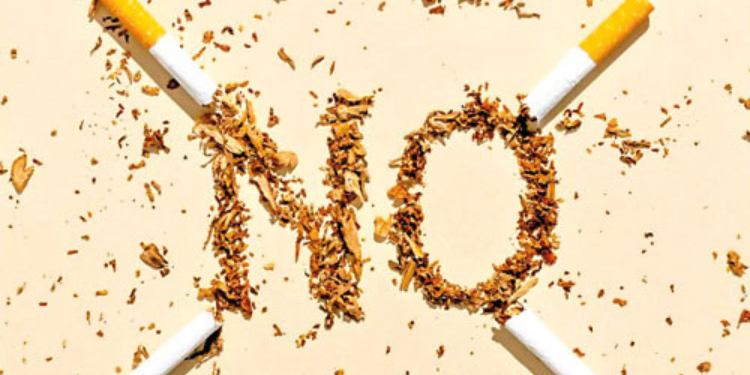
The National Authority on Tobacco and Alcohol (NATA) has called for legislation to ban the sale of cigarettes to anyone born after 2010, its chairman, Ananda Rathnayake, told the Sunday Times.
Dr. Rathnayake said the proposal, which has the backing of specialist doctors and other medical professionals, will be formally presented to the government.
The proposed law would mirror a similar measure passed by the Maldives last year, which prohibits the sale, purchase, and use of all tobacco products for anyone born on or after January 1, 2007.
“If such a law is introduced, it would serve as a long-term solution to reduce smoking prevalence among Sri Lankans,” Dr. Rathnayake said.
He added that concerns about tourism impacts are unfounded. “The Maldives is heavily reliant on tourism. If anyone claims that banning smoking in Sri Lanka would affect tourism, the Maldives proves otherwise. The overall theme there is ‘you can visit a smoke-free country.’” He further noted that one in three smokers dies prematurely.
Currently, the authority to carry out raids on cigarette sales rests with Public Health Inspectors (PHIs), the police, and food and drug inspectors. The legal age for the sale or purchase of cigarettes is 21 years.
NATA also plans to urge the government to introduce a licensing system for the sale of tobacco, similar to the licensing of liquor shops. Dr. Rathnayake highlighted that cigarette companies deliberately target the younger generation to attract new customers.
The increase in cigarette prices has been a topic of discussion for years. “Ideally, 75% of the price of a cigarette should be taxes. Before the Covid-19 pandemic, taxes had been increased to 73%. However, post-Covid, while taxes on many products were increased, cigarette taxes remained unchanged. Presently, taxes are around 63%,” he said.
Dr. Rathnayake explained that the tax system for cigarettes is complicated and depends on the size of the cigarette, allowing companies to shift categories to their advantage. “Even with a 27.5% tax increase, companies still earn over 92% profit. The government needs to reform how revenue from cigarette taxes is calculated.”
He also warned that the belief that the government earns significantly from cigarette taxes is misleading. The actual annual revenue is around Rs 90 billion, with 80% of cigarette companies owned by British firms.
“Measures are already underway to amend the National Authority on Tobacco and Alcohol Act itself,” he added.
Dr. Rathnayake emphasized the public health impact of tobacco and alcohol, which are linked to 200 diseases in Sri Lanka. Approximately 22,000 people die prematurely each year due to tobacco consumption, and Rs 220 billion is spent annually on treating tobacco-related illnesses—equivalent to about 1.6% of the country’s overall economy.
The authority also highlighted the environmental hazards caused by cigarette consumption. It estimates that 10 million cigarette filters are discarded daily, and contrary to popular belief, filters do not reduce harmful chemical absorption for smokers.
Dr. Rathnayake further pointed out that land used for tobacco cultivation is not available for food crops, and firewood is consumed in the drying process, causing additional environmental damage.