
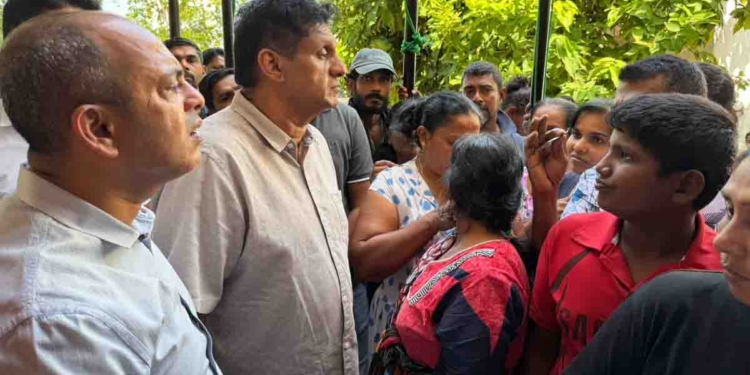
Opposition Leader Sajith Premadasa stated that although some individuals are accusing the Meteorological Department of failing to warn the public about the cyclone, the department had, in fact, issued warnings from November 11. He noted that Meteorological Department officials appeared before the media and informed the country that turbulence in the Bay of Bengal would lead to the formation of a low-pressure area in the southeastern sea, bringing over 100 mm of rainfall. They further warned that this low-pressure area would later intensify into a depression and develop into a cyclone. Sri Lanka Latest News
He added that during this period, the Meteorological Department, the heads of the Disaster Management Unit, and the Head of the Building Research Unit all held press conferences and alerted the public. Information and warnings were issued on November 11, 12, 14, and 17. The weather forecasts for November 21 and 22 had also been presented by the Deputy Director of the Department of Science. Furthermore, on November 23 and 24, both local and international media continued to inform the public.
Despite clear warnings issued between November 11 and 15, the Opposition Leader questioned why the disaster management process remained inactive. He stressed that instead of blaming the Meteorological Department, authorities must address the serious shortcomings within the disaster management system. He stated that the people of the country have suffered enormous losses to life and property due to the cyclone, and at a time when many sectors have collapsed and millions have been affected, officials who provided accurate information should not be threatened. Instead, lessons must be learned from this disaster, and mistakes corrected immediately.
Opposition Leader Sajith Premadasa made these remarks in a special statement today.
Do Not Politicize Relief Distribution
Premadasa emphasized that relief distribution for the affected communities must be transparent and honest. He cited a serious issue in the Kolonnawa Divisional Secretariat, where attempts were made to require approval from two additional community groups, beyond the signatures of four government officials.
He said that in addition to the recommendations of the Grama Niladhari, Economic Development Officer, Samurdhi Officer, and Divisional Disaster Management Officers, signatures from the Disaster Management Committee and the Head of the Community Development Committee were being requested. He noted that these grassroots bodies were created through politicization in the past, and at a time when youth societies, civil defense committees, and similar groups are politically influenced, relief distribution must remain free from political interference.
Premadasa stressed that only the signatures of government officials are necessary and sufficient for beneficiaries to receive relief. He called for an immediate end to unnecessary political involvement and external influence in the relief process.
“Emergency Regulations Are for Disaster Relief, Not Media Suppression”
The Opposition Leader further stated that the opposition supported the declaration of an emergency solely to ensure rapid and effective assistance to those affected by the disaster. He emphasized that these measures should not be used to suppress the media.
He said the government must not use emergency laws to initiate repressive actions during this crisis. Instead, authorities should focus on delivering maximum relief through an efficient mechanism. Suppressing the media while failing to provide adequate assistance is unacceptable, Premadasa said.