
The White House has reaffirmed President Donald Trump’s commitment to strengthening India-US relations, emphasizing that the partnership remains a priority for the US administration despite ongoing tensions surrounding trade tariffs and India’s oil imports from Russia.
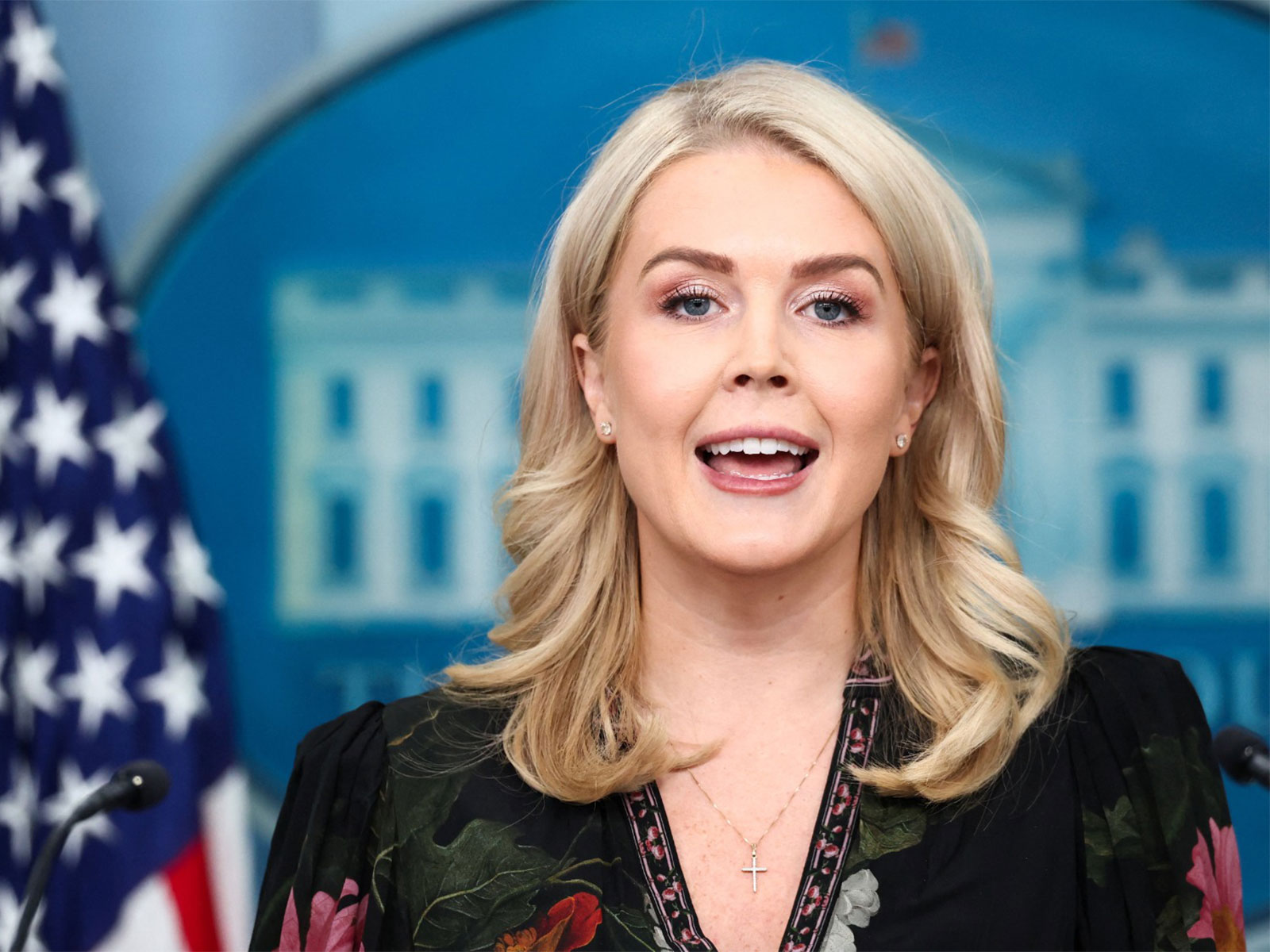
Addressing a press briefing on Tuesday (local time), White House Press Secretary Karoline Leavitt stated, “The President is positive and feels very strongly about the India-US relationship. A few weeks ago, he spoke to the Prime Minister directly when he celebrated Diwali in the Oval Office with many high-ranking Indian-American officials here at the White House.”
Leavitt further highlighted that the United States has “a great Ambassador to India, Sergio Gor,” and confirmed that President Trump’s trade team is engaged in “very serious discussions” with New Delhi. “I know the President has great respect for Prime Minister Modi and they speak pretty frequently,” she added.
Her remarks follow recent comments by President Trump during his five-day Asia tour, where he claimed that India has significantly reduced its purchase of Russian oil, calling New Delhi “very good” on the matter. Since mid-October, Trump has repeatedly stated that Prime Minister Narendra Modi assured him India would curtail or halt crude imports from Moscow. These assertions come amid the Trump administration’s efforts to economically isolate Russia through sanctions and energy restrictions in response to the ongoing war in Ukraine.
Earlier this month, India’s Ministry of External Affairs (MEA) responded to Trump’s remarks, underscoring that the country bases its energy decisions on national interests and consumer welfare. MEA spokesperson Randhir Jaiswal said, “India is a significant importer of oil and gas. It has been our consistent priority to safeguard the interests of the Indian consumer in a volatile energy scenario. Our import policies are guided entirely by this objective.”
He added that India aims to ensure stable prices and secure energy supplies through diversified sourcing. “Where the US is concerned, we have for many years sought to expand our energy procurement. This has steadily progressed in the last decade. The current Administration has shown interest in deepening energy cooperation with India. Discussions are ongoing,” he said.
Bilateral ties have experienced strains in recent months, particularly after the United States imposed steep trade tariffs on India in August. Washington levied 50 percent tariffs, including 25 percent secondary duties, in response to India’s continued purchases of Russian oil. India condemned the move as “unfair, unjustified, and unreasonable,” while President Trump described US-India trade relations as a “totally one-sided disaster.”
Addressing business leaders at the Asia-Pacific Economic Cooperation (APEC) Summit in South Korea last week, Trump also asserted that he had “threatened India and Pakistan with tariffs” to avert a potential nuclear conflict. He referenced India’s Operation Sindoor, launched in May following the Pahalgam terror attack in Jammu and Kashmir, which resulted in the deaths of 26 civilians.
Trump claimed he played a key role in preventing an escalation. However, India has firmly rejected this narrative. The MEA clarified that the ceasefire between India and Pakistan was achieved through established military communication channels between the Director Generals of Military Operations (DGMOs) of both nations.
“India’s position remains unchanged; all issues with Pakistan are to be resolved bilaterally, without any third-party involvement,” the ministry reiterated.