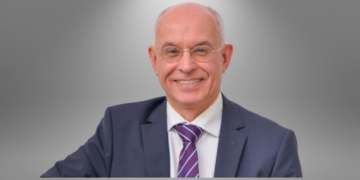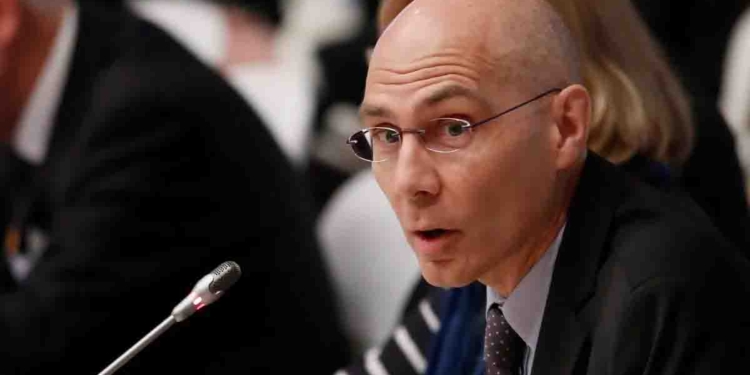
The United Nations High Commissioner for Human Rights, Volker Türk, is expected to visit Sri Lanka later this month or in early July, according to reliable sources from the Ministry of Foreign Affairs.
Although the Sri Lankan government has agreed to facilitate Türk’s visit, the specific dates have not yet been finalized.
This marks the first official visit to Sri Lanka by a UN High Commissioner for Human Rights in nine years. The last such visit was by Zeid Ra’ad Al Hussein in February 2016, during the presidency of Maithripala Sirisena.
Volker Türk, an Austrian national, assumed his role as UN Human Rights Chief in October 2022. His upcoming visit comes at a critical time, as the Sri Lankan government faces ongoing international pressure to address long-standing human rights concerns.
In a report presented to the United Nations in August last year—just ahead of Sri Lanka’s presidential and parliamentary elections—Türk urged the newly elected government to commit to essential constitutional and institutional reforms aimed at resolving the root causes of conflict and bridging the accountability gap. He also emphasized the need to advance national reconciliation efforts.
The report further recommended the immediate suspension of the Prevention of Terrorism Act (PTA) and insisted that any replacement legislation align with international human rights standards. It also called for the amendment of laws that unnecessarily curtail freedoms of expression, association, and peaceful assembly, including concerns regarding the Internet Security Act and the ICCPR Act.
Türk’s predecessor, Michelle Bachelet, had also sought to visit Sri Lanka during her tenure, but that visit never materialized.
During Bachelet’s term, the Office of the High Commissioner for Human Rights (OHCHR) initiated the Sri Lanka Accountability Project—an external mechanism for gathering evidence related to alleged human rights violations. The Sri Lankan government has strongly opposed this project.
As of 5 July 2024, the OHCHR repository established under this initiative contained 96,215 individual items, gathered from over 470 sources, including international and multilateral organizations.
Earlier this year, at the High-Level Segment of the UN Human Rights Council in March, Sri Lanka’s Foreign Minister Vijitha Herath publicly rejected the OHCHR Sri Lanka Accountability Project. He reaffirmed the government’s commitment to pursuing a credible and transparent domestic mechanism to address issues of accountability.