
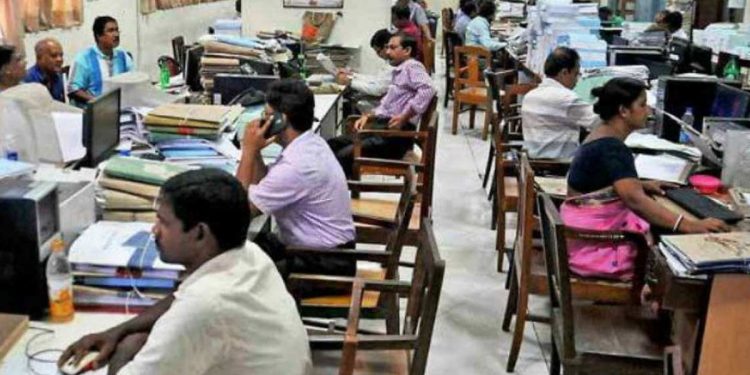
The Department of Population and Statistics has reported a notable decline in public sector employment in Sri Lanka, with the number of employees dropping by approximately 205,772 in recent years.
In 2015, Sri Lanka’s total workforce stood at 8,600,629, of which 1,352,167 were employed in the public sector, accounting for nearly 16% of total employment. However, by the second quarter of 2024, the total number of employees had decreased to 7,988,626, with public sector employment reducing to 1,146,395.
As a result, public sector employment has dropped to 14% of the total workforce as of the second quarter of 2024, according to Professor Wasantha Athukorala, Director of the Department of Humanities and Statistics at the University of Peradeniya, who shared these insights with Mawrata.
The data further reveals that between the second quarter of 2015 and the second quarter of 2024, public sector employment declined by approximately 205,772. Additionally, by the second quarter of 2020, the public sector workforce stood at 1,180,450, but by 2024, this number had dropped by 34,055.
A sectoral analysis indicates that the agricultural sector has experienced the highest decline in public sector employment. Moreover, employment in the non-agricultural sector has also gradually decreased over the years.
Despite the overall reduction in public sector employment, a disparity remains across different sectors. While some areas face an employee surplus, others are struggling with a shortage of workers. Additionally, a significant portion of public sector employees are reported to be underemployed, highlighting inefficiencies in workforce distribution.
These findings raise concerns about workforce management and the structural challenges within Sri Lanka’s public sector employment system.