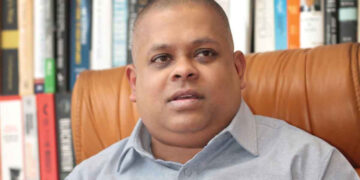


A special press conference was held today (23) in Colombo to address the 2024 presidential election results, the current political landscape, and the future actions of the People’s Struggle Alliance. Nuwan Bopage, a representative of the People’s Struggle Alliance, spoke at the event.
The results of the 2024 presidential election were announced, with Anurakumara Dissanayake being appointed as the new president. While the election reflects the democratic rights of the people to some extent, it falls short in achieving the broader aspirations of the population.
Reflecting on past elections, Bopage recalled the 2015 presidential election, where there was widespread discussion about eliminating corruption and promoting good governance. Although the People’s Struggle Alliance respected these aspirations, they emphasized that true victory would only come from transforming the existing political and economic systems. However, the regime that came to power in 2015 ultimately failed to meet the people’s expectations.
During the 2019 presidential election, the hope of establishing a disciplined government to address the country’s issues resonated with the public. The Alliance respected these desires but remained firm in their belief that only a systemic change could bring about real progress. As predicted, the existing political and economic structures, which serve the interests of capitalists, did not yield positive outcomes for the people. Two years later, the failure of these systems became evident, as citizens took to the streets in protest.
Bopage noted that the people’s struggle had fundamentally altered the political landscape of the country. The slogans of the Golfface protests, such as “No to 225,” “Stop the corruption,” and “Lower the tax burden,” reflected the people’s demand for a complete overhaul of the political and economic systems.
In the 2024 presidential election, voters once again expressed their desire for change. By rejecting traditional political parties and leaders, the people made their demand for political and economic transformation clear. While the People’s Struggle Alliance respects the will of the voters, Bopage expressed concern that there was little discussion during the campaign about a full-scale transformation of these systems. He pointed out that Anurakumara Dissanayake’s platform, like those before him, failed to commit to addressing the fundamental political and economic issues or offer a definitive solution to the country’s national problems.
Bopage also highlighted the continued influence of external forces, such as the IMF, Indian economic strategies, and American interventions, which he described as the real enemies behind leaders like Ranil Wickremesinghe. He expressed doubt about how the newly elected leaders, including Anura and Sajith, would confront these external forces, noting that they avoided discussing these issues during the campaign.
Another concern raised was the treatment of Tamil plantation workers and the lack of a clear solution to national problems in this election. Instead of addressing these issues directly, political parties seemed more focused on winning votes by telling different stories to different regions of the country. The lack of attention to the rights of these communities was reflected in the election results in the Northern Province.
Looking ahead, Bopage stressed the importance of the upcoming parliamentary election, describing it as crucial for addressing the unresolved economic and political challenges. He warned that without strong representation in parliament, the people’s voice could be sidelined. The People’s Struggle Alliance is preparing to take their political program nationwide, with the aim of continuing the fight for democracy and ensuring the people remain active participants in shaping the country’s future.
“We have a battle ahead of us,” Bopage declared. “The vote we received is critical, and we must continue to push forward with the people who supported us. We will take our message to every corner of this country, and we are ready to take the necessary steps to make this vision a reality.