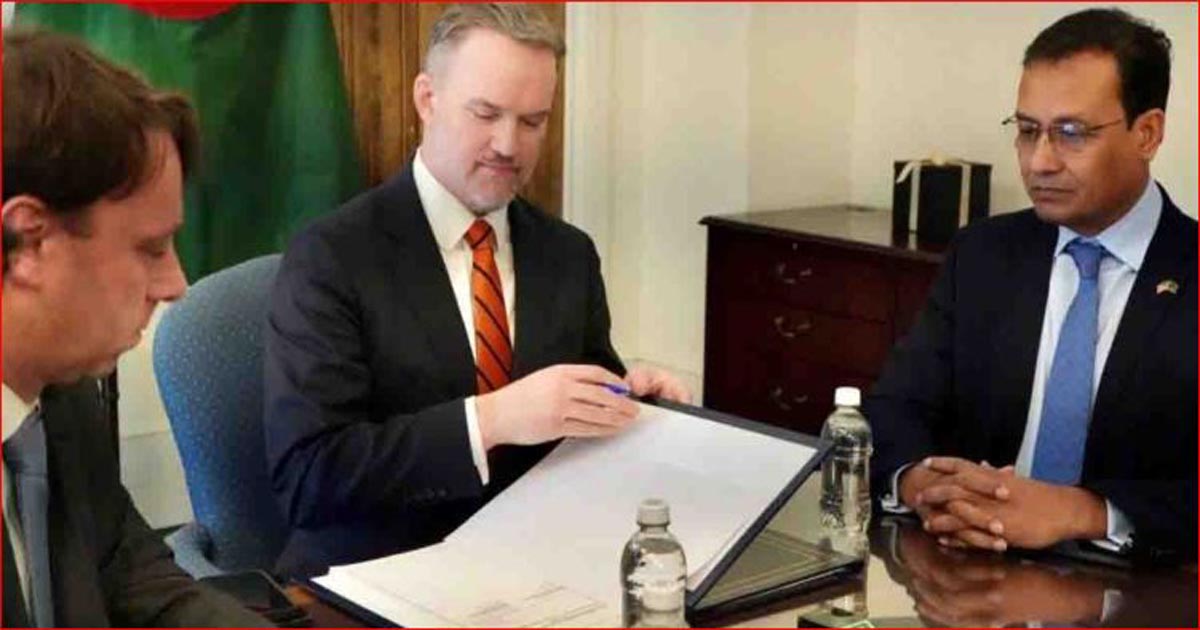
The United States and Bangladesh have signed a tariff agreement, setting a 19% duty on Bangladeshi exports to the US, while granting a 0% tariff on selected garment categories. This concession is being described as a major advantage not available to other countries in the region. ‘Mawrata’ had reported this development in advance. Questions are now being raised over whether this agreement could pose challenges for Sri Lanka’s garment exports. | Sri Lanka Latest News
Under a newly signed trade agreement between Bangladesh and the United States, a 19% tariff has been decided on goods exported from Bangladesh to the US. Sri Lanka Latest News
A key feature of the agreement is the United States’ consent to reduce tariffs on textiles and certain categories of garments to 0%.
According to the new agreement, garments manufactured using American cotton or American manufactured fibres will be allowed duty-free access to the US market under specified quota limits. This provides Bangladesh with a significant opportunity to enter the American market without tariffs for such products.
For apparel and other Bangladeshi products that fall outside this concession, the United States will continue to levy the standard 19% tariff as a general duty.
An Advantage Not Extended to Other South Asian Countries
Trade analysts point out that this new duty-free mechanism places Bangladesh in a distinctly advantageous position compared to major apparel-exporting countries such as India, Vietnam, and others.
Countries including India and Vietnam still face tariffs ranging between 16% and 20% when exporting garments to the United States, and they do not currently have comparable agreements granting 0% duty access.
A Major Boost for Bangladesh’s Apparel Industry
Bangladesh, the world’s second-largest apparel exporter, is expected to benefit significantly from the agreement. Exporters believe that increased use of American raw materials will help reduce production costs and enhance competitiveness in the global market.
It is further noted that the agreement could lead to increased investment, more employment opportunities, and higher foreign exchange earnings within Bangladesh’s apparel sector.
More Than Trade — A Geopolitical Signal
Economic analysts observe that this agreement can be viewed not only as a commercial arrangement but also as a geopolitical strategy aimed at restructuring supply chains between the United States and South Asia