

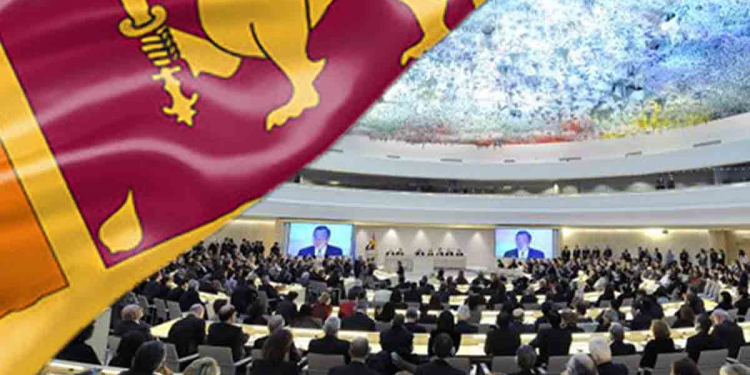
The United Nations Human Rights Council (UNHRC) has adopted resolution A/HRC/57/L.1, extending the mandate of the Office of the High Commissioner for another year. This extension will allow the continued collection of evidence regarding Sri Lanka’s human rights violations, potentially for use in future war crimes trials.
Passed earlier today in Geneva, the resolution calls for an oral update to the UNHRC at its 58th session and a detailed progress report on reconciliation, accountability, and human rights at the 60th session.
In response, Sri Lanka reiterated its opposition to the resolution, urging member states to support addressing human rights issues through domestic mechanisms. Sri Lanka’s ambassador assured the Council that domestic processes on reconciliation, accountability, and justice would be credible and independent, operating within the constitutional framework. A truth and reconciliation process that gains public trust would also be implemented, he added.
The Core Group, which drafted the resolution, emphasized that the Sri Lanka Accountability Project enables the Office of the High Commissioner to collect, analyze, and preserve evidence of severe human rights violations and breaches of international humanitarian law. Their goal, the Core Group stated, is to end the longstanding impunity that has persisted in Sri Lanka.
Belgium, speaking on behalf of the European Union, noted that the project is crucial for ensuring reconciliation and accountability in Sri Lanka. They acknowledged that many stakeholders had hoped for a longer extension of the mandate and expressed the need to engage with the new Sri Lankan government on how best to support these efforts.
Costa Rica urged Sri Lanka’s new president to adopt an inclusive national vision that addresses the root causes of ethnic conflict, corruption, and impunity. Meanwhile, Cuba and China voiced their opposition to resolutions lacking the consent of the affected country, with China further expressing its disapproval of using human rights as a tool for interference in a nation’s internal affairs.
Japan, while recognizing Sri Lanka’s efforts, expressed hope that the new authorities would enhance accountability and reconciliation through transparent domestic mechanisms.
The resolution comes in the wake of a damning report from the Office of the High Commissioner for Human Rights (OHCHR), which documented abuses in Sri Lanka between October 2022 and July 2024. The report detailed sexual abuse and intimidation of Tamil activists by security forces, crackdowns on memorials in the North-East, and new legislation that could suppress dissent. It also linked entrenched impunity to corruption, abuse of power, and governance failures, which contributed to Sri Lanka’s recent economic crisis. The report recommended that other states explore international legal options for advancing accountability, including the International Criminal Court (ICC) and prosecutions under universal jurisdiction.