Multiple Special Rapporteurs of the United Nations have responded to the government’s request for comments on Sri Lanka’s revised anti-terrorism bill, which is intended to replace the Prevention of Terrorism Act (PTA), expressing “deep concern” over the continuation of “substantive deficiencies” that cause the draft legislation to fall “significantly short of conformity with international law.”
The concerns were detailed in a joint report issued by several UN human rights mandate holders, including the Special Rapporteur on counter-terrorism and human rights, the Working Group on Arbitrary Detention, the Working Group on Enforced or Involuntary Disappearances, and Special Rapporteurs on extrajudicial executions, human rights defenders, privacy, and torture.
The draft legislation, titled the “Protection of the State from Terrorism Bill” (PSTA), was published by Sri Lanka’s Ministry of Justice in December last year as a replacement for the 1979 Prevention of Terrorism Act. The bill was opened for public comments until February 28.
In their detailed joint communication, the UN experts argued that the bill’s existing framework is “significantly vague and overbroad,” making it vulnerable to unintended consequences as well as deliberate misuse. They warned that such provisions could potentially be used to target civil society actors and human rights defenders.
A central issue raised by the experts relates to the proposed definition of terrorism under Section 3. They contend that it fails to comply with the principle of legality. According to the rapporteurs, international best practices restrict terrorism to conduct involving death, serious bodily injury, or hostage-taking. However, the PSTA includes “mere hurt,” property damage, and ordinary crimes such as robbery or weapons offences within its scope.
They further criticised the bill’s mental element, which extends criminal liability to cases involving “knowledge” or “recklessness” rather than strictly requiring “intention.” The rapporteurs also urged the removal of broadly framed intent elements, including references to “infringing the sovereignty” of a country.
The draft legislation’s implications for freedom of expression also drew strong criticism, particularly the expansive definition of “confidential information” under Section 78. The rapporteurs warned that, when read together with Section 8, this provision could effectively criminalise legitimate media reporting on security operations, police misconduct, or human rights violations.
They further observed that the use of the vague term “encouragement” of terrorism, rather than “incitement,” lowers the threshold for criminal liability and fails to incorporate the necessary “double intent” requirement to demonstrate that a message was intended to incite a terrorist act. Similarly, they expressed concern that the offence of “dissemination of terrorist publications” under Section 10 is drafted so broadly that it could expose journalists, researchers, or activists to prosecution.
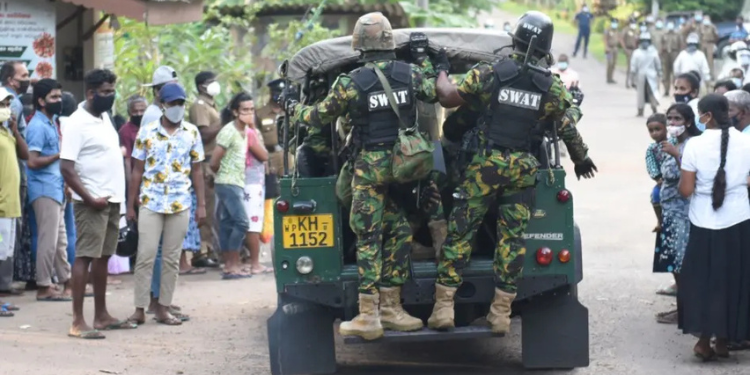
Among the most alarming concerns raised was the potential normalisation of a “permanent state of militarised emergency” through the extension of extensive police powers to the armed forces and coast guard. The PSTA permits military detention for up to 24 hours, in addition to unspecified travel time, a provision the experts fear could create opportunities for abuse and lead to short-term enforced disappearances.
The bill also authorises prolonged detention for up to two years, including up to one year of administrative detention imposed by the executive branch. Crucially, the rapporteurs noted that the draft effectively removes magistrates’ authority to release detainees or review the legality of their detention, thereby undermining essential judicial oversight.
Provisions relating to surveillance and privacy rights also came under scrutiny. The bill allows for warrantless searches and the interception of communications based on the vague standard that an individual is “likely” to commit an offence. The rapporteurs expressed particular alarm at attempts to weaken end-to-end encryption by compelling service providers to grant access to data.
In addition, the experts criticised the retention of what they described as an “overbroad immunity clause” in Section 70, which shields officials from civil or criminal liability for acts carried out in “good faith.” They also highlighted the absence of a right to an effective remedy for victims.
As a reflection of what they described as a necessary shift in priorities, the rapporteurs urged the government to reconsider the title of the legislation, suggesting that it should focus on protecting the “people” or “population” rather than the “State.”
The concerns expressed in the latest report echo criticisms raised by local experts since the bill’s release in December.
Former Human Rights Commission of Sri Lanka member Ambika Satkunanathan stated that the PSTA represents one of the worst revisions of anti-terrorism legislation the country has seen in recent years.
She pointed out that the Counter Terrorism Act proposed in 2018 was replicated in 2023 and challenged before the Supreme Court by members of the current government when they were in opposition. “So my question is, why is the current government copy-pasting what they challenged when they were in the opposition?” she asked.
Satkunanathan further argued that all three proposed draft laws are, in key respects, worse than the existing Prevention of Terrorism Act. Although the maximum period of detention remains up to one year, the new framework extends the period between pre-bail detention and remand to two years. Under the current PTA, bail becomes available if court proceedings do not begin within one year. “In effect, you are prolonging the period a person can be held without meaningful judicial progress,” she observed.
She also raised concerns regarding accountability in the arrest process. Under the current PTA, detention orders are issued by the Minister of Defence. Under the proposed legislation, that authority would be transferred to the Secretary of Defence. “The stature of the person issuing the order is reduced, which in turn reduces accountability,” she said.