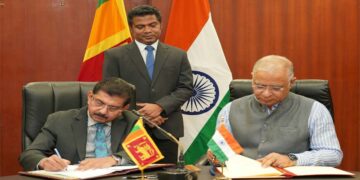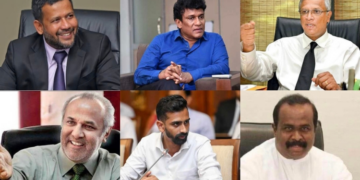

The Supreme Court today (Aug 27) directed the lawyers representing the petitioners, including former Minister Wimal Weerawansa, who had filed petitions seeking an order to annul the Memorandum of Understanding (MoU) entered into between the Sri Lankan government and India regarding the implementation of a digital identity card project for Sri Lankan citizens, to take steps to issue notices to the respondents named in the case.
These petitions were taken up before a Supreme Court bench comprising Chief Justice Priyasath Dep, Justices Kumuduni Wickramasinghe, and Sampath Wijeratne.
Appearing on behalf of the Attorney General, Solicitor General Viraj Dayaratne informed the court that the Cabinet Ministers and other respondents named in the petitions had not yet received notices.
Request for an early hearing
Attorney Kanishka Witharana, representing one of the petitioners, requested that an early date be fixed to hear the case. Accordingly, the bench informed the petitioners’ lawyers to issue fresh notices to the respondents. The petitions were then scheduled to be taken up again on October 17.
Respondents named
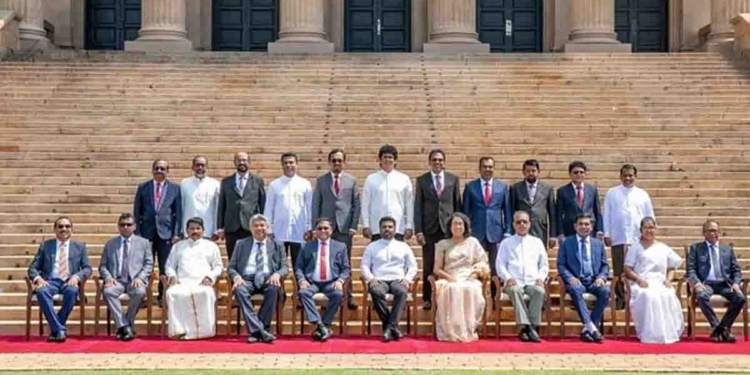
Among the respondents named are the President (in his capacity as the Minister of Digital Economy), Prime Minister Harini Amarasuriya, other members of the Cabinet, and 31 individuals in total.
The petitioners state that the Government of Sri Lanka has entered into an MoU with India to implement a project related to issuing digital national identity cards for Sri Lankan citizens. They further note that Cabinet decisions regarding this matter were taken on January 27 and June 2 of this year, without informing the general public or Parliament.
The petitions claim that in 2022, the Sri Lankan government entered into an MoU with the Government of India regarding this project, and the two Cabinet decisions mentioned were aimed at amending that agreement.
The petitioners allege that under this MoU, Sri Lankans’ biometric data and personal information would be accessible to India, thereby granting India the opportunity to interfere in Sri Lanka’s internal affairs.
They argue that although the Department for Registration of Persons has already been preparing the required framework to issue digital identity cards locally, the government has arbitrarily and unlawfully decided to entrust the task to an Indian company, outside the national procurement process.
The petitions contend that such a move compromises Sri Lanka’s sovereignty, national economy, security, and independence, and violates fundamental human rights guaranteed under the Constitution.
Accordingly, the petitioners have requested the Court to issue an order nullifying the MoU signed with India and the related Cabinet decisions, and to prevent the implementation of the proposed digital identity card project.