
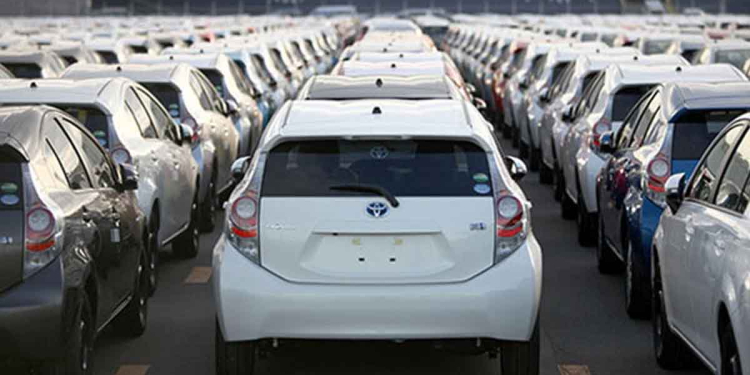
The Finance Committee has revealed that the government has incurred a tax revenue loss of Rs. 257 million due to the importation of 171 brand new vehicles falsely declared as used. This finding was disclosed in a report compiled by Sri Lanka Customs based on a random sampling of vehicles imported on May 21st, 22nd, and 23rd. The report was prepared following a notification from the Chairman of the Finance Committee, Dr. Harsha de Silva, and subsequently handed over to him by the Ministry of Finance.
The report covers 194 vehicles, of which 171 were imported under the used vehicle category. However, investigations revealed that the majority of these vehicles had been driven less than ten kilometers. Notably, 88% of them had mileage under 1,000 kilometers, raising concerns about the legitimacy of their classification as “used.”
Despite their minimal usage, these vehicles qualified for a 15% tax concession under the existing regulations for used vehicle imports. As a result, the state suffered a loss of Rs. 257 million in expected tax income from these 171 vehicles alone.
During the Committee session, Dr. de Silva presented specific examples from the report. One vehicle, driven only five kilometers, had been manufactured just three months prior. Another, with only eleven kilometers on the odometer, had been manufactured only twenty days before its import. In certain cases, new vehicles imported under this guise received tax concessions as high as 29%.
Finance Ministry officials informed the Committee that these tax concessions are provided under a gazette notification issued in 2016. According to this regulation, a vehicle that has not been driven but is registered in the country of manufacture qualifies as “used” and is eligible for tax relief.
In response, the Chairman instructed officials to revisit and revise the definition of a “used vehicle.” Supporting this move, Deputy Minister of Economic Development Dr. Harshana Suriyapperuma emphasized that the concession had been misused and urged the officials to explore possible corrective measures.