

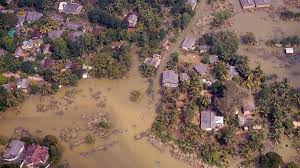
Sri Lanka is confronting potentially severe economic damage from the recent cyclone and floods, with early industry estimates possibly understating the full impact. Initial loss figures range from US$200 million to $2.9 billion, with the final toll expected to reach 1–3% of GDP, roughly Rs. 300–900 billion.
Government officials warn that, when factoring in the compounding effects on infrastructure, agriculture, supply chains, and livelihoods, a comprehensive independent assessment could push total economic losses to Rs. 500–1,440 billion ($3.4–9.6 billion) over the coming years. This includes the impact of reconstruction delays, reduced exports, and lost productivity.
Prabath Chandrakeerthi, Commissioner-General of Essential Services, who is leading the recovery efforts, said on Wednesday that $6–7 billion would be needed to rebuild homes, industries, and roads destroyed by Cyclone Ditwah.
The World Bank is conducting a rapid post-disaster assessment to quantify damages across housing, infrastructure, agriculture, and services, aiming to mobilize funds for medium- to long-term development needs. The International Monetary Fund (IMF) has also pledged additional support beyond the resources available in the ongoing debt relief package.
A senior Finance Ministry official said that the final estimate of economic losses will be released after the conclusion of this assessment and the Ministry’s determinations.
Meanwhile, Prof. Priyanga Dunusinghe, Head of the Department of IT at the University of Colombo, suggested that losses could range between $1.5 billion and $2 billion. He emphasized that traditional small-scale fundraising, used in past disasters such as the 2004 tsunami and the 2016 floods, would be insufficient this time and called for bold, large-scale financing measures.
The government has already launched a “Disaster Recovery Fund,” inviting both domestic and international contributions, and has asked industries to report damages by December 16 for assessment.
In its maiden budget for 2025, the government allocated a record Rs. 1,315 billion. However, only Rs. 200 billion—about 15% of the total capital investments—has been approved so far, leaving approximately Rs. 1 trillion available for rebuilding activities. A Rs. 50 billion supplementary estimate has also been presented in Parliament to provide relief to cyclone and flood victims. Donations to date have exceeded Rs. 697 million.
According to the Ministry, development partners have agreed to repurpose and redesign existing loan facilities to support the medium-term rehabilitation of economic and social infrastructure, including major roads, bridges, irrigation systems, and transport networks. These partners and international agencies are also exploring new loan and grant facilities to meet the country’s long-term development needs.