
Blame Game Rages as Minister Survives No-Confidence Vote
COPE to Reopen Coal Deals Probe as Past Scandals Resurface
Ravi K Points Finger at IMF Chief Amid Growing Economic Fallout Debate
AG Report Ignored as Government Weather No-Confidence Storm
Opposition Seizes the Initiative
It is no exaggeration that last week’s parliamentary sessions were effectively commandeered by the main opposition, the Samagi Jana Balawegaya (SJB). In a striking political turnaround, the opposition managed—within just a year and a half of the government assuming office with a commanding two-thirds majority—to drag the entire administration into a defensive battle over a single, explosive issue.
That issue was the SJB’s allegation that the importation of substandard coal had inflicted massive financial losses on the country. By the end of the week, the government—once buoyed by a strong mandate—found itself politically cornered, forced into retreat and struggling to maintain control of the narrative.
Calculated political checkmate
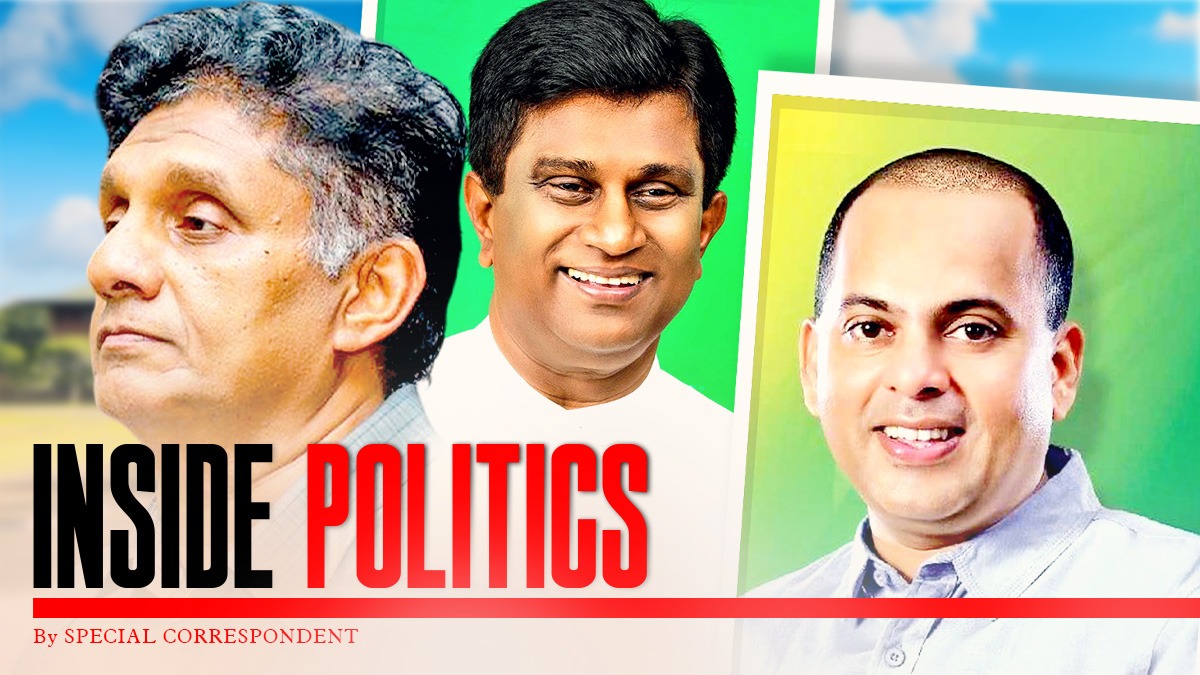
At the center of this offensive was Opposition Leader Sajith Premadasa, whose relatively small team of MPs executed what can only be described as a calculated political checkmate—both inside Parliament and in the court of public opinion. Premadasa was the first to raise the alarm, only to be met initially with ridicule and aggressive dismissal from the government benches.
Undeterred, he returned with mounting evidence—documents, data, and repeated assertions—laying out what he described as a large-scale fraud tied to substandard coal imports. Standing firmly alongside him were S. M. Marikkar and Ajith P. Perera, who played critical roles in transforming allegation into sustained political pressure.
Marikkar, leveraging his position within the Sectoral Oversight Committee on Power and Energy, methodically summoned officials from key institutions, including the Ceylon Electricity Board and the Lanka Coal Company. Through these proceedings, layers of the alleged irregularities were peeled back, with fresh revelations surfacing both within committee hearings and on the parliamentary floor.
Meanwhile, Perera ensured that the issue did not remain confined to a single party narrative. By systematically presenting the facts to other opposition groups, he helped forge a broader, unified front—drawing in factions that had previously been preoccupied with their own political battles.
The result was a relentless campaign that neither the government nor the media could ignore. Mainstream outlets and social media platforms alike were compelled to keep the story alive, amplifying its reach and impact. In just eighteen months, what began as a contested claim evolved into a nationwide political flashpoint, resonating from Parliament to the grassroots.
In the end, the coal controversy did more than expose alleged corruption—it exposed a government vulnerable to a disciplined and determined opposition willing to seize its moment.
The Auditor General Saga
A similar political dynamic was witnessed in 2015, when the Joint Opposition managed to effectively take control of the political narrative within about one and a half years of the Yahapalana government coming to power. This was achieved through the exposure of the Central Bank bond scandal.
At that time, a group of around 40 opposition MPs raised allegations against the government regarding the bond issue and succeeded in turning it into a nationwide topic within a very short period. The ultimate outcome was that the scandal contributed significantly to the fragmentation of the Yahapalana government and became a key factor in its eventual downfall.
Amid the ongoing allegations over the coal issue, another related development that raised suspicion had occurred about a year earlier—the repeated delay in appointing a new Auditor General.
AG’s retirement
Following the retirement of then Auditor General C. Wickramaratne, many expected that the most senior official in the Auditor General’s Department, Deputy Auditor General Dharmapala Gammampila, would be appointed to the position. However, in a surprising move, the President nominated someone else to the Constitutional Council instead.
The opposition alleged that, for the first time in history, the President was attempting to appoint an external individual—someone loyal to him—rather than a career official from within the department, suggesting that there could be a significant hidden agenda behind this decision.
As a result of these strong objections, the President’s nomination was rejected at the Constitutional Council, with the Opposition Leader, Ajith P. Perera, and three civil society representatives voting against it. Notably, on four separate occasions, the President submitted different nominees, but each was rejected by the Council.
Consequently, for the first time in history, the position of Auditor General remained vacant for over eight months. During this period, Dharmapala Gammampila, as the most senior official, was repeatedly appointed in an acting capacity.
Even when the Chief Prelates of the Malwathu and Asgiri Chapters, along with other leading Buddhist clergy, formally requested the President to appoint Gammampila to the position, there was no indication that the President accepted or acted upon that request.
A Game That Backfired
In this context, the opposition persistently alleged that the government was attempting to manipulate the process of appointing a new Auditor General. Their claim was that, with the terms of the three civil representatives in the Constitutional Council set to expire in January, the government was planning to install three loyalists who would cooperate with it—thereby securing the appointment of a preferred Auditor General.
Accordingly, following the expiry of the terms of these civil representatives in January, several rounds of discussions were held in Parliament between the Prime Minister and the Opposition Leader to appoint new members. In reality, the government’s intention was to resolve the issue by appointing three individuals aligned with its interests.
However, this proved more difficult than anticipated, as the Constitution requires that at least one civil representative be appointed with the consent of the Opposition Leader. As a result, Sajith Premadasa opposed the Prime Minister’s nominees on two separate occasions, leading to two rounds of talks ending without agreement.
Notably, during the second round of discussions, Speaker Jagath Wickramaratne was also present. Premadasa objected to his participation, arguing that the Speaker had no basis to be involved in the process and emphasizing that such nominations must be made with his concurrence, not solely at the Prime Minister’s discretion.
Third round success
It was only during the third round of discussions that a mutually acceptable nomination emerged. Thus, both the Prime Minister and Premadasa were compelled to engage in three rounds of negotiations to finalize the composition of the Constitutional Council.
Nevertheless, Premadasa’s eventual agreement to the nomination drew sharp criticism—even from within his own party. Some accused him of compromising the struggle over the Auditor General’s appointment. They argued that accepting a nomination that had previously been rejected—particularly that of Mrs. S. Wijeratne—was unjustifiable. While criticism also surfaced externally, it was particularly significant that the strongest backlash came from within his own ranks.
Subsequently, the President once again nominated Mrs. Wijeratne—then the second-most senior official in the Auditor General’s Department—for the position. With the Constitutional Council’s approval, she was appointed as Sri Lanka’s first female Auditor General. Her first major assignment: to audit the controversial importation of substandard coal.
“No One Tasted the Coal”
Meanwhile, in a striking twist of timing, the audit report on the coal imports was released at the very start of the week in which the opposition’s no-confidence motion against Power and Energy Minister Kumara Jayakody was scheduled for debate.
The matter came to light on Tuesday, the first sitting day of the week. It had been announced that the President would address Parliament at noon to inform it of a relief package approved by the Cabinet the previous day. Accordingly, Leader of the House Bimal Rathnayake informed Parliament that the President would arrive at 12 noon. He also revealed that the Auditor General’s report on the so-called “coal fraud” had already been released and tabled in Parliament.
Not government’s responsibility
However, under normal procedure, any such report must be made available to all Members of Parliament in their respective languages. Despite the announcement, not a single opposition MP had received a copy of the report at that point. When questioned, the government responded that only about five copies had been printed so far, assuring that copies would be distributed later.
As opposition members continued to press the issue, Rathnayake stated that distributing the report was not the government’s responsibility but that of the Parliament Secretariat.
Despite these explanations, MPs Ajith P. Perera and S.M. Marikkar grew increasingly suspicious that something was being concealed. From Tuesday morning onward, they made repeated attempts—visiting the parliamentary library and meeting senior officials—to obtain a copy of the report before the President’s arrival.
However, before they could secure it, the President arrived in Parliament, announced the relief package, and went on to make a special statement regarding the coal controversy. In a notable first, he acknowledged that the imported coal was indeed of substandard quality.
At the same time, he firmly denied any wrongdoing in the tender process, asserting that neither he nor anyone in the government had engaged in any corruption—adding, somewhat pointedly, that no one had “tasted the coal” before importing it.
The Report released
Amid all this, opposition MPs made strenuous efforts to obtain the Auditor General’s report on the coal issue—but without success. The government, for its part, showed little interest in making the report available to the opposition.
However, shortly after the President concluded his speech, a dramatic and unexpected development unfolded. The very report that opposition MPs had been searching for was suddenly published on the official website of the Auditor General’s Department itself.
What had until then been merely an allegation against the government—the importation of substandard coal—instantly transformed into a full-blown political bombshell with the release of the final audit report. Opposition MPs wasted no time in downloading the document and securing copies for themselves.
It was lawyer Ajith P. Perera who took the lead at this critical moment. Drawing on his legal expertise, he carefully examined the report and identified several crucial revelations—particularly on page 13—relating to the coal controversy. As the parliamentary session neared its close, Perera secured time to present these findings before the House.
Ministers appeared stunned
As he laid out the details, even government ministers appeared stunned into silence. The revelations quickly overshadowed the President’s relief package announced earlier that day, becoming the dominant national issue.
In effect, the newly appointed Auditor General left an indelible mark with her very first report. Significantly, the audit findings also corroborated—almost word for word—the claims repeatedly made both inside and outside Parliament by Opposition Leader Sajith Premadasa, S.M. Marikkar, and Ajith P. Perera.
That the government felt the heat was evident. Although the President attempted to defend his colleague, Minister Kumara Jayakody, key government figures such as Harini Amarasuriya, Bimal Rathnayake, and Nalinda Jayatissa notably refrained from mounting a strong defense. Even more telling was the fact that when first referring to the report in Parliament, Rathnayake himself used the phrase “coal fraud.”
The Late-Night Call
The next phase of the political battle began on Wednesday. By then, all opposition MPs had obtained copies of the audit report and were engaged in detailed study.
On Wednesday night, however, Sajith Premadasa received a crucial phone call. He was informed that the Committee on Public Enterprises (COPE) was scheduled to meet on Thursday—and that the government was planning to present comprehensive data on coal imports from 2020 to 2025, possibly in an attempt to dilute the current controversy.
Premadasa responded immediately. That very night, he convened an emergency discussion via conference call with all SJB MPs serving on the COPE committee. The focus was clear: if the government attempted to shift public attention by bringing up past coal import practices, the opposition needed a coordinated response.
Following this discussion, Premadasa contacted Marikkar and entrusted him with mobilizing public support outside Parliament on Friday—the day the no-confidence motion against Kumara Jayakody was to be debated. Within a remarkably short time, Marikkar managed to rally a large crowd near the Parliament roundabout through a series of phone calls.
What Next for Kumara?
With the audit report clearly revealing that the coal imports had caused significant losses to the country, the pressing question became: what action would the government take?
This government came to power pledging zero tolerance for corruption and vowing swift action against any wrongdoing. True to that promise, it had earlier acted decisively to remove former Speaker Ashoka Ranwala when allegations regarding his academic qualifications were proven.
Therefore, many expected that, following the audit findings, Minister Kumara Jayakody would also be removed from his post. Yet, no such action materialized.
Instead, reports circulating within government circles suggested that Jayakody should resign before the no-confidence motion was debated. Others argued that if he failed to do so, the President should immediately remove him.
These claims were even reported by The Leader website. But what is the real story?
According to internal discussions at the Pelawatte party headquarters, it was strongly argued that Jayakody—who is neither a formal member of the JVP nor an elected MP but a National List appointee—should be removed without delay. Party insiders reportedly warned that retaining him in the Cabinet under such serious allegations would inevitably damage the government’s credibility.
No Removal
However, in response, a faction within the government close to the President is said to have argued that similar allegations had also been made against the current Speaker, yet no action had been taken to remove him. Therefore, they contend, there is no justification to remove Kumara Jayakody from his ministerial post.
They further pointed out that complaints had even been lodged with the Bribery Commission against the Speaker. Since the Speaker is seen as aligned with the Pelawatte faction, and no effort was made by that group to remove him, the same logic, they argue, applies to Jayakody—who is considered aligned with the President’s camp. Hence, the President too is unlikely to move against him.
That said, following the release of the Auditor General’s report, pressure from the Pelawatte faction has reportedly intensified. According to inside sources, there is now a strong push to remove Jayakody immediately. The party, it is said, is no longer in a position to defend him, and continuing to do so could further damage the government’s standing among the public.
This has raised a critical question: can the President continue to shield his ally, Kumara Jayakody, under mounting pressure? There are indications that, even if the government manages to defeat the no-confidence motion, a situation may arise where Jayakody is asked to resign afterward. At the same time, whether the JVP would continue to defend him under such circumstances remains a serious uncertainty.
Ravi Steps In
Amid these unfolding political developments surrounding the no-confidence motion, another significant yet underreported happening took place inside Parliament last week. Officials from the International Monetary Fund (IMF) met with opposition party leaders for a special discussion.
Previously, it had been standard practice for IMF representatives visiting Sri Lanka to meet both government and opposition leaders. However, in recent months under the current administration, this practice appeared to have changed, with IMF officials engaging only with the government and bypassing the opposition altogether.
Following repeated complaints from the opposition, this time IMF officials agreed to meet opposition leaders in Parliament—responding to a formal request made through the Speaker’s office. The discussion that followed was notably intense.
Strong dissatisfactiong
The tension stemmed largely from persistent questioning by former Finance Minister Ravi Karunanayake. Right at the outset, he expressed strong dissatisfaction with remarks made by IMF Managing Director Kristalina Georgieva during her recent visit to Sri Lanka.
He criticized her for praising the government’s economic program—highlighting economic management and growth—while failing to acknowledge the role of former President Ranil Wickremesinghe.
“When the IMF Managing Director left Sri Lanka, she issued a statement praising the government’s economic program. She spoke as if the government was managing the economy well and that growth was strong. But she did not even mention former President Ranil Wickremesinghe. That is not appropriate. We are deeply disappointed. It was Wickremesinghe who engaged with the IMF after the country went bankrupt and initiated the reforms that helped stabilize the economy. At the very least, she should have acknowledged that. Even today, the government is continuing the same policies he introduced. There has been no real change. So, making a statement that appears biased toward the government is wrong,” Ravi asserted.
He did not stop there. He went on to question the IMF’s broader approach:
IMF’s current program
“We also have concerns about the IMF’s current program. Typically, the IMF’s role should be to help a country break free from the debt trap and move toward sustainable growth. But what we see now is the IMF effectively steering Sri Lanka toward continued borrowing. At the very least, its failure to intervene on this is deeply problematic.”
Ravi even cited examples to reinforce his argument.
As he articulated his position in clear and direct English, IMF representatives appeared visibly taken aback, listening in silence. He then went further, questioning whether the IMF’s engagement with Sri Lanka was truly aligned with its own stated principles.
“Usually, the IMF works with countries based on agreed conditions. But is that happening in Sri Lanka today? That is a serious question. A country working with the IMF is expected to follow transparent, corruption-free economic policies. It must operate on sound economic principles. Yet what we are seeing are instances of corruption and a lack of transparency within this government. However, we do not see the IMF questioning these issues. Where are the corrective measures from the IMF in response to these concerns?”
Faced with these pointed questions, IMF officials reportedly had little to say in response.
Archuna intervene
As Ravi Karunanayake continued to question IMF officials at length, MP Archuna Ramanathan also joined the exchange. He used the opportunity to highlight corruption allegations against the government.
“In recent times, several serious allegations have been raised against the government. The first was the release of 323 containers from the port without any inspection. Did you question that? Where are the reports? Now we have the latest issue—the coal fraud. We have not seen you questioning the government on this either. Yet your stated policy is to ensure countries remain free from corruption…”
As Archuna pressed these questions, it became evident that the momentum created by Ravi’s line of questioning had gained traction.
At the conclusion of the meeting, as opposition leaders were leaving, an IMF representative approached Ravi, shook his hand, and made a notable remark:
“I was surprised by the points you raised. Your line of questioning was of a very high standard. The issues you presented are extremely important to us. No one has engaged with us in this manner before. We are grateful to you for that—and we would like to continue this discussion with you privately.”
Ravi responded that he would be ready to engage at any time.
The impact of this exchange became evident within days, when The Island newspaper reported—quoting an IMF representative—that the Fund was closely monitoring the government’s compliance with its conditions. The report further noted that continued IMF support would depend on whether those conditions were met. In that sense, Ravi’s intervention appeared to have achieved its intended effect.
Mansions Falling Apart
Another high-profile move by the current government after coming to power was the repossession of official residences previously occupied by former Presidents—an effort accompanied by significant media attention.
Accordingly, the residences used by former Presidents Chandrika Kumaratunga (Independence Avenue), Mahinda Rajapaksa (Wijerama Mawatha), Maithripala Sirisena (Mahagama Sekara Mawatha), and Gotabaya Rajapaksa (Bauddhaloka Mawatha) were all taken back by the state.
At the time, government ministers publicly stated that some of these properties would be repurposed for judicial functions, while others would be converted into embassies, government offices, or even luxury hotels. The public, therefore, expected that these properties would be put to productive use.
stark transformation
However, while the residences of some former presidents remain out of public view, the house on Wijerama Mawatha—once occupied by Mahinda Rajapaksa—continues to draw attention. Those passing by now observe a stark transformation: a property once bustling with activity has turned into an abandoned structure, visibly deteriorating due to lack of maintenance—resembling a neglected estate of a bygone era.
Further inquiries reveal that although these residences were reclaimed by the government, the Ministry of Public Administration has yet to formally take them over. The reason cited is the disappearance of inventory lists detailing the assets within these properties. Without such documentation, the Ministry has reportedly refused to assume official responsibility.
As a result, a serious legal question has now emerged regarding ownership and accountability for these properties. According to reports, a senior opposition figure has engaged an independent group of lawyers to examine the legal status of these residences.
It is understood that this legal team has already met with Chandrika Kumaratunga and plans to meet Mahinda Rajapaksa and Maithripala Sirisena in the coming days. There are also indications that legal action may soon be initiated, seeking judicial clarification on the ownership and status of these official residences.