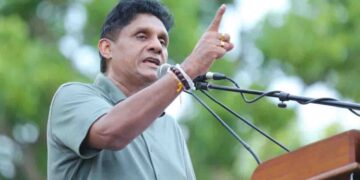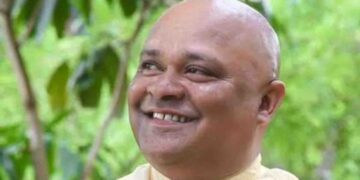

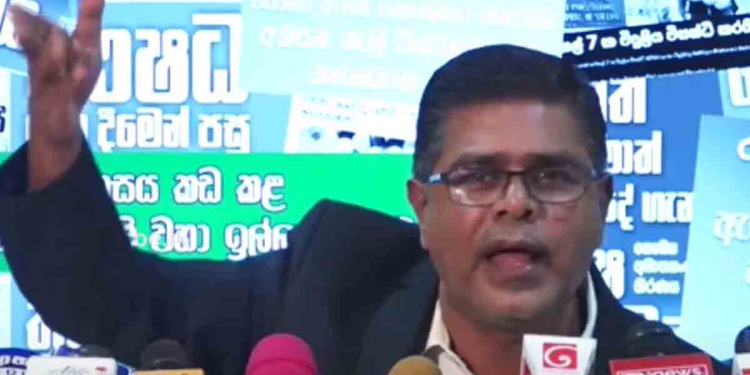
Parliamentarian Mujibur Rahuman participated in a media briefing held today (21) at the Samagi Jana Balawegaya (SJB) headquarters. Speaking further, he stated as follows:
“For nearly a year now, the government has been unable to appoint an Auditor General. Moreover, the name proposed for the post of Auditor General must receive the approval of the Constitutional Council. However, the National People’s Power (NPP) government stated that appointments to public service positions would be made without political interference and that competent and qualified officers would be appointed. This claim was repeatedly made by the NPP during election campaigns as well.
In addition, the President’s policy statement ‘A Prosperous Country, A Beautiful Life’—specifically on page 197—mentions matters such as promotions for public officers, increasing efficiency in the public service, and making appointments without political interference. Trusting that the NPP would act according to these policies, public servants worked to bring the NPP to power.
However, when appointing an Auditor General, the previous government took steps to appoint an independent individual to the position. Even while leaders facing allegations were governing the country, a person with experience, expertise in state accounting, and knowledge of auditing was appointed as Auditor General. It is because such qualified officers were appointed that fraud and corruption in state institutions are exposed at the COPE and COPA committees. At both COPE and COPA, revelations of fraud and corruption in government institutions are based on reports submitted by the Auditor General.
The current Chairman of the COPE Committee speaks loudly about fraud and corruption that occurred under the previous government and points them out clearly.
However, President Anura Dissanayake repeatedly promised the people that corruption would be eradicated, that the public service would be made efficient, that promotions would be based on merit, experience, and competence, and that diversity would be ensured in the public service. Yet, even now, President Anura Dissanayake has been unable to appoint a competent, experienced, and qualified officer as Auditor General.
The President submitted two names to the Constitutional Council for the post of Auditor General. Accordingly, he first attempted to appoint a person who was not part of the public service. That nomination was rejected by the Constitutional Council. Secondly, the President proposed the name of a retired military officer for the position. This individual lacked experience, had not held a senior position in the military, and had faced allegations related to the misuse of vehicles. Serious questions arise as to why the President is making such determined efforts to appoint such individuals to the position of Auditor General.
Meanwhile, the Acting Auditor General is a competent officer who has served in the Auditor General’s Department for 30 years. He possesses the necessary qualifications for the post of Auditor General. He actively participates in COPE and COPA committees and properly intervenes by highlighting fraud and corruption that occurred under previous governments. He has extensive experience in auditing and strong knowledge of government audits.
It is questionable that President Anura Dissanayake is attempting to appoint an external individual to the post of Auditor General instead of appointing such a qualified officer. Through this incident, the President’s image has become questionable. If President Anura Dissanayake is truly opposed to fraud and corruption, then failing to confirm the Acting Auditor General in the permanent position is problematic. If the Acting Auditor General is unsuitable for the permanent post, then he is also unsuitable even to serve as Acting Auditor General—yet he has been serving in that role for eight months.
Nevertheless, the audit process of the current government will begin next year. From next year onward, audits will commence on all transactions, actions, and activities carried out by the National People’s Power government in 2025. Accordingly, the President, Prime Minister, and ministers of the NPP government will be subject to audit for actions taken within state institutions.
Thus, once an Auditor General is appointed, the true nature of the NPP government—which promised transparency and an end to corruption—will be revealed next year. This is why the President appears to be striving to appoint an Auditor General who is loyal and compliant to him. That suspicion has now arisen.
Previously, former leaders did not directly or indirectly interfere politically in appointing the Auditor General. Yet President Anura Dissanayake claimed he would eliminate political interference in the public service and make it efficient. However, it now appears that he has forgotten everything stated in his own policy declaration ‘A Prosperous Country, A Beautiful Life’.
The only institution capable of reducing fraud and corruption in the public service and improving transparency and efficiency is the Auditor General’s Department. Therefore, an independent individual with knowledge, accountability, and a clear understanding of auditing must be appointed to this position. Individuals who worked for the President’s electoral victory should not be appointed. The President’s attempt to appoint a government-friendly Auditor General appears aimed at preventing exposure of fraud and corruption within the government.
It is evident that Anura Dissanayake as an opposition politician and Anura Dissanayake as President are two different individuals.
Furthermore, after the recent disaster, the government established a fund called ‘Rebuilding Sri Lanka’. However, all matters relating to establishing disaster relief funds are clearly outlined in the Disaster Management Act of 2005. Despite having legal provisions to establish a fund accountable to Parliament, the President has chosen to establish the Rebuilding Sri Lanka fund outside parliamentary oversight.
The government itself criticized fraud and corruption in the Helping Hambantota fund established after the tsunami. Therefore, the Samagi Jana Balawegaya urges the President to establish a fund accountable to Parliament. The Disaster Management Act of 2005 clearly states procedures for post-disaster funds, but the President has bypassed these provisions.
Although details of the Rebuilding Sri Lanka fund, including committee members and intended activities, are listed on its website, the total amount of funds collected so far is not disclosed. This information must be clearly stated and updated daily. Instead, information about funds received is being published on President Anura Dissanayake’s Facebook page, which is not an official government website.
The SJB urges the President to ensure that the Rebuilding Sri Lanka fund does not meet the same fate as previous funds. Transparency regarding collected funds is essential, and the fund must be made accountable to Parliament.
There is no issue with donating funds, but they must be utilized transparently. Once a fund is accountable to Parliament, Parliament has the right to question and oversee its finances. Despite existing legal mechanisms, President Anura Dissanayake has created a fund according to his own discretion, similar to previous presidents. To this day, there is no report on funds used under the Itukama fund created during the Gotabaya Rajapaksa administration for COVID-19. President Anura Dissanayake can investigate this, as well as what happened to the Red Star fund created by the JVP, whose website no longer exists.
The SJB agrees with all proposals presented by the President in Parliament to assist disaster-affected citizens and opposes none of them. If more can be given to the affected people, give more. The SJB does not oppose compensation. However, although the President presents many proposals in Parliament, they are not being effectively implemented at ground level.
Many foreign countries and local businesses are providing assistance to disaster victims, but there are issues regarding the proper flow of aid to the grassroots. The SJB is closely monitoring this. The President must quickly implement the vision he presents in Parliament, and the opposition led by the SJB will support its implementation. The SJB will never act to shatter dreams.
Finally, among the seven agreements signed between India and Sri Lanka, one pertains to health. These agreements have not yet been disclosed to the public. There have long been concerns regarding medicines imported from India, prompting people to prefer European medicines. Even now, there are issues regarding Indian-imported pharmaceuticals.
Therefore, the government must immediately disclose the health agreement signed with India. How many medicines has the government agreed to import from India, and which medicines are they? Even requests made under the Right to Information Act have not resulted in disclosure, raising serious concerns.
Whenever the government faces criticism, it attempts to suppress the issue by organizing supportive groups. Government-aligned parties claim there is no political involvement in importing medicines, but the question remains—can such actions be carried out without government approval?”