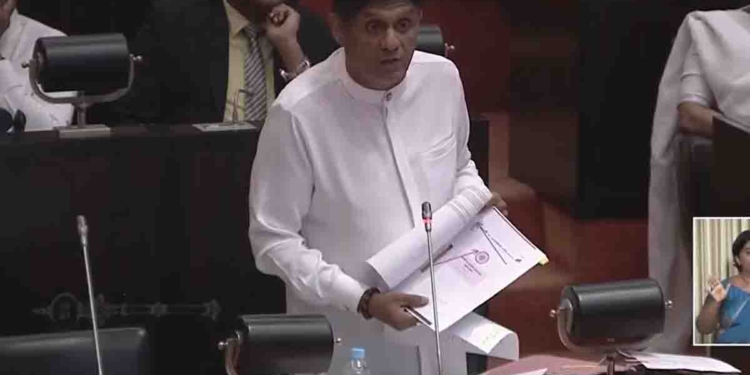
Sajith Premadasa called on the government led by the President to immediately move towards a successor programme with the IMF, making a special statement in Parliament today.
He said that the current IMF programme will end in March 2027, after which Sri Lanka will lose access to the Extended Fund Facility. Although the IMF requires Sri Lanka to maintain reserves of US$14.2 billion, the country currently has only around US$7 billion, or about 50% of the required amount. He stressed that the opportunity to build reserves up to US$14.2 billion is extremely limited, estimated at only 0.01%, and therefore the government should begin discussions on a successor IMF programme now rather than waiting until the country faces another crisis.
Debt Repayments Will Begin from 2027
The Opposition Leader stated that from 2027 onwards, Sri Lanka will have to start repaying both loan capital and interest, pushing the country into a growing debt burden. Although reserves should stand at US$14.2 billion, only around US$7 billion is currently available, and the usable amount is even lower. He pointed out that the country should be adding around US$600 million per month to reserves, but at present is accumulating only about US$60 million monthly.
Country Facing Multiple Challenges
He further said that Octane 92 petrol prices have increased by 39%, and although petrol prices had reached Rs. 470 in 2022, they are now around Rs. 410. He warned that Sri Lanka is facing serious economic difficulties, including a 9.2% depreciation of the rupee and a 17% decline in tourism revenue.
Although foreign remittances have exceeded US$8 billion, he noted that nearly 60% of them come from Middle Eastern countries, and the ongoing conflicts in the region could increase unemployment and reduce remittance inflows.
“This is a Mountain of Debt”
Sajith Premadasa warned that by 2027 Sri Lanka would face a massive debt burden, and questioned how the country would manage it without IMF oversight and financial provisions. He said the country would have to repay US$3–4 billion annually in capital repayments in addition to interest payments from 2027 onwards, accusing the government of leading the country into a dangerous economic trap.
“We Do Not Want Another Era of Queues”
He emphasized the need to extend the current programme and negotiate a new agreement from a stronger and more stable position to protect the country’s 22 million people. Although the government claims there is no economic crisis, he pointed out that the US dollar rose from Rs. 346 yesterday to Rs. 354 today.
He stated that the opposition does not want the public to face fuel queues, medicine shortages, or fertilizer shortages again, and urged the government to understand the seriousness of the situation.
“This is the Beginning of a Major Tragedy”
The Opposition Leader warned that rising fuel prices would force the government to use foreign reserves to pay for imports, leading to a shortage of dollars. He cautioned that import cover could fall below three months, creating the conditions for a major economic disaster.
“Tell the Truth to the People”
He noted that oil prices had increased by 39% from January to May this year, compared to a 44% increase between March and June 2022. Economists, he said, have warned that if oil prices rise by 25%, Sri Lanka could once again face a balance of payments crisis.
He stressed that the government must tell the truth to the public. While oil prices at US$60–70 per barrel would reduce the risk, current prices exceeding US$110 per barrel pose a serious threat to the country’s reserves.
Concerns Over Ratings and Financial Mismanagement
NDB Bank’s alleged Rs. 13.2 billion fraud, the loss of US$2.5 million while repaying debt, repeated issues with the Aswesuma welfare programme, delays in postal payments, and problems at People’s Bank were among several financial irregularities highlighted by the Opposition Leader.
He warned that such incidents could negatively affect Sri Lanka’s international credit ratings.
Call for Immediate IMF Discussions
Sajith Premadasa further stated in Parliament that the opposition alliance, Samagi Jana Balawegaya, would hold a special discussion this evening with all relevant parties regarding the rapid rise of the US dollar.
He urged the government to wake up to the seriousness of the situation, engage in a proper parliamentary discussion, and work together to prevent the country from heading toward an economic catastrophe. He called on the government to adopt a clear economic policy framework, begin immediate discussions with the IMF on a successor agreement, and ensure that a new programme is ready to be implemented from April 2027 when the current arrangement expires in March 2027.