
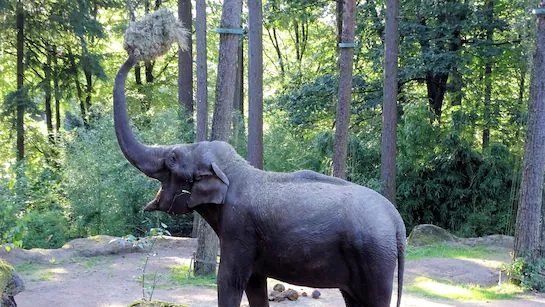
In most parts of the world, paying a road toll involves handing cash to a transport employee stationed in a roadside booth. However, Sri Lanka offers a unique twist. Along the Buttala-Kataragama road, a majestic wild elephant, believed to be over 40 years old, has taken on the role of toll collector. Known to locals as “Raja,” meaning king, this elephant has become an iconic figure, stopping vehicles and demanding food as his toll.
Raja’s method is as calm as it is effective. He positions himself along the roadside and, upon spotting a vehicle, approaches it with his massive trunk, gently requesting food from the drivers. Raja’s patience is key to his charm. He avoids aggression, understanding that intimidating motorists might scare them away. Instead, his persistent yet peaceful gestures eventually compel drivers to offer fruits or other edibles, turning the interaction into a unique roadside ritual.
What began as a casual food search has now evolved into a cherished tradition. Drivers traveling this route often purchase fruits like bananas in anticipation of encountering Raja. Small roadside stalls between Lunugamvehera and Sella Kataragama thrive on this practice, catering to travelers eager to meet the elephant.
The Buttala-Kataragama road itself is a crucial link connecting Sri Lanka’s west and southeast coasts. Flanked by dense jungle, the route is popular among both locals and tourists seeking an immersive experience with nature. Despite occasionally blocking traffic, Raja is treated with respect and admiration by the local community, who humorously refer to his actions as an “authoritarian tax collection.”
Raja’s antics have garnered significant attention on social media, with many users expressing delight and humor at the spectacle. One user remarked, “This is where and how I want my tax to be paid,” while another quipped, “For people saying it’s dangerous, I mean, who’s gonna stop him? It’s called hustle!” A third added, “These elephants are true businessmen. Look how patiently he’s dealing with the drivers.”
Elephants hold a special place in Sri Lankan culture. With 70% of the population being Buddhist, elephants are seen as sacred. According to Buddhist tradition, Queen Mahamaya dreamt of a great white elephant before giving birth to Buddha. Some believe Buddha himself may have lived as an elephant in a past life. Similarly, the Hindu community reveres Lord Ganesha, the elephant-headed god, further cementing the animal’s significance in the island nation.
While Raja’s unique toll-collecting behavior may cause occasional disruptions, it has undeniably become a celebrated aspect of Sri Lanka’s cultural and natural landscape, symbolizing a harmonious coexistence between humans and wildlife.