
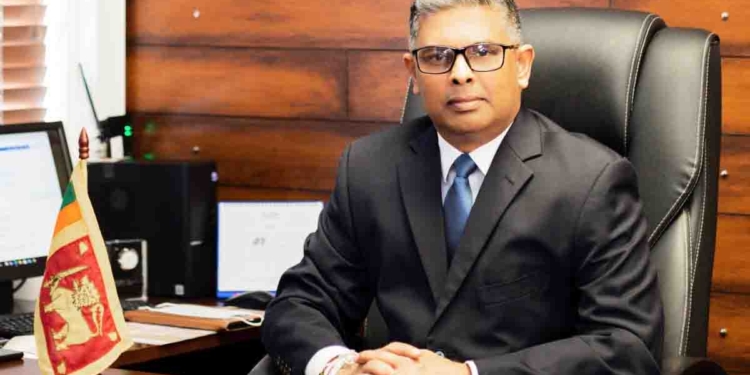
Harsha Ilukpitiya, the Controller General of Immigration and Emigration, who had been charged with contempt of court for failing to implement an interim injunction issued by the Supreme Court regarding the electronic visa issuance process, has unconditionally pleaded guilty before the Supreme Court.
Accordingly, the three-judge bench of the Supreme Court announced that the sentence against the respondent Controller General would be delivered on July 24.
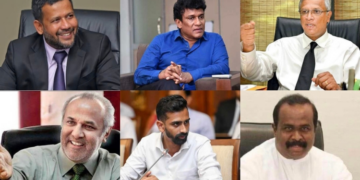
Previously, Members of Parliament Rauff Hakeem, Patali Champika Ranawaka, and former MP M.A. Sumanthiran had filed a fundamental rights petition before the Supreme Court seeking to annul a Cabinet decision taken during the previous government to hand over the electronic visa issuance process to two private companies.
Granting leave to proceed with the petitions, the Supreme Court on August 2 issued an interim injunction preventing the implementation of the relevant Cabinet decision and instructed the Controller General of Immigration and Emigration to continue issuing e-visas under the existing procedure.
However, Harsha Ilukpitiya had failed to implement the interim injunction, leading to contempt of court charges being filed against him, and on September 25 last year, he was remanded.
Against this backdrop, the case was recalled before the three-judge Supreme Court bench consisting of Justices Yasantha Kodagoda, Janak de Silva, and Arjuna Obeysekera.
President’s Counsel Saliya Peiris, appearing on behalf of Harsha Ilukpitiya, informed the court that the respondent was withdrawing his previous statement denying the charges and was now pleading guilty.
The court granted permission for the respondent to make a statement accepting guilt.
There, Harsha Ilukpitiya made the following statement before the court:
“Your Lordship, earlier I stated that I was not guilty of these charges. I now withdraw that statement and plead guilty to the charges.”
At this point, Justice Yasantha Kodagoda questioned the respondent:
“Are you aware of the gravity of making such a statement?”
To this, Harsha Ilukpitiya replied:
“Your Lordship, I sought advice from the Attorney General about the interim injunction issued by the court. I was advised to obtain further clarification from the court about the order. Until such clarification was received, the Secretary to the Ministry at the time instructed me not to act according to the interim injunction. I acted accordingly. At that time, I had also requested early retirement and asked for a transfer to another institution.”
Justice Yasantha Kodagoda further questioned:
“Were you pressured by a higher authority not to implement the court’s order?”
Harsha Ilukpitiya replied:
“Your Lordship, until I received further advice from the Attorney General, Secretary to the Ministry Mr. Viyani Gunathilaka instructed me not to implement the court order. I received these instructions both verbally and in writing.”
Then Justice Yasantha Kodagoda asked again:
“So you are saying that you did not implement the court order based on the Secretary’s instructions? When exactly did you receive these instructions?”
Harsha Ilukpitiya replied:
“Your Lordship, I do not exactly remember the date. It was before I went abroad. But I received those instructions both verbally and in writing.”
Thereafter, the court also inquired about these matters from the petitioners’ side.
Counsel Rauff Hakeem, appearing as one of the petitioners, stated that this act was not something carried out at the respondent’s discretion and that failure to implement the interim injunction had caused great harm to the national economy. Therefore, he requested the court to take that into account when imposing the punishment.
Petitioner Patali Champika Ranawaka, making submissions before the court, noted that losses due to the e-visa deal had previously been calculated at Rs. 3.31 billion, but because of the failure to implement the court’s order, those losses had further increased.
Meanwhile, Harsha Ilukpitiya’s lawyer asked the court to treat his client leniently, arguing that this unfortunate situation arose because he was acting in the wrong position at the wrong time and that he had now accepted his guilt.
Accordingly, the three-judge Supreme Court bench announced that it would deliver its decision on the sentence against the respondent on July 24.