
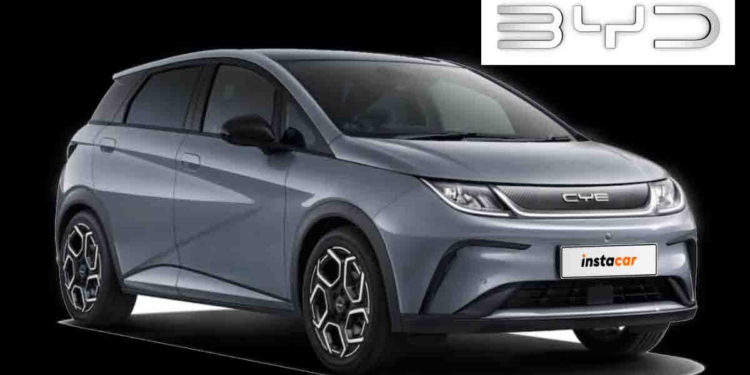
Deputy Minister of Economic Development and Minister of Labor, Anil Jayantha Fernando, yesterday (04), addressed growing concerns over allegations involving Sri Lanka Customs investigations into the importation of BYD electric vehicles. The controversy centers on complaints that importers attempted to reduce tax liabilities by misrepresenting the motor capacity of the vehicles through software manipulation.
The minister stated that the issue arose following claims made by a group involved in importing used vehicles. “There was a concern raised by importers of used vehicles regarding the motor capacity of BYD vehicles,” Fernando said during a televised interview on Derana TV. “They argued that while they accurately declare a motor capacity of 150 kilowatts and pay the required tax, some importers of brand-new BYD vehicles claim a capacity of only 100 kilowatts.”
Fernando explained that two months ago, this issue was discussed with vehicle importers, after which the Customs Department was brought into the conversation.
Allegations of Software Manipulation
According to Minister Fernando, it was alleged that brand-new vehicles with 150 kW motors were being declared as having only 100 kW output, possibly through software modification. “There is information suggesting that the company importing these vehicles has submitted documents indicating a 100 kW capacity, while software may be used to adjust the actual output,” he noted. “However, according to Sri Lankan regulations, vehicle tax is calculated based on motor capacity, not output.”
He added that once the issue was submitted to Customs, officials responded by acknowledging the possibility of a mistake in a specific case and launched an investigation. “If the motor was originally 150 kW but has been presented as 100 kW, there are two possibilities: either the documents were falsified, or the capacity was altered via software to claim a lower tax rate,” he explained. “Regardless of the reasoning, tax is levied based on the motor’s actual capacity. Customs is currently investigating this.”
Concerns Over Vehicle Release and Consumer Impact
In response to a question about the release of approximately 1,000 BYD vehicles already imported under questionable circumstances, Fernando acknowledged the financial concerns faced by Sri Lankan buyers who have already paid for these vehicles. “Yes, there is a problem,” he admitted. “If a mistake has occurred and the due tax hasn’t been paid, a bank guarantee might be required to recover the owed amount. Customs may allow release under such conditions, but whether the importing company is willing to provide the bank guarantee is uncertain.”
He further stated that results of the ongoing investigation are expected soon.
On Registered Vehicles with Potential Tax Discrepancies
Minister Fernando also addressed questions about BYD vehicles already registered in Sri Lanka with a declared 100 kW capacity. “If investigations prove that there was tax evasion and vehicles were misrepresented, the Customs Department has provisions to act accordingly,” he said. “Some vehicles are released under audit, and if a discrepancy is found post-release, Customs can take necessary action.”
Responsibility for Tax Payment
When asked whether the responsibility to settle any tax discrepancies lies with the company or the consumer, Fernando clarified: “Yes, the main responsibility lies with the importer. If there has been wrongdoing, the company is accountable.”
The minister’s remarks were made during a broadcast interview on the Derana TV channel, as public scrutiny continues to grow over the alleged manipulation of vehicle import documentation and its impact on Sri Lankan consumers.