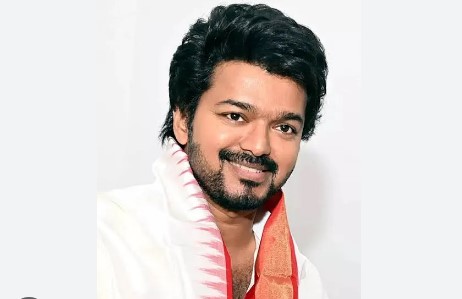
Tamil Nadu’s political landscape is witnessing a significant realignment as the Communist Party of India (CPI), Communist Party of India (Marxist) (CPM), and Viduthalai Chiruthaigal Katchi (VCK) have reportedly extended support to actor-turned-politician Vijay and his Tamilaga Vettri Kazhagam (TVK). The development has intensified speculation over a possible reshaping of alliances and raised fresh questions about the future balance of power in the state.
The emerging support for Vijay marks one of the most closely watched political developments in Tamil Nadu, where traditional Dravidian giants — the DMK and AIADMK — have dominated for decades. Political observers believe the backing from Left parties and VCK could strengthen TVK’s attempt to position itself as a serious alternative force ahead of upcoming electoral battles.
The latest political buzz has also fueled discussions around the possibility of a fractured mandate or a “hung assembly” scenario if regional equations continue to evolve. Vijay’s growing political visibility, coupled with dissatisfaction among sections of voters, is being seen as a factor that could alter conventional voting patterns in the state.
According to reports, the support from CPI, CPM, and VCK is being interpreted as a strategic move aimed at consolidating anti-establishment votes while expanding TVK’s outreach among youth and grassroots voters. Vijay, popularly known as “Thalapathy” among fans, has increasingly sharpened his political messaging in recent months, focusing on governance, corruption, social justice, and people-centric policies.
The development is expected to intensify competition between the ruling DMK led by Chief Minister M.K. Stalin and opposition forces seeking to challenge its dominance. AIADMK’s positioning in the evolving political scenario will also remain crucial as parties explore new alliances and electoral strategies.
Political analysts suggest that while TVK is still in its formative political phase, the endorsement from established ideological parties could provide organizational support and credibility. However, the long-term impact of these alignments will depend on cadre-level coordination, seat-sharing negotiations, and Vijay’s ability to convert popularity into electoral performance.
As Tamil Nadu heads toward another high-stakes political contest, all eyes will remain on how alliances take shape and whether Vijay’s political entry can truly disrupt the state’s traditional two-party structure.