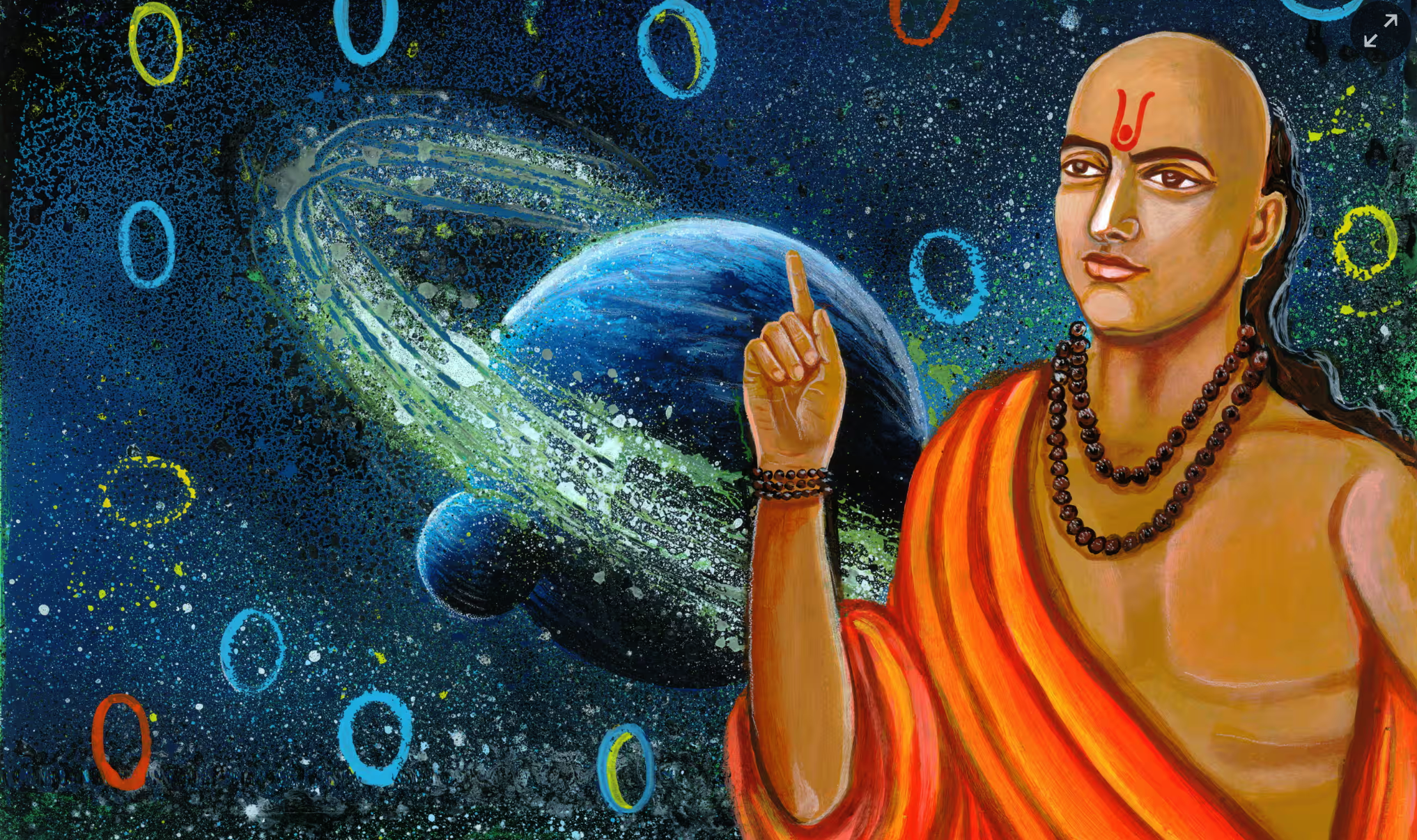
In AD 628, an Indian sage residing in the mountains of Rajasthan made a discovery that would forever alter mathematics and human understanding. Brahmagupta (598–670), a brilliant mathematician, explored Indian philosophical concepts of nothingness and the void. His groundbreaking treatise effectively invented—and unquestionably defined—the concept of zero.
Brahmagupta was born near the hill station of Mount Abu in Rajasthan. At the age of 30, he authored a remarkable 25-chapter mathematical text, immediately acclaimed for its extraordinary subtlety and genius. He was the first mathematician to regard the circular zero symbol—originally depicted merely as a dot—as a numerical entity equal to other numbers, rather than just the representation of absence. This pivotal insight necessitated new arithmetic rules, which he meticulously developed, enabling calculations with zero alongside the other nine numerals.
These fundamental principles made it possible, for the first time, to express any number up to infinity using only ten symbols: the nine numerals previously devised by Indian mathematicians, plus zero. Remarkably, these rules remain the basis of arithmetic taught worldwide today.
In addition, Brahmagupta composed Sanskrit verses detailing arithmetic rules governing positive and negative numbers—another significant innovation. His writings also suggest he was the first person to describe gravity as an attractive force, nearly a thousand years before Isaac Newton.
However, Brahmagupta did not work in isolation; he explicitly acknowledged building upon the achievements of an earlier Indian mathematical genius, Aryabhata (476–550). Aryabhata’s pioneering work includes a remarkably precise approximation of pi (3.1416), detailed explorations in spherical trigonometry, and astonishingly accurate astronomical calculations—including planetary motions, eclipses, Earth’s dimensions, and the solar year’s exact length to seven decimal places. Aryabhata also correctly identified Earth as a rotating sphere. Reflecting on his intellectual journey, Aryabhata poetically wrote: “By the grace of Brahma, I dived deep in the ocean of theories, true and false, and rescued the precious sunken jewel of true knowledge by the means of the boat of my own intellect.”
The intellectual legacy of these two scholars, consolidating India’s ancient mathematical wisdom, spread first to the Arab world and eventually far to the West. Their work gave humanity not only vital mathematical concepts such as zero but also the numeral system we universally use today. Yet, despite their foundational contributions, the British education system continues to emphasize Greek mathematicians like Pythagoras and Archimedes, largely neglecting Indian figures of comparable stature. Names like Brahmagupta and Aryabhata remain unfamiliar outside small academic circles.
It was these Indian scholars who perfected the numeral system, arguably humanity’s nearest equivalent to a universal language. Yet, in the West, we commonly attribute these numerals to the Arabs from whom Europeans borrowed them, rather than acknowledging their true Indian origins.
In Britain, there remains a profound lack of awareness regarding India’s historically pivotal role as an economic hub and a center of civilizational innovation in ancient and early medieval times. Despite limited recognition in the West, Indian philosophy, religion, science, and culture have deeply shaped the foundations of modern global civilization, comparable in influence to ancient Greece.
Just as Greece profoundly influenced Rome and subsequently European civilization, India exerted a similar transformative influence across South-East and Central Asia, reaching even as far as China. This diffusion occurred not through conquest but through India’s unparalleled cultural sophistication and appeal.
From approximately 250 BC to AD 1200, India confidently exported its diverse civilization, cultivating an expansive “Indosphere” where its cultural impact was dominant. During this period, Asia eagerly embraced Indian “soft power,” incorporating religious, artistic, musical, medical, technological, astronomical, mathematical, linguistic, and literary traditions.
India exported not just pioneering merchants, scientists, astronomers, mathematicians, and artists, but also religious figures from various Hindu and Buddhist traditions. While these religious streams occasionally merged, competed, or clashed, collectively they became culturally dominant across southern, central, and eastern Asia. Even today, more than half of humanity resides in regions significantly influenced by Indian religious and cultural ideas.
The enduring legacy of Indian cultural influence remains visible yet largely unnoticed—evident in the Buddhism of Sri Lanka, Tibet, China, Korea, and Japan; in the place names of Burma and Thailand; in the murals depicting the Ramayana and Mahabharata across Laos and Cambodia; and in Bali’s numerous Hindu temples.
Despite this remarkable cultural network stretching along ancient maritime trade routes—the “Golden Road”—this expansive “Indosphere,” linking regions from the Red Sea to the Pacific, has rarely been recognized as a unified cultural entity.
Why, then, has India’s profound historical impact been so underappreciated?
This neglect largely stems from colonialism, specifically the attitudes fostered by Victorian-era Indology. Figures such as Thomas Babington Macaulay, who dismissively asserted that “a single shelf of a good European library was worth the whole native literature of India and Arabia,” actively undermined and devalued Indian history, culture, and scientific accomplishments.
If colonial powers had acknowledged India as an advanced civilization, it would have undermined their justification for a so-called “civilizing mission.” The irony lies in the fact that Indian intellectual innovations eventually facilitated European domination over India itself.
Indian numerals entered the Arab world by the 8th century through the Barmakid dynasty in Baghdad—originally Sanskrit-literate converts from Buddhism. In AD 773, a Barmakid-sponsored mission from Sindh delivered the works of Brahmagupta and Aryabhata to Baghdad. Soon after, Persian polymath Al-Khwarizmi synthesized these Sanskrit texts in his influential book, “The Compendious Book on Calculating by Completion and Balancing, According to Hindu Calculation,” giving rise to the word “algebra” and the term “algorithm.”
These ideas later reached Europe through Italian mathematician Leonardo of Pisa, better known as Fibonacci. Having grown up in a trading post in Béjaïa, Algeria, Fibonacci learned Arabic mathematics and introduced Indian numerals to Europe in 1202 through his seminal “Liber Abaci” (“Book of Calculation”). As Fibonacci noted, “With the sign 0, which the Arabs call zephyr (al-sifr), any number whatsoever can be written.”
The widespread adoption of these numerals in Europe enabled advances in banking and accounting, propelling commercial and financial revolutions and financing the Renaissance. Ironically, these innovations later empowered Europe to economically and militarily dominate India itself.
From the mid-18th century onwards, Britain’s East India Company—guided by meticulous accounting and commercial strategy—subjugated India in perhaps the greatest act of corporate violence in history.
Today, 75 years post-independence, many assert that India’s global influence is again on the rise. Its economy has quadrupled within a single generation, and India remains recognized as a global hub of mathematics and scientific expertise, exemplified by the Indian engineers staffing Silicon Valley’s modern-day “Houses of Wisdom.”
The only questions now are whether India, China, or the United States will lead the world by this century’s end, and precisely what kind of India will emerge in that role.
For over a millennium, India’s ideas traveled along the Golden Road, profoundly transforming cultures and civilizations. Within this expansive Indosphere, Indian thought reshaped everything it touched—an enduring testament to India’s once and future global impact.