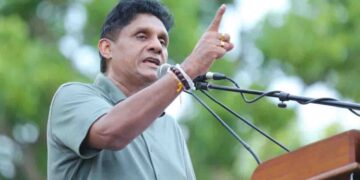
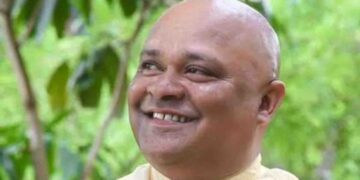
India deliberately decided to delay the SAARC summit held in Sri Lanka in 1991. This decision made President Premadasa uneasy. All attempts by President Premadasa to bring the Indian prime minister to the SAARC summit failed. The opposition ridiculed President Premadasa for India’s delaying tactics. However, Premadasa held the SAARC summit for one day with Indian disturbances.
By then, Narasimha Rao was the Prime Minister of India. The decision-makers of Indo-Sri Lankan relations advised Indian Prime Minister Rao to boycott the SAARC Summit in Sri Lanka, possibly because of Premadasa’s anti-Indian stance. Rao, who tried to delay the summit, later agreed to hold the SAARC Summit, with the the intention of changing the Indo-Sri Lankan policy. He wanted to change the method of deciding India’s policy towards Sri Lanka based on the issue of the Tamil people’s problem and develop economic relations between the two countries.
If an Indian prime minister visited Sri Lanka after Prime Minister Rajiv Gandhi’s attack by a naval officer in Sri Lanka in 1987, it was Rao. He came to Sri Lanka not for a state visit, but for the SAARC summit. After that, no Indian prime minister made a state visit to Sri Lanka till 2015. Vajpayee and Manmohan Singh also visited Sri Lanka for the SAARC summit. If an Indian prime minister visited Sri Lanka for a state visit after the attack on Rajiv Gandhi, it was Modi. In 2015, Modi visited Sri Lanka for the first time after Rajiv Gandhi on a state visit.
Now, Modi is ready to visit Sri Lanka again next month at the invitation of Anura Kumara. Modi is coming to Sri Lanka at the invitation of the JVP President, the political party that stood against India. The naval officer who attacked Rajiv Gandhi in 1987 belonged to the political ideology that the JVP fought for. Modi has taken the decision taken by Rao on anti-Indian Premadasa on the JVP president, whose party had an anti-India ideology. This is why this is a historic visit.