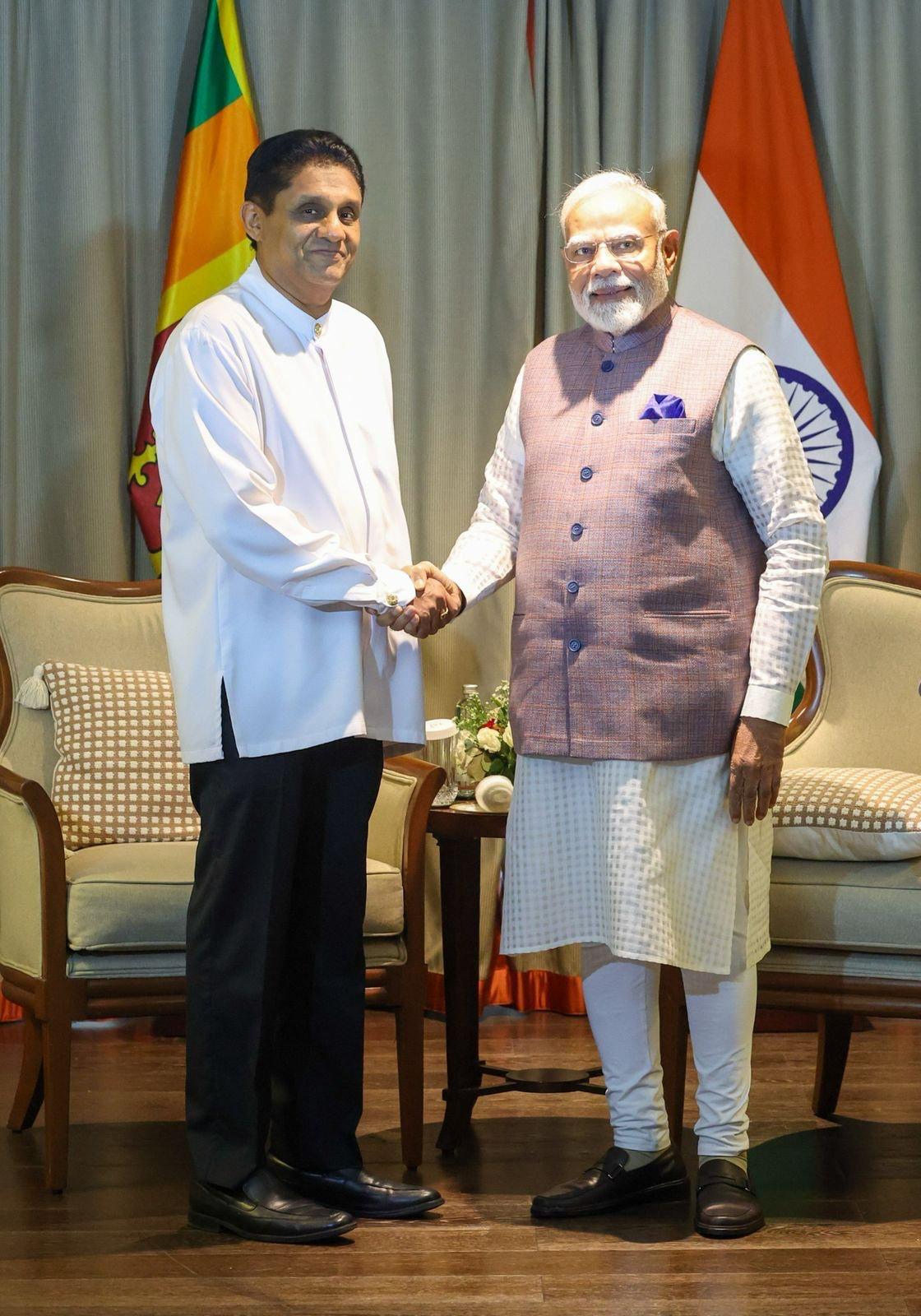


A significant meeting took place today in Colombo between Indian Prime Minister Narendra Modi, who is currently on an official visit to Sri Lanka, and the Leader of the Opposition, Sajith Premadasa.
Notably, the meeting was held exclusively between the two leaders, without the presence of any other officials.
Although initially scheduled to take place from 3:00 p.m. to 3:25 p.m., the discussion extended until 3:40 p.m., indicating a deeper and more engaging dialogue than anticipated.
According to sources, a number of highly important matters were discussed during the meeting between Prime Minister Modi and Opposition Leader Premadasa.
At the conclusion of the meeting, Mr. Premadasa presented a commemorative memento to Prime Minister Modi as a gesture of goodwill.
The Opposition Leader expressed his heartfelt gratitude to the Indian government and the people of India for their generous support during Sri Lanka’s financial crisis. He emphasized that India was the single country that provided the most substantial assistance during the time of the country’s bankruptcy, and acknowledged the critical role India played in helping Sri Lanka stabilize during that period.
Furthermore, Mr. Premadasa highlighted the importance of preserving and strengthening the longstanding friendship between India and Sri Lanka. He emphasized that this bilateral relationship should serve as a solid foundation to achieve the economic, social, and political aspirations of both nations, while also ensuring harmony and the safeguarding of territorial integrity.
The Opposition Leader also requested India’s continued support in helping Sri Lanka recover from its ongoing economic recession. He drew attention to the 44% reciprocal tariffs imposed by the United States on Sri Lankan exports, noting that such measures could severely impact the country’s export-oriented industries and the livelihoods of thousands of employees.
In light of this, Mr. Premadasa made a respectful appeal to Prime Minister Modi to expand opportunities for Sri Lankan garments and other manufactured goods within the Indian market, which would help mitigate the adverse effects of international trade challenges and support the country’s economic recovery.