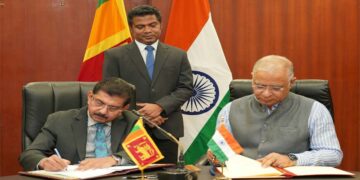
On October 25, 2024, solar rooftop systems were officially handed over at four key religious sites in Sri Lanka’s Western Province: Hokandara Temple, Sri Aanjaneyar Temple, St. Anthony’s Church, and Mutwal Jumma Mosque. Attendees included representatives from the Indian High Commission in Sri Lanka, the Ceylon Electricity Board (CEB), and the Sri Lanka Sustainable Energy Authority (SLSEA).
This handover is part of a $17 million initiative from India to install solar PV rooftop systems at 5,000 religious sites across Sri Lanka, aimed at lowering energy expenses for these institutions while promoting Sri Lanka’s clean energy transition. The installations will span all nine provinces and 25 districts, including religious sites representing Buddhism, Hinduism, Christianity, and Islam, reflecting India’s commitment to renewable energy and secular, people-centred cooperation with Sri Lanka.
Leveraging Indian expertise, the project will add 25 MW of solar capacity, generating an estimated 37 million units annually and supporting Sri Lanka’s ‘people-centric energy transition’ policy. Completion is targeted for early next year, with a five-year maintenance plan included to ensure long-term sustainability.
During a recent visit by India’s External Affairs Minister, Dr. S. Jaishankar, India reaffirmed its dedication to advancing projects prioritized by Sri Lanka under its ‘Neighbourhood First’ policy. This initiative, a vital part of bilateral collaboration, enhances the energy partnership between the nations by promoting sustainable, reliable, and affordable energy.
Other ongoing collaborations in this sector include solar electrification of approximately 9,000 Buddhist temples and Pirivenas, a hybrid renewable energy project for three islands near Jaffna, LNG supply and infrastructure projects, and a solar power plant at Sampur.